
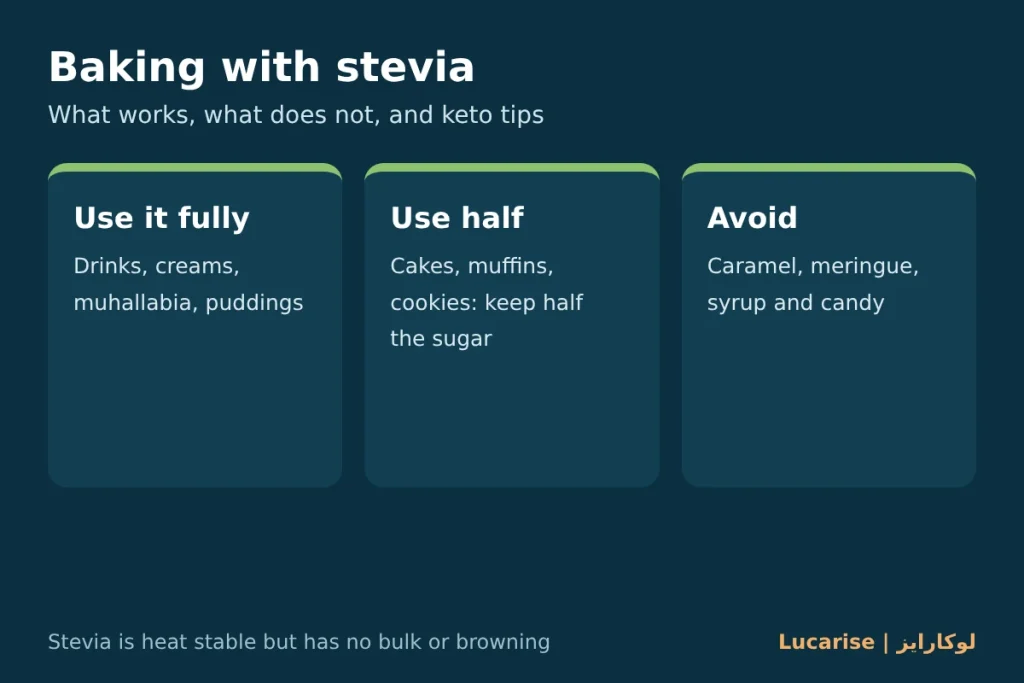
Quick answer: yes, you can bake with stevia, because it does not break down in the oven. But stevia only replaces sugar’s sweetness, not its bulk, moisture or golden colour. For the best results, use stevia fully in drinks, creams and puddings, replace about half the sugar in cakes and cookies, and avoid it in caramel, meringue and syrup. On a keto diet, pure stevia and erythritol add almost no carbohydrates, but check the label for dextrose or maltodextrin.
Stevia is one of the easiest ways to cut sugar at home, and many people in Oman and the Gulf now use it in tea, karak and coffee. Desserts are harder. This guide explains what sugar really does in a recipe, where stevia works and where it does not, how to use it in keto recipes, and how much to use. For the full picture of stevia itself, see the complete stevia guide.
Can you bake with stevia?
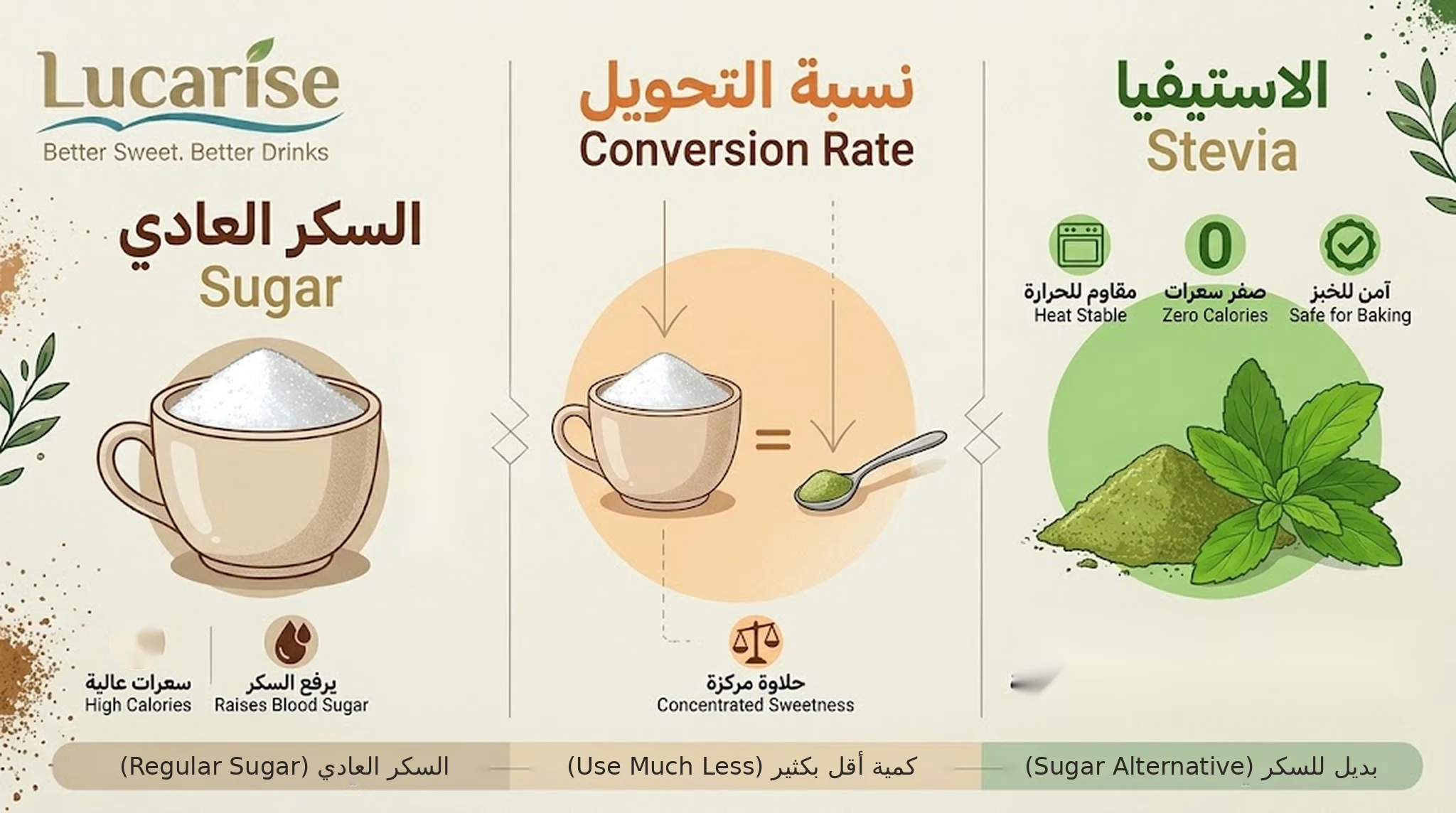
Yes. Steviol glycosides, the sweet compounds in stevia, are stable to heat and do not break down at normal baking temperatures[1]. Your cake will still taste sweet after baking. The problem is not heat but quantity: purified stevia is hundreds of times sweeter than sugar, so a whole cup of sugar is replaced by a tiny amount. The cake loses everything else that cup of sugar was doing.
What sugar does in a dessert
- Sweetness: the only job stevia can fully take over.
- Volume and structure: sugar crystals help trap air when you beat butter or eggs, which gives cakes height.
- Moisture and softness: sugar holds water, so cakes stay soft for longer.
- Colour and flavour: sugar browns and caramelises in the oven.
- Texture in sweets: caramel, meringue, syrup and candy are mostly sugar. Without it, they do not form.
Stevia, erythritol or a blend: which works best?
| Pure stevia extract | Erythritol | Stevia + erythritol blend | |
|---|---|---|---|
| Sweetness vs sugar | Hundreds of times sweeter | About 60–70% | Usually close to sugar; check the pack |
| Bulk (volume) | Almost none | Yes, similar to sugar | Yes |
| Browning | No | No[2] | No |
| Heat | Stable[1] | Stable | Stable |
| Taste notes | Can be bitter if you use too much | Slight cooling feeling[2] | Balanced; Reb-M blends taste closest to sugar |
| Best for | Drinks, creams, puddings | Cookies, cakes, chocolate | Most home recipes |
Most stevia sold for home use, including Lucarise stevia sachets, is a blend of stevia Reb-M and erythritol. The erythritol gives volume and the stevia gives sweetness, which makes blends easier to bake with than pure extract.
How to use stevia in desserts
- Drinks, creams and puddings: replace all the sugar. Muhallabia, custard, rice pudding, chia pudding and saffron cream only need sweetness.
- Cakes, muffins and cookies: replace about half the sugar and keep half. This keeps the texture and colour while cutting the sugar a lot.
- Add back moisture: if you replace more sugar, add a little yogurt, milk, mashed banana or an extra egg so the cake does not turn dry.
- Check doneness, not colour: stevia and erythritol do not brown, so a cake can look pale when it is ready. Use a toothpick.
- Avoid in caramel, meringue, syrup (like luqaimat syrup) and candy: these need real sugar to set.
- Taste first: start with less stevia and add more. Too much gives a bitter, liquorice-like aftertaste.
To work out the exact amount for your recipe, use our stevia to sugar converter. Blends differ, so always check how much sugar one sachet or spoon replaces on your pack.
Stevia on a keto diet
Pure stevia and erythritol add almost no carbohydrates, so many people on keto use them. Most keto counts do not include erythritol in net carbs, because the body absorbs it but does not use it for energy[4]. The catch is the label: some cheap stevia packets are mostly dextrose or maltodextrin, which are carbohydrates and can raise blood sugar. For keto baking, look for an ingredient list that says only stevia (steviol glycosides) and erythritol.
A keto dessert still needs low-carb flour (such as almond or coconut flour) and no dates, honey or syrup. If you have diabetes or follow a special diet for a medical reason, ask your doctor or dietitian before changing it.
Is it safe to cook with stevia?
Yes, when used in normal amounts. Purified steviol glycosides have an acceptable daily intake (ADI) of 4 mg per kg of body weight[3], and erythritol of 0.5 g per kg[4]. A slice of cake made with a stevia blend is far below both. Large amounts of erythritol can cause bloating in some people, so desserts are best as a treat, not a daily habit. Read more in stevia sugar: is it safe?.
Run a café, restaurant or shop?
Lucarise makes café drinks in business packs in our own factory in Oman: 1 kg café bags, 100-sachet hotel boxes and distributor cartons. Prices on request.
Frequently asked questions
Can stevia be used in baking?
Yes. Stevia is heat stable, so it stays sweet in the oven. Because it has no bulk, replace about half the sugar in cakes and cookies, or use a stevia and erythritol blend.
Does stevia make cakes dry?
It can, because sugar holds moisture and stevia does not. Keep part of the sugar, or add a little yogurt, milk or mashed banana.
Can I make caramel with stevia?
No. Caramel, meringue and syrup need real sugar to set and brown. Stevia and erythritol do not caramelise.
Is stevia keto friendly?
Pure stevia and erythritol add almost no net carbs. Check the label for dextrose or maltodextrin, which are carbohydrates.
How much stevia replaces 1 cup of sugar?
It depends on the product. Pure extract replaces a cup of sugar with less than a gram, while blends are often closer to sugar. Use our stevia converter and check your pack.
Why does my stevia dessert taste bitter?
You probably used too much. Start with less, taste, and add more slowly. Reb-M blends taste closer to sugar than older Reb-A stevia.
Sources
- Australian Beverages Council. Steviol glycosides: technical fact sheet (heat stability, sweetness).
- American Society of Baking. Erythritol (sweetness, browning, cooling effect in baking).
- EFSA Panel on Food Additives (2010). Scientific opinion on the safety of steviol glycosides.
- EFSA Panel on Food Additives (2023). Re-evaluation of erythritol (E 968).


