

Quick answer: “Stevia sugar” is not sugar. It is a sweetener made from the sweet compounds of the stevia leaf, called steviol glycosides. They are roughly 200–300 times sweeter than sugar and add practically no calories. Purified steviol glycosides are approved by JECFA, EFSA and the US FDA, with an Acceptable Daily Intake of 4 mg per kg of body weight (expressed as steviol).
In Gulf supermarkets you will see it labelled “stevia sugar”, “stevia sweetener” or simply “stevia”. This guide explains what is really inside, what food-safety authorities say about its safety and side effects, how to use it in tea, karak, coffee and matcha, and how to choose a good one.
Stevia sugar, explained
What it is, what the authorities say, and how to use it every day.
What is stevia sugar?
Stevia (Stevia rebaudiana) is a small plant whose leaves taste sweet. The sweetness comes from compounds called steviol glycosides. The best known are rebaudioside A (Reb-A) and stevioside, while rarer ones such as rebaudioside M (Reb-M) are prized for their cleaner taste.
Because purified steviol glycosides are so intense, a pinch would be too small to measure. That is why most tabletop “stevia sugar” products mix them with a carrier that adds volume, such as erythritol, or, in some brands, dextrose or maltodextrin. The carrier makes a big difference to taste, calories and sugar content.
What are steviol glycosides?
Steviol glycosides are the sweet molecules of the stevia leaf. Each one has the same core, called steviol, with a different number of sugar units attached, and that difference decides how sweet and how bitter it tastes. The leaf contains dozens of them; the best known are stevioside, rebaudioside A (Reb-A) and the rarer rebaudioside M (Reb-M). Because the body cannot digest them for energy, they add practically no calories. [5]
When a label says “stevia”, “stevia extract” or “steviol glycosides”, it is usually naming a purified mix of these molecules. Which ones are in the mix matters for taste: Reb-A-based products are the ones people often describe as bitter, while Reb-M is the cleanest. For the full story, read our guide to What Is Stevia Reb-M?
Types of stevia you will find in shops
| Type | What it is | Good to know |
|---|---|---|
| Dried stevia leaf | Whole or ground leaves | Not approved as a food additive in the US; taste can be grassy and bitter |
| Stevia extract (Reb-A) | Purified steviol glycosides, mostly Reb-A | The most common type; some people notice a bitter aftertaste |
| Reb-M stevia | A rarer steviol glycoside, purified | Cleaner, more sugar-like taste |
| Stevia blends | Steviol glycosides plus a carrier such as erythritol, dextrose or maltodextrin | Check the label: dextrose and maltodextrin add sugar and calories |
Is stevia a sugar alcohol?
No. Stevia is made of steviol glycosides, which are not sugar alcohols. Sugar alcohols (also called polyols) are a different group of sweeteners, such as erythritol, xylitol, sorbitol and maltitol.
The confusion comes from the packaging. Pure steviol glycosides are so intense that tabletop products need a carrier to give them volume, and the carrier is often erythritol, which is a sugar alcohol. So a box of “stevia” may well contain a sugar alcohol, but that is the carrier, not the stevia. Check the ingredient list: it should name the steviol glycoside (for example Reb-M) and the carrier (erythritol, dextrose or maltodextrin) separately.
Does stevia sugar have side effects?
This is one of the most searched questions about stevia. Here is what the evidence and the authorities say, in plain language.
What food-safety authorities say
JECFA (the joint WHO and FAO expert committee) and the European Food Safety Authority have evaluated purified steviol glycosides and set an Acceptable Daily Intake of 4 mg per kg of body weight per day, expressed as steviol. The US FDA has not objected to high-purity steviol glycosides being used as sweeteners, but whole stevia leaves and crude extracts are not approved as food additives there. [1] [2]
Points to keep in mind
- Aftertaste: some stevia sweeteners, especially those based on Reb-A, can taste bitter or liquorice-like.
- The carrier matters: blends with sugar alcohols such as erythritol may cause digestive discomfort in some people when eaten in large amounts, while blends with dextrose or maltodextrin add sugar.
- Not a weight-loss tool: in 2023 the World Health Organization advised against using non-sugar sweeteners, including stevia, as a way to control body weight. [3]
- Medical conditions: if you have diabetes or another condition, or you are pregnant, follow your doctor’s advice.
Stevia vs sugar at a glance
| Stevia (purified) | Table sugar | |
|---|---|---|
| Sweetness | About 200–300 times sweeter | Reference |
| Calories | Practically none | About 4 kcal per gram |
| Amount per cup | A tiny amount, usually in a sachet | One or two teaspoons or more |
| Taste | Depends on the type; Reb-M is the cleanest | Clean, familiar sweetness |
| Effect on blood glucose | Does not raise blood glucose or insulin in clinical studies [4] | Raises blood glucose |
| Teeth | Not fermented by mouth bacteria; the EU allows a tooth-mineralisation claim for sugar replacers [6] | Fed on by plaque bacteria |
| Baking | No bulk and no browning, so recipes need a stevia-specific blend | Gives bulk, structure and browning |
| Aftertaste | Depends on the type: Reb-A can be bitter, Reb-M is close to sugar | None |
Stevia vs sugar: which is better?
It depends on what you want. If the goal is to cut added sugar and calories in drinks such as tea, karak, coffee or matcha, stevia does that: a sachet replaces the teaspoons of sugar and adds practically no calories. Sugar is still the better choice where you need bulk, browning or caramelisation, as in baking. In both cases the practical advice is the same: choose the type of stevia carefully (Reb-M for taste) and read the carrier on the label. The WHO’s 2023 guidance on non-sugar sweeteners applies to both: they are not a tool for weight control.
How to use stevia sugar
- Tea and karak: start with one sachet per cup and adjust.
- Coffee and cappuccino: stir it in while the drink is hot so it dissolves evenly.
- Matcha latte: add it to the warm milk before whisking.
- Baking: stevia has no bulk, so choose a blend made for baking or follow a recipe written for stevia.
How to choose a good stevia sweetener
- Read the ingredient list and look for the type of steviol glycoside, for example Reb-M.
- Check the carrier. If dextrose or maltodextrin are listed, the product contains sugar.
- Prefer single-serve sachets if you want the same sweetness in every cup.
- Look for “no added sugar” rather than vague claims.
Can you mix stevia and sugar?
Yes. Some products blend a little sugar with stevia to soften the taste while still reducing the sugar per serving, and many people simply use less sugar and top up the sweetness with stevia. Remember that any blend containing sugar, dextrose or maltodextrin is not “no added sugar”, so read the label for the amount of sugar per serving.
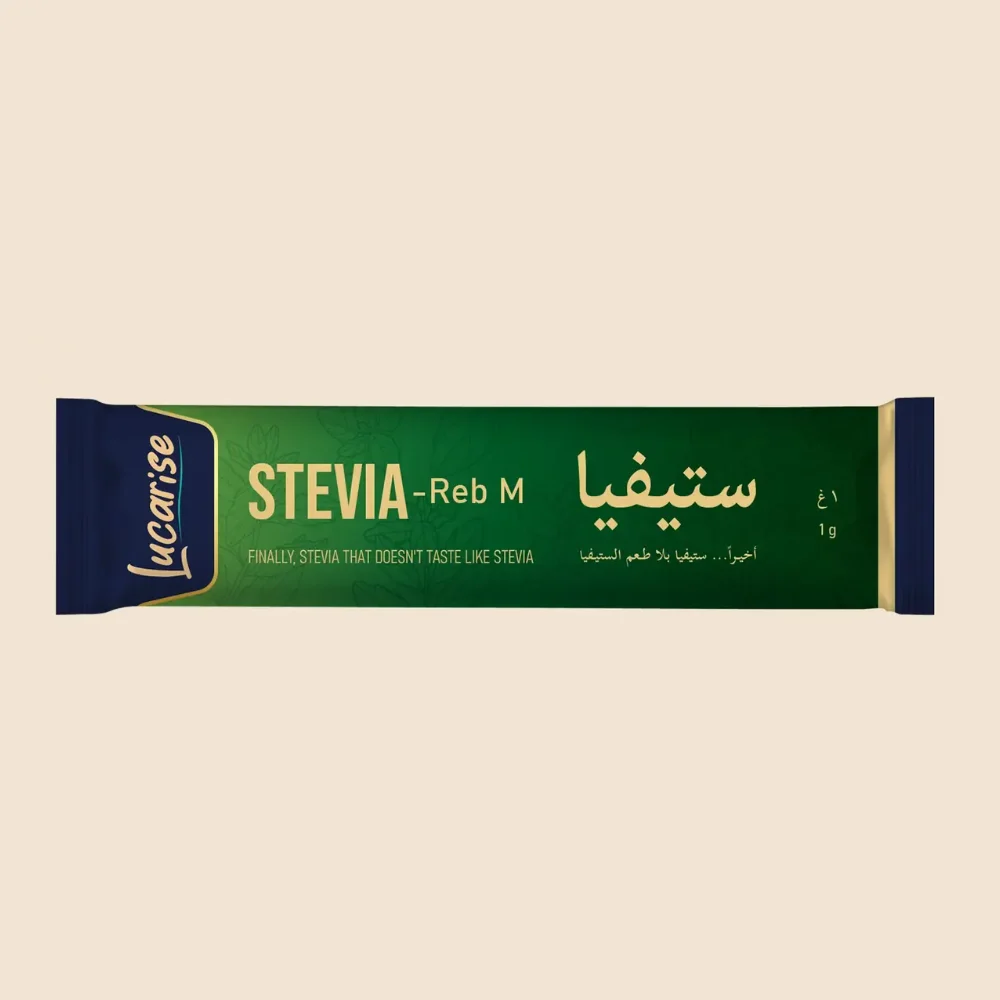
Finally, stevia that doesn’t taste like stevia
Two 1 g sachets, Classic and Cardamom, each blending stevia Reb-M with erythritol. One sachet per cup is a good start.
Swapping sugar for stevia in a recipe or drink? Use our stevia to sugar conversion calculator to work out how much you need.
Keep reading
Frequently asked questions
Is stevia sugar natural?
Stevia sweeteners start from the leaves of the stevia plant. The sweet compounds are extracted and purified, so a stevia sweetener is a processed product made from a natural source, not ground leaves. Some newer steviol glycosides are also made by bioconversion or fermentation; the ingredient list or the brand should tell you which route was used.
Does stevia contain sugar or calories?
Purified steviol glycosides contain no sugar and contribute practically no calories, because they are needed in such tiny amounts. Some stevia products, however, are bulked with dextrose or maltodextrin, which do add sugar and calories, so always read the ingredient list.
Is stevia suitable for people with diabetes?
Steviol glycosides contain no digestible carbohydrate, but some products add fillers such as dextrose or maltodextrin. If you have diabetes, check the ingredients and follow your doctor’s advice on sweeteners. Read more in our guide to stevia for diabetics.
Can children and pregnant women use stevia?
Food-safety authorities set the Acceptable Daily Intake for everyone, including children and pregnant women. Because children weigh less, their limit in grams is lower. If you are pregnant or choosing sweeteners for a young child, ask your doctor.
Why does some stevia taste bitter?
Older stevia sweeteners rely on rebaudioside A and stevioside, which many people find bitter or liquorice-like. Newer glycosides such as Reb-M are known for a cleaner, more sugar-like taste.
Is stevia a sugar alcohol?
No. Stevia is made of steviol glycosides, while sugar alcohols are a separate group that includes erythritol, xylitol and sorbitol. Some stevia sweeteners use erythritol as a carrier, which is why the two are often confused.
Is stevia the same as sugar?
No. Stevia sweeteners come from the stevia leaf and are about 200 to 300 times sweeter than sugar, with practically no calories. They are not sugar and do not raise blood glucose, although products bulked with dextrose or maltodextrin do add sugar.
What does stevia taste like?
It depends on the type. Reb-A-based sweeteners can taste bitter or liquorice-like, while Reb-M tastes much closer to sugar, with sweetness that lingers slightly longer.
How much stevia equals a teaspoon of sugar?
There is no single answer, because it depends on the purity and the carrier of each product. Use the equivalence printed on the pack: a sachet is usually designed to replace one or two teaspoons of sugar.
Sources
[1] EFSA. EFSA evaluates the safety of steviol glycosides, 2010.
[2] US FDA. Import Alert 45-06: stevia leaves and crude extracts.
[3] WHO. WHO advises not to use non-sugar sweeteners for weight control, 2023.
[4] Anton SD et al. Effects of stevia, aspartame, and sucrose on food intake, satiety, and postprandial glucose and insulin levels. Appetite. 2010;55(1):37-43.
[5] Prakash I, Markosyan A, Bunders C. Development of Next Generation Stevia Sweetener: Rebaudioside M. Foods. 2014;3(1):162-175.
[6] Commission Regulation (EU) No 432/2012, permitted health claims for sugar replacers.


