
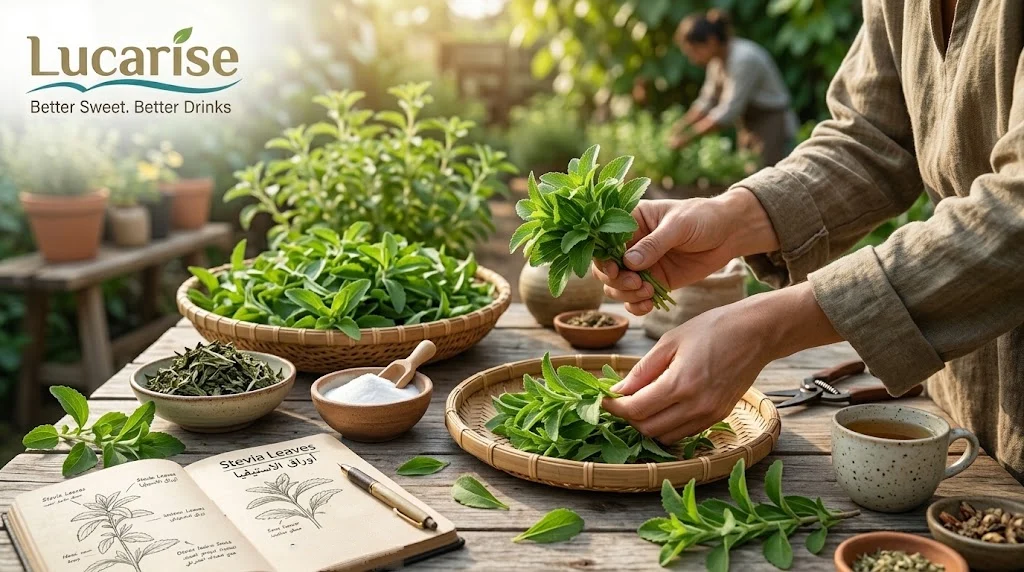
Quick answer: yes, you can sweeten tea with fresh or dried stevia leaves, but they are not a like-for-like swap for sugar. Leaves are only a few times sweeter than sugar (purified stevia is 200–350 times), the sweetness changes from plant to plant, and they add a green colour and a liquorice-like aftertaste. In the EU, stevia leaves are allowed in herbal infusions, while in the US whole leaves and crude extracts are not approved as food ingredients. Only purified steviol glycosides have a set safe daily intake.
Stevia sweeteners all start as the leaves of the Stevia rebaudiana plant. So why not skip the factory and use the leaves themselves? This guide explains how stevia leaves compare with the white stevia powder and sachets you see in shops, how to use them in tea, what food safety authorities say about them, and when the leaves make sense. For the bigger picture, see our complete stevia guide.
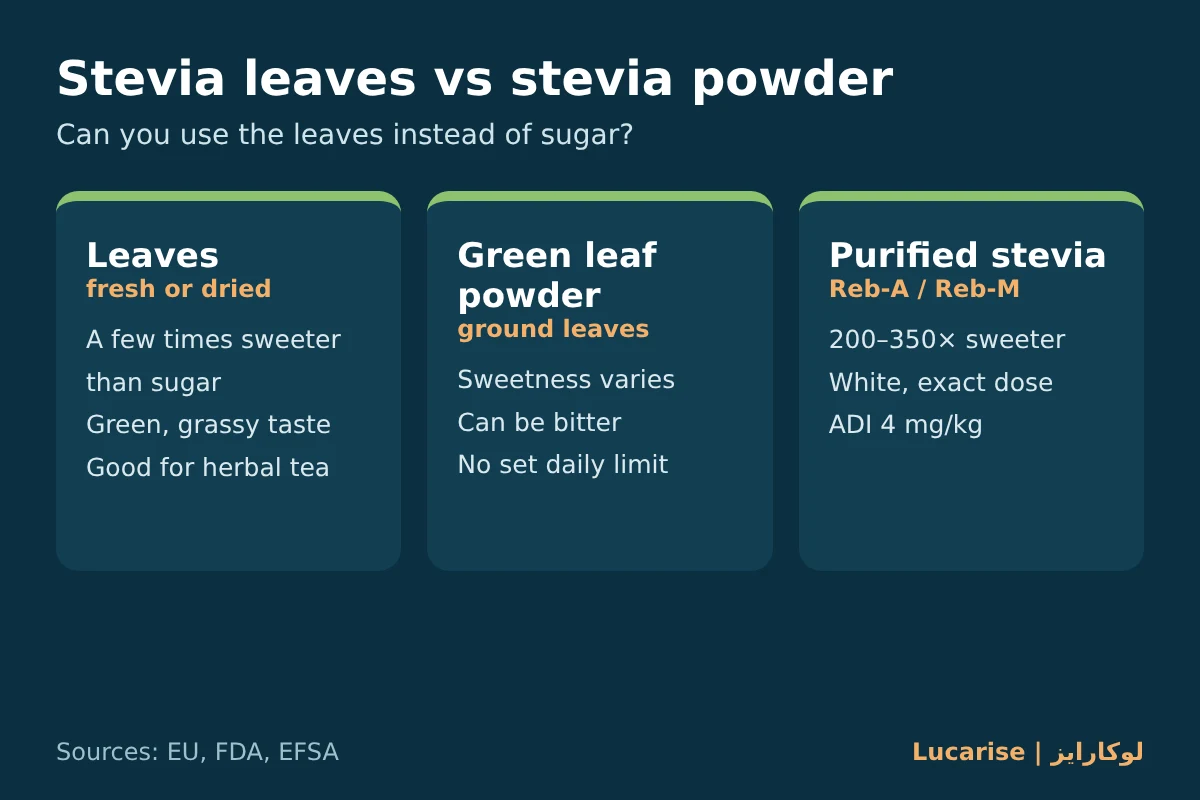
Stevia leaves vs stevia powder: what is the difference?
| Fresh or dried leaves | Green leaf powder | Purified stevia (Reb-A or Reb-M) | |
|---|---|---|---|
| What it is | Whole leaves from the plant | Dried leaves ground to a powder | Sweet compounds (steviol glycosides) extracted and purified to 95% or more |
| Sweetness | A few times sweeter than sugar; varies by plant | A few times sweeter than sugar; varies | About 200–350 times sweeter than sugar |
| Taste | Grassy, liquorice-like aftertaste | Grassy, can be bitter | Reb-A can be bitter; Reb-M tastes closest to sugar |
| Colour | Green, colours the drink | Green | White, no colour |
| Safe daily intake | No ADI set for leaves | No ADI set | ADI 4 mg/kg body weight (as steviol)[3] |
| Best for | Herbal tea, home use | Herbal tea | Any drink, cooking and baking with exact dosing |
Can you use stevia leaves instead of sugar?
In hot drinks, yes, with some limits. Steep the leaves with your tea or infusion and taste as you go. Because the sweetness of each plant is different, you cannot measure it the way you measure sugar or a sachet. Leaves also add flavour and colour, which suits herbal tea or karkade better than coffee or a matcha latte.
Most people meet stevia as a white powder, not a leaf. Our stevia sugar guide explains how the leaf becomes that sweetener and how to use it.
In baking and desserts, leaves do not work well. Sugar gives cakes their volume, moisture and browning, and leaves cannot replace that. Even purified stevia needs a recipe adjustment; our stevia to sugar calculator helps with amounts.
How to sweeten tea with stevia leaves
- Start with 1–2 fresh leaves, or a pinch of crushed dried leaf (about ¼ teaspoon), per cup.
- Add them to the pot with the tea and steep for 3–5 minutes, then strain.
- Taste, and add more next time if needed. Too much gives a bitter, liquorice-like finish.
- For several cups, make a small stevia leaf infusion, keep it in the fridge and use it within a couple of days.
Are stevia leaves safe?
Food rules treat leaves and purified stevia differently:
- European Union: since 2017, stevia leaves used in herbal and fruit infusions are not considered a novel food, so such infusions can be sold[1]. This does not make leaves an approved sweetener for other foods.
- United States: the FDA says whole stevia leaf and crude extracts are not generally recognised as safe and are not approved food additives, because there is not enough safety data[2].
- Purified steviol glycosides (95% or more) have been reviewed by JECFA and EFSA, with an acceptable daily intake of 4 mg per kg of body weight[3].
If you are pregnant, have diabetes or take regular medicine, ask your doctor before using stevia leaves regularly. The research and approvals behind stevia apply to the purified sweetener, not to leaves.
Why stevia sachets use purified extract
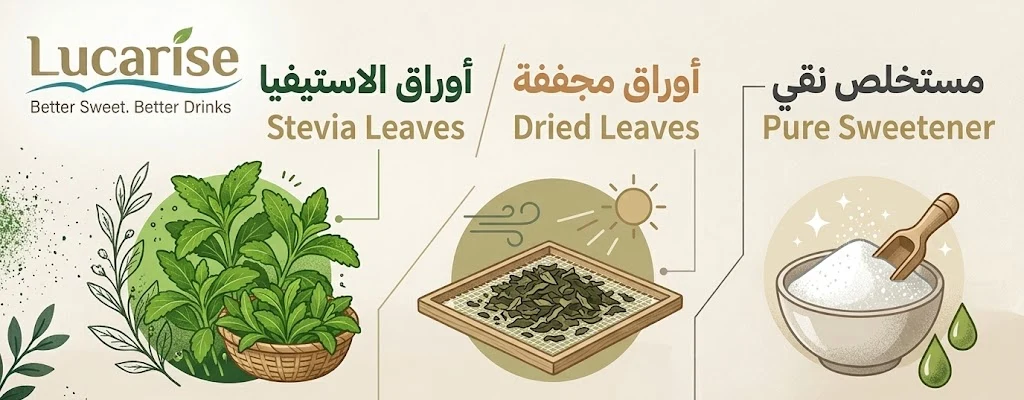
A sachet has to taste the same every time. Purified extract makes that possible: the dose is exact, there is no green colour and, with Reb-M, almost no aftertaste. Lucarise stevia sachets combine stevia Reb-M with erythritol, with no sugar and no calories. See our stevia sweeteners, learn more about stevia Reb-M, or compare stevia with other sweeteners in stevia vs sucralose vs aspartame.
🍰 Using stevia in cakes or keto desserts? Read baking with stevia: what works and how much to use.
Run a café, restaurant or shop?
Lucarise makes café drinks in business packs in our own factory in Oman: 1 kg café bags, 100-sachet hotel boxes and distributor cartons. Prices on request.
Frequently asked questions
Are stevia leaves the same as stevia powder?
No. White stevia powder is a purified extract of the sweet compounds in the leaves. Leaves and green leaf powder contain the whole leaf, so they are much less sweet and taste grassy.
How many stevia leaves for a cup of tea?
Start with 1–2 fresh leaves, or about ¼ teaspoon of crushed dried leaf, per cup, and adjust to taste.
Can I bake with stevia leaves?
Not really. Leaves cannot give cakes the volume and moisture that sugar does, and their taste and colour come through. Use purified stevia with a tested recipe instead.
Are stevia leaves safe?
In the EU, stevia leaves are allowed in herbal infusions. In the US, the FDA does not approve whole leaves or crude extracts as food ingredients because of limited safety data. Only purified steviol glycosides have a set safe daily intake.
Do stevia leaves contain sugar?
The sweetness of stevia leaves comes from steviol glycosides, not sugar. People with diabetes should still follow their doctor’s advice.
Is green stevia better than white stevia?
Not necessarily. Green leaf products are less processed, but their sweetness varies and they have no set safe daily intake. White, purified stevia is consistent and has been assessed by food safety authorities.
Sources
- European Commission (2017). Novel Food consultation: Stevia rebaudiana leaves used in herbal and fruit infusions are not a novel food. food.ec.europa.eu
- FoodNavigator (19 Aug 2015). FDA warning letter reminds industry whole stevia leaf is not GRAS or an approved food additive. foodnavigator.com
- EFSA ANS Panel (2010). Scientific Opinion on the safety of steviol glycosides for the proposed uses as a food additive. EFSA Journal 8(4): 1537. doi:10.2903/j.efsa.2010.1537


