
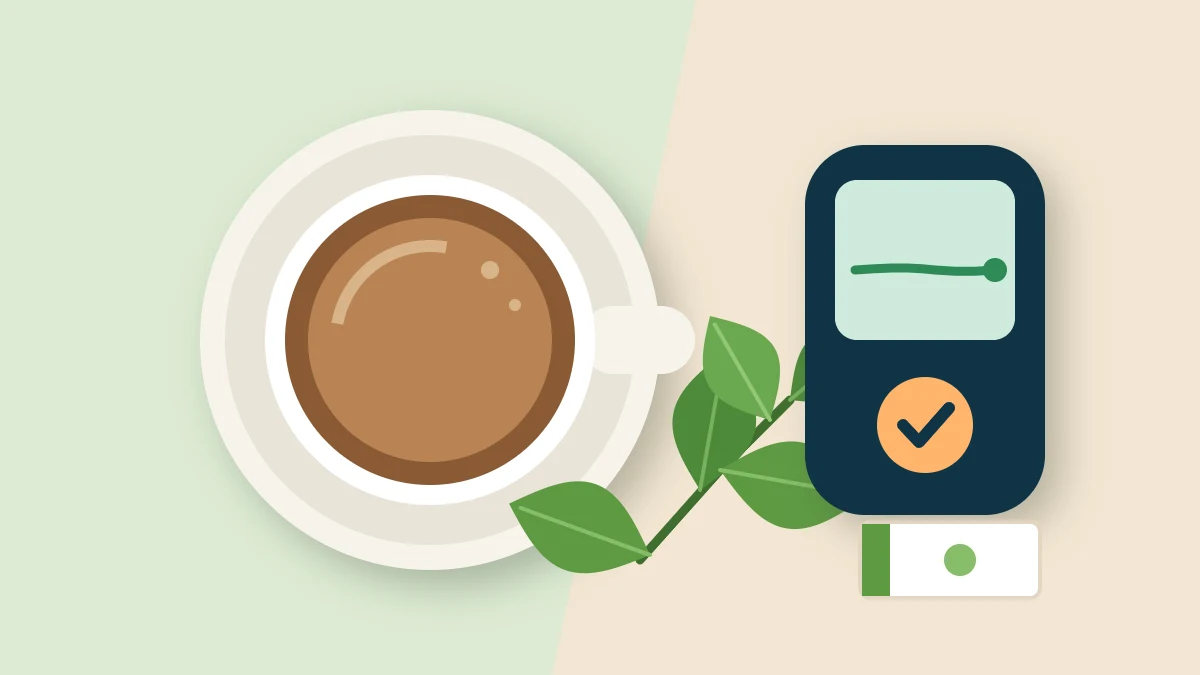
If you live with diabetes, sugar in your tea, karak or coffee is one of the first things you are asked to give up. So it is natural to ask: is stevia safe for diabetics, and does it raise blood sugar? In this guide we look at what the research and the diabetes guidelines actually say, which hidden ingredients in some “stevia” products can raise your blood sugar, and how to use stevia sensibly every day.
The short answer
- Pure stevia does not raise blood sugar. Your body does not digest steviol glycosides into glucose, and they contain no calories.
- The American Diabetes Association says non-nutritive sweeteners such as stevia can replace sugar-sweetened products when used in moderation.
- Read the label. Some stevia products are bulked with dextrose or maltodextrin, which do raise blood sugar.
- Stevia is not a treatment. It helps you cut sugar, but it does not replace your diet plan or medication.
Stevia for people with diabetes: what to know
What the research says, in plain language. Always follow your doctor’s advice.
Does Stevia Raise Blood Sugar in Diabetics?
No, pure stevia does not raise blood sugar. The sweet taste comes from compounds called steviol glycosides. Unlike sugar, they pass through the stomach and small intestine without being broken down. Then, in the colon, gut bacteria remove the glucose units and use them themselves. Finally, the remaining steviol is processed by the liver and leaves the body in urine.[1]
As a result, no glucose reaches your bloodstream and stevia provides zero calories. Its glycaemic index is therefore effectively zero. For a detailed look at how stevia works, read What is stevia Reb-M?
What the Research Says About Stevia and Diabetes
Several clinical studies have tested stevia directly. In a well-known crossover trial, participants had a stevia-sweetened snack before lunch. Their blood sugar after the meal was clearly lower than after a sugar-sweetened snack. In addition, their insulin was lower than after both sugar and aspartame.[2]
More recently, a 2024 meta-analysis combined 26 studies with 1,439 participants. It found that stevia slightly lowered fasting blood glucose, especially in people with diabetes, high blood pressure or a higher body weight. However, stevia did not change HbA1c, the three-month marker of blood sugar control, and the authors rated the evidence as low certainty.[3]
In other words, stevia is a safe way to sweeten without sugar. Even so, it is not a medicine, and you should not expect it to lower your blood sugar on its own.
What Diabetes Guidelines Say About Stevia for Diabetics
The American Diabetes Association (ADA) gives two clear messages in its Standards of Care.[4] First, water is the best drink for people with diabetes or prediabetes. Second, non-nutritive sweeteners, which include stevia, can be used instead of sugar-sweetened products when used in moderation, to reduce overall calories and carbohydrates.
You may also have read that the World Health Organization advises against sweeteners. In fact, its 2023 guideline is about weight control in the general population. It is a conditional recommendation, and it explicitly does not apply to people who already have diabetes.[5]
Read the Label: Hidden Sugars in Some Stevia Products
Pure stevia extract is so sweet that one serving weighs only about 15–20 mg. For this reason, every tabletop stevia product contains a carrier that gives it volume. That carrier is what decides whether a stevia sweetener is truly suitable for diabetics.
| Carrier on the label | Effect on blood sugar | Suitable for diabetics? |
|---|---|---|
| Erythritol | None | Yes |
| Allulose | Practically none | Yes |
| Inulin (fibre) | Very low | Yes, in normal amounts |
| Dextrose (glucose) | Raises it quickly | Not ideal |
| Maltodextrin | Raises it quickly | Not ideal |
| Sugar (“stevia blend”) | Raises it | No |
One sachet with dextrose adds only a small amount of glucose. Still, several sachets a day add up, and there is no reason to choose them when better options exist. Therefore, check the ingredient list and the carbohydrate line before you buy.
Stevia With Erythritol: Is It Suitable for Diabetics?
Erythritol is a sugar alcohol found naturally in fruits such as pears, melons and grapes. It has practically no calories and does not raise blood sugar or insulin. That is why it is the most common partner for stevia in sweeteners made for diabetics and for people on low-carb diets.
In 2023, an observational study in Nature Medicine linked high blood levels of erythritol with heart attacks and strokes.[6] However, most participants already had heart disease, and an observational study cannot prove cause and effect. Moreover, the body makes erythritol itself, so high levels may be a sign of metabolic problems rather than their cause. The US FDA reviewed the study and called for further research, while its safety assessment of erythritol stayed unchanged.[7] In addition, EFSA re-evaluated erythritol in 2023 and set a safe daily intake of 0.5 g per kg of body weight.[8]
For context, the study gave volunteers 30 g of erythritol in one drink. In comparison, a Lucarise sweetener sachet weighs 1 g in total. If you have heart disease, however, talk to your doctor about which sweetener is right for you.
How Much Stevia Is Safe per Day?
International food-safety authorities have set an acceptable daily intake (ADI) for stevia of 4 mg per kg of body weight per day, expressed as steviol. In 2024, the European Food Safety Authority reviewed the evidence again and kept this limit.[9] For a 70 kg adult, that equals roughly 1 g of pure stevia Reb-M every day, for life. By comparison, one cup of tea needs only about 15–20 mg, so normal use stays far below the limit.
Practical Tips on Using Stevia for Diabetics
- Start with less: stevia Reb-M’s sweetness lasts a little longer than sugar’s, so one sachet is often enough for a cup.
- Look at the whole drink: milk contains natural milk sugar (lactose). A no-added-sugar karak or latte is lower in carbohydrates than a sugary one, but it is not carbohydrate-free.
- Check your own response: if you use a glucose meter or a sensor, test before and two hours after a new drink to see how it affects you.
- Use it in cooking: stevia is heat-stable, so it also works in porridge, yoghurt and baking. Remember, though, that flour and fruit still contain carbohydrates.
- Keep water first: as the ADA advises, water remains the best everyday drink.
For example, to make a no-added-sugar karak tea, brew black tea with cardamom, add milk and finish with one sachet of stevia instead of two spoons of sugar.
Lucarise Stevia Reb-M Sachets
We made our tabletop sweeteners with diabetics and anyone cutting sugar in mind. Each 1 g sachet contains leaf-extracted stevia Reb-M blended with erythritol, with no added sugar, dextrose or maltodextrin. Reb-M is the cleanest-tasting part of the stevia leaf, so you get sweetness without the bitter aftertaste of ordinary stevia.
- Stevia Reb-M Sweetener – Classic: neutral sweetness for tea, coffee and baking.
- Stevia Reb-M Sweetener – Cardamom: with a hint of cardamom, made for karak and Arabic coffee.
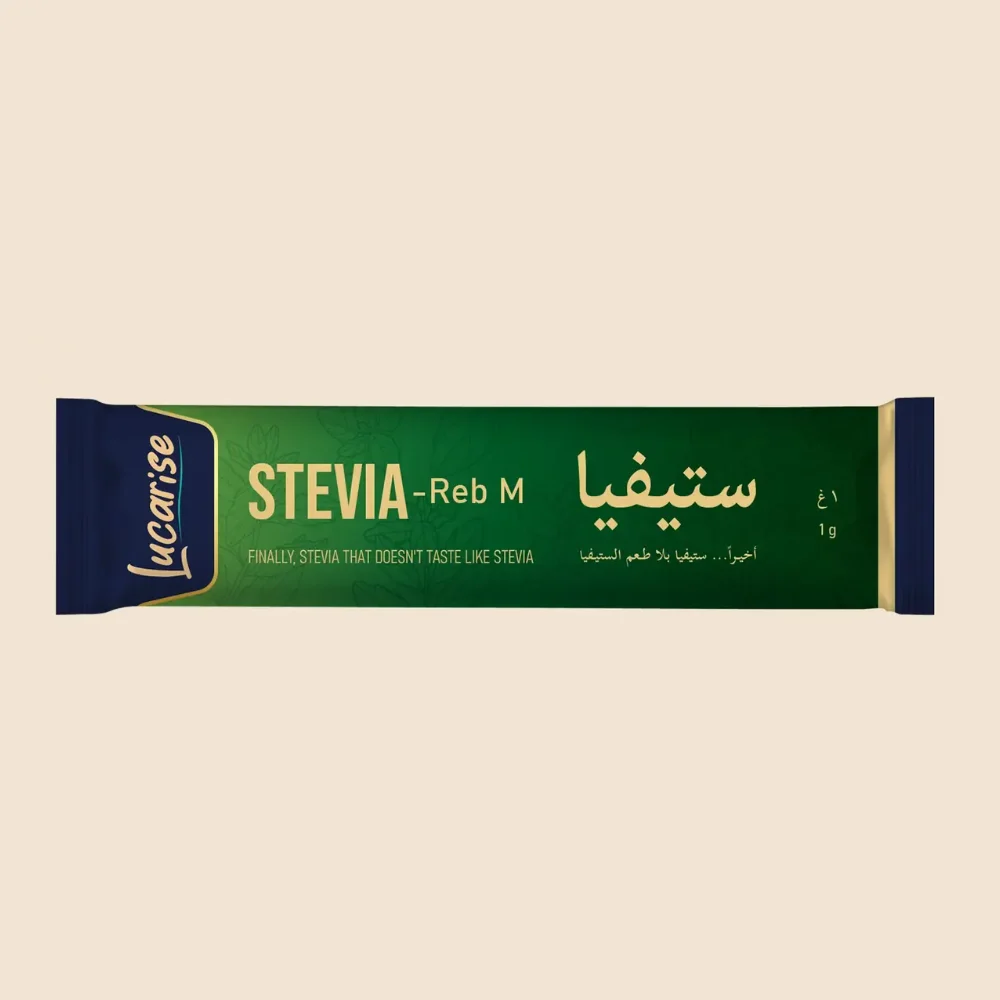
Finally, stevia that doesn’t taste like stevia
Two 1 g sachets, Classic and Cardamom, each blending stevia Reb-M with erythritol. One sachet per cup is a good start.
Keep reading
Stevia for Diabetics: FAQ
Is stevia safe for type 1 and type 2 diabetes?
Yes. Stevia does not contain carbohydrates that need insulin, so it suits both types. Nevertheless, everyone’s plan is different, so follow the advice of your doctor or dietitian.
Can stevia cause low blood sugar with diabetes medication?
At normal sweetening amounts, this is not expected. The small effects on blood sugar seen in some studies used much larger doses. If you take insulin or tablets that can cause hypoglycaemia, however, tell your doctor about any major change in your diet.
Is stevia suitable during pregnancy or for gestational diabetes?
Food-safety authorities found no harmful effects of steviol glycosides on reproduction or development, and the ADI covers the whole population. Even so, pregnant women should follow their doctor’s advice.
Is stevia better than artificial sweeteners for diabetics?
Stevia, sucralose and aspartame all leave blood sugar unchanged. The main differences are taste, origin and personal preference. Many people choose stevia because it comes from a plant.
Does stevia break a fast?
Pure stevia has no calories and does not raise blood sugar or insulin, so a small amount in black coffee or tea is unlikely to affect a fast. Check the carrier, though: dextrose or maltodextrin do add calories.
Medical note
This article is for general information only and does not replace advice from your doctor or dietitian. If you have diabetes, discuss any change in your diet or medication with your healthcare team.
Related reading: comparing all your options? See our guide to natural sweeteners.
References
- Magnuson BA, Carakostas MC, Moore NH, Poulos SP, Renwick AG. Biological fate of low-calorie sweeteners. Nutrition Reviews. 2016;74(11):670–689. doi:10.1093/nutrit/nuw032
- Anton SD, Martin CK, Han H, et al. Effects of stevia, aspartame, and sucrose on food intake, satiety, and postprandial glucose and insulin levels. Appetite. 2010;55(1):37–43. doi:10.1016/j.appet.2010.03.009
- Zare M, Zeinalabedini M, Ebrahimpour-Koujan S, Bellissimo N, Azadbakht L. Effect of stevia on blood glucose and HbA1C: A meta-analysis. Diabetes & Metabolic Syndrome: Clinical Research & Reviews. 2024;18(7):103092. doi:10.1016/j.dsx.2024.103092
- American Diabetes Association Professional Practice Committee. 5. Facilitating Positive Health Behaviors and Well-being to Improve Health Outcomes: Standards of Care in Diabetes—2025. Diabetes Care. 2025;48(Suppl 1):S86–S127. diabetesjournals.org
- World Health Organization. WHO advises not to use non-sugar sweeteners for weight control in newly released guideline. 15 May 2023. who.int
- Witkowski M, Nemet I, Alamri H, et al. The artificial sweetener erythritol and cardiovascular event risk. Nature Medicine. 2023;29:710–718. doi:10.1038/s41591-023-02223-9
- US Food and Drug Administration. An evaluation of the article “The artificial sweetener erythritol and cardiovascular event risk”. fda.gov
- EFSA Panel on Food Additives and Flavourings (FAF). Re-evaluation of erythritol (E 968) as a food additive. EFSA Journal. 2023;21(12):8430. doi:10.2903/j.efsa.2023.8430
- EFSA FAF Panel. Scientific opinion on the extension of the authorisation of use of the food additive steviol glycosides (E 960a–d) and the modification of the acceptable daily intake (ADI) for steviol. EFSA Journal. 2024. doi:10.2903/j.efsa.2024.9045
Try Lucarise before you buy
Free samples are available for cafés, hotels, offices and distributors in Oman and the GCC.


