
Walk down any supermarket aisle and the word “natural” is everywhere: on honey, on date syrup, on stevia, even on products that are mostly sugar. If you are trying to cut sugar from your coffee, tea or matcha, choosing between natural sweeteners can feel confusing. This guide explains the main types of sweeteners in plain language, compares them honestly, and shows why stevia Reb-M has become one of the most popular choices for people who want sweetness without sugar.
The short answer
- Sweeteners fall into four groups: sugars (including honey and date syrup), sugar alcohols such as erythritol, high-intensity plant sweeteners such as stevia and monk fruit, and artificial sweeteners such as sucralose and aspartame.
- Stevia Reb-M is a steviol glycoside, one of the sweet molecules found in the stevia leaf. It is popular because it has no calories and a cleaner, softer finish than older stevia.
- Safety: the European Food Safety Authority (EFSA) set an acceptable daily intake of 4 mg per kg of body weight for steviol glycosides and concluded in 2015 that Reb M is safe.[2][3]
- An honest caveat: in 2023 the WHO advised against relying on non-sugar sweeteners to control body weight. They are a tool for replacing sugar in drinks you already enjoy, not a health food.[1]
Natural sweeteners, side by side
Sugars, sugar alcohols and plant sweeteners compared in plain language.
Why Are People Looking for Sugar Alternatives?
Sugar gives energy and flavour, but little else. Two or three sweetened coffees, teas or lattes a day add up quickly, often without you noticing. That is why more people now look for a way to keep the taste of their favourite drinks while taking the added sugar out. Sweeteners are the tool most people reach for, and the label “natural” is often the deciding factor.
The Four Types of Sweeteners
1. Sugars, including the “natural” ones
Table sugar, honey, date syrup, maple syrup and agave are all sugars. Their natural origin does not change the fact that they carry calories and raise blood sugar. Honey and dates bring small amounts of other compounds, but they are still sugar in your cup, so they are best treated as a smaller portion of sugar rather than a sugar-free option.
2. Sugar alcohols
Erythritol, xylitol and maltitol are sugar alcohols. Small amounts occur in some fruits, and they are produced commercially for use in food. They are less sweet than sugar and add bulk, which is why they are often blended with high-intensity sweeteners. Erythritol has almost no calories. Some people notice digestive discomfort or a slight cooling sensation when they eat larger amounts of sugar alcohols.
3. High-intensity plant sweeteners
Stevia and monk fruit belong here. Their sweet compounds (steviol glycosides in stevia, mogrosides in monk fruit) are many times sweeter than sugar, so only a tiny amount is needed and they add practically no calories to a drink.
4. Artificial sweeteners
Sucralose, aspartame, acesulfame K and saccharin are made synthetically. They are approved for use in many countries, but many people prefer to avoid them and choose sweeteners that come from plants.
What Is Stevia and What Makes Reb-M Different?
The leaves of the stevia plant (Stevia rebaudiana) contain several sweet molecules called steviol glycosides. The best known are stevioside and rebaudioside A (Reb A). Older stevia products relied mainly on these two, and many people find they leave a bitter, metallic or liquorice-like aftertaste.
Rebaudioside M (Reb M) is another steviol glycoside from the same plant. EFSA describes it as a minor constituent of the leaf.[3] Reb M is commonly described as having a cleaner, more rounded sweetness and a softer finish than Reb A, which is why many modern drinks and sweetener blends use it. For a deeper look at taste and production, read our full guide: What Is Stevia Reb-M?
Why Stevia Reb-M Stands Out
- Cleaner taste. It is the version of stevia that most people find closest to sugar, with much less of the bitterness that put many drinkers off stevia in the past.
- No calories and no sugar. Steviol glycosides are not digested into glucose, so they do not raise blood sugar the way sugar does.[5] If you live with diabetes, read our guide Stevia for Diabetics and talk to your doctor.
- A little goes a long way. One small sachet is enough to sweeten a cup of coffee, karak or matcha latte.
- Reviewed for safety. EFSA concluded in 2015 that Reb M is safe and added it to the list of approved steviol glycosides (E960).[3] The same acceptable daily intake of 4 mg per kg of body weight applies.[2]
Is Stevia Reb-M Really “Natural”?
“Natural” has no single legal definition, so it is worth being precise. Reb M is a molecule that occurs in the stevia leaf, so it is plant-derived at the molecular level. However, it is present in the leaf only in small amounts. Because of that, many commercial producers make Reb M by converting the more abundant stevia glycosides with enzymes, or by fermentation, instead of extracting it directly. The European Union authorised the enzymatic route in 2021, with the same use levels and the same acceptable daily intake as other steviol glycosides.[4]
The end product is the same molecule and is assessed under the same safety limits, but we think you deserve to know how this works. Our guide What Is Stevia Reb-M? explains the three production routes. Our stevia is made and packed in our own factory in Oman.
Natural Sweeteners Compared
| Sweetener | Type | Calories | Taste and notes |
|---|---|---|---|
| Table sugar | Sugar | About 4 kcal per gram | Familiar taste; raises blood sugar |
| Honey, date syrup | Natural sugar | Calories; mostly sugars | Rich flavour; still counts as sugar |
| Erythritol | Sugar alcohol | Almost none | Less sweet than sugar; slight cooling feel; large amounts may upset digestion |
| Stevia (stevioside, Reb A) | Plant, high-intensity | None | Can taste bitter or leave a lingering finish |
| Stevia Reb-M | Plant, high-intensity | None | Cleaner, softer finish; the most sugar-like stevia |
| Monk fruit | Plant, high-intensity | None | May have a fruity aftertaste |
| Sucralose, aspartame | Artificial | None | Sugar-like taste but synthetic |
What Do the Health Authorities Say?
EFSA reviewed steviol glycosides in 2010 and set an acceptable daily intake of 4 mg per kg of body weight per day.[2] It later evaluated Reb M specifically and concluded it was safe for addition to the approved list.[3] EFSA also noted that intake could exceed this limit if sweeteners were used at the maximum proposed levels in many foods at once, so moderation matters.[2]
The WHO takes a more cautious view. In May 2023 it issued a conditional recommendation not to use non-sugar sweeteners, including stevia and its derivatives, to control body weight or reduce the risk of noncommunicable diseases. The guidance applies to everyone except people with pre-existing diabetes, and the WHO noted that the links seen in studies might be affected by other factors in participants’ lives.[1]
Our reading is simple: a zero-calorie sweetener is a useful way to cut added sugar in a drink, but it works best as part of a balanced diet. It is not a shortcut to weight loss.
How to Choose a Sweetener
- For hot drinks, coffee and matcha: a Reb-M based sweetener gives sweetness without calories and with the least aftertaste.
- For baking: sweeteners that include a bulking ingredient such as erythritol behave better than pure stevia, which has no volume.
- If you prefer minimal processing: small amounts of honey or dates are fine, but count them as sugar.
- Read the label. Some “stevia” packets are mostly carriers such as dextrose or maltodextrin, which are carbohydrates. Look for what the sweetener is actually blended with.
- Start small. Sweeteners are far sweeter than sugar, so begin with half a sachet and adjust.
Lucarise Stevia
Our stevia sachets combine Reb-M with erythritol for a clean, balanced sweetness in tea, karak, coffee and matcha. Explore the range in our stevia collection, including classic stevia and flavored stevia.
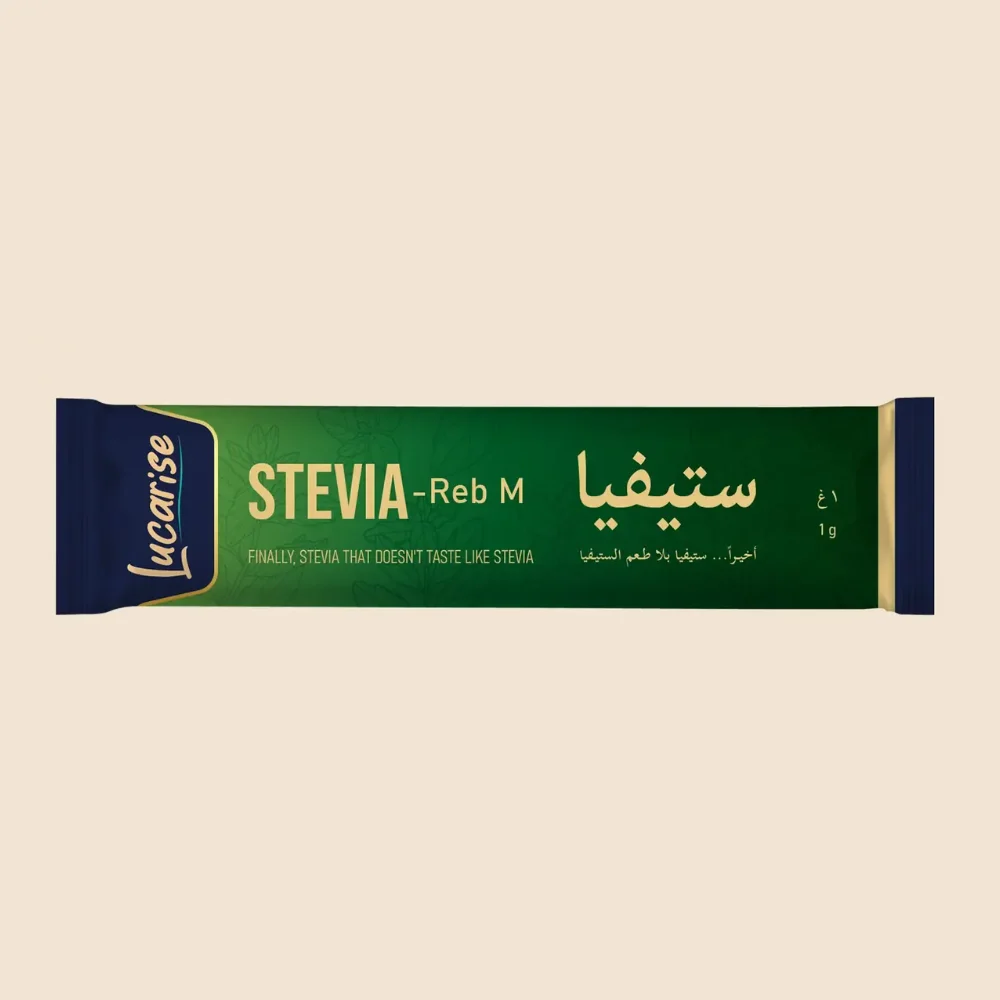
Finally, stevia that doesn’t taste like stevia
Two 1 g sachets, Classic and Cardamom, each blending stevia Reb-M with erythritol. One sachet per cup is a good start.
Keep reading
Try it: add up the sugar in your daily drinks with our sugar calculator.
Frequently Asked Questions
What is the healthiest natural sweetener?
There is no single winner. Plant sweeteners such as stevia add no calories and do not raise blood sugar, while honey and date syrup add calories and sugar. Which is best depends on your goal, your health and how much you use. If you have a medical condition, ask your doctor.
Is stevia better than sugar?
For cutting calories and added sugar in drinks, yes. Stevia adds no calories and does not raise blood sugar. It does not provide the bulk or browning of sugar in baking, and the WHO advises against relying on sweeteners for weight control.[1]
Is Reb-M better than regular stevia?
Reb M is mainly better in taste: it is described as cleaner and less bitter than Reb A. All steviol glycosides are assessed under the same acceptable daily intake.[2]
Is stevia Reb-M safe to use every day?
Within the acceptable daily intake of 4 mg per kg of body weight, EFSA considers steviol glycosides safe.[2] Because intake adds up across everything you eat and drink, moderation matters. Pregnant women, children and people with health conditions should check with a doctor.
Does stevia Reb-M have an aftertaste?
Much less than older stevia. Most people find it clean, though a few still notice a slight lingering sweetness because taste is personal. Try a small amount first.
Can I use stevia Reb-M in hot drinks?
Yes. Steviol glycosides hold up well in hot drinks such as coffee, karak tea and matcha lattes, so you can stir a sachet straight into your cup.
References
- World Health Organization. WHO advises not to use non-sugar sweeteners for weight control in newly released guideline. 15 May 2023. who.int
- European Food Safety Authority. EFSA evaluates the safety of steviol glycosides. 14 April 2010. efsa.europa.eu
- FoodNavigator. EFSA backs safety of new stevia form. 14 December 2015. foodnavigator.com
- TraceOne. EU amends food additives regulations: steviol glycosides (E960) and rebaudioside M (Commission Implementing Regulation (EU) 2021/1156). traceone.com
- Magnuson BA, Carakostas MC, Moore NH, Poulos SP, Renwick AG. Biological fate of low-calorie sweeteners. Nutrition Reviews. 2016;74(11):670–689. doi:10.1093/nutrit/nuw032
Try Lucarise before you buy
Free samples are available for cafés, hotels, offices and distributors in Oman and the GCC.


