How much sugar is in your drinks? The World Health Organization advises adults to keep free sugars under 50 g a day (about 12 teaspoons) and ideally under 25 g (about 6 teaspoons). Drinks use that up fast: a can of regular cola has 35 g, and a cup of karak made with condensed milk can have more than 20 g. Add up what you drank today with the calculator below.

What did you drink today?
Sugar from your drinks today
How the sugar calculator works
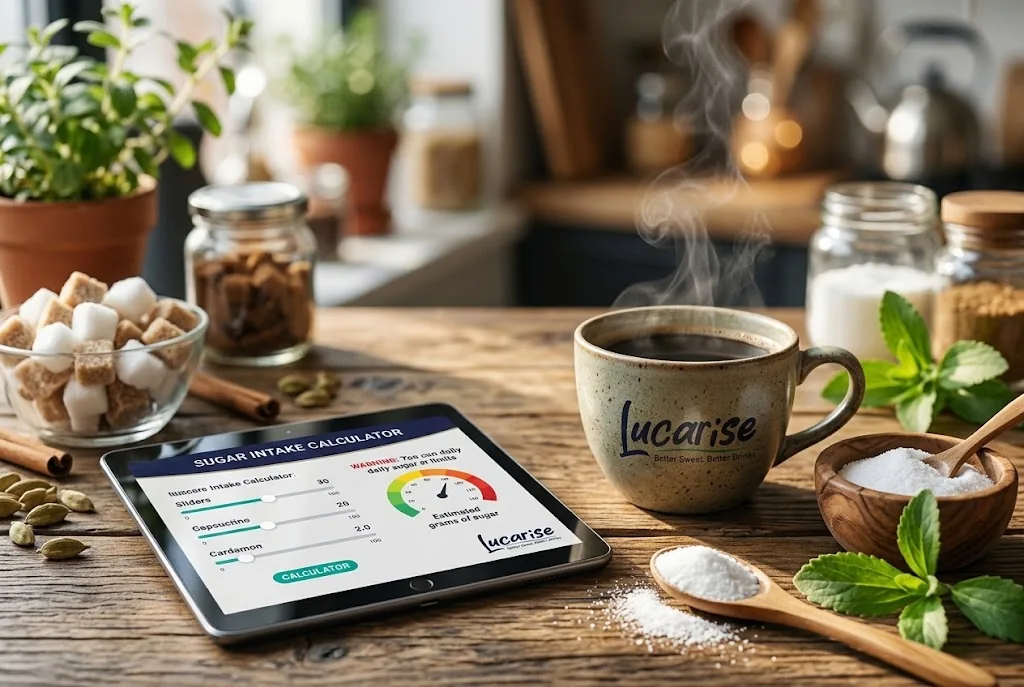
Tap the + button for each drink or spoonful you had today. The calculator multiplies each one by its average sugar content, adds them up and shows the total in grams and in teaspoons (1 teaspoon of granulated sugar weighs about 4.2 g)3. It then compares the total with the two WHO figures12:
- 50 g a day: less than 10% of daily energy from free sugars, the WHO’s main recommendation for an adult eating about 2,000 calories.
- 25 g a day: 5% of daily energy, which the WHO says may bring additional health benefits.
It also shows the calories that sugar adds (about 4 calories per gram) and how much sugar you would have over a year at the same rate. The sugar values come from USDA data for sugar, sweetened condensed milk and orange juice3, the Nestlé UK label for a 16 g 3-in-1 sachet4 and Coca-Cola’s figure for a 330 ml can5.
Sugar in popular drinks in the Gulf
| Drink | Sugar | Teaspoons | Share of 50 g |
|---|---|---|---|
| 1 teaspoon of sugar | 4.2 g | 1 | 8% |
| 1 tablespoon of sweetened condensed milk | about 10 g | 2.4 | 20% |
| Karak made with 2 tbsp condensed milk + 1 tsp sugar (example) | about 24 g | 5.8 | 48% |
| 1 sachet of 3-in-1 coffee (16 g) | about 8 g | 2 | 17% |
| 1 can of regular cola (330 ml) | about 35 g | 8.3 | 70% |
| 1 glass of orange juice (240 ml) | about 21 g | 5 | 42% |
| 1 Lucarise latte, cappuccino or karak | 0 g added | 0 | 0% |
A single can of regular soft drink takes up most of the daily limit; the WHO notes a can can hold up to 40 g of free sugars2. Hot drinks add up more quietly: two cups of karak and a 3-in-1 coffee at work can pass 50 g before any food is counted.
What counts as “free sugar”?
The WHO limit is for free sugars: sugar added to food and drinks by the maker, the cook or you, plus the sugar naturally present in honey, syrups and fruit juices1. That is why a glass of 100% orange juice counts. Sugar inside whole fresh fruit and the natural sugar in plain milk are not counted.
Easy ways to cut sugar in your drinks
- Cut down step by step: go from two teaspoons to one and a half, then one. Taste adjusts within a few weeks.
- Choose drinks with no added sugar: for example a sugar-free cappuccino or a sugar-free matcha latte, then sweeten only as much as you need.
- Rethink karak: condensed milk brings most of the sugar. Using less of it, or plain milk, makes the biggest difference. See our karak tea recipe.
- Swap juice and soft drinks for water or unsweetened tea most of the time.
- If you use a sweetener such as stevia, work out the right amount with our stevia to sugar converter.
A note on sweeteners: the WHO advises against using non-sugar sweeteners as a way to control body weight6. They can help replace sugar in a drink, but the long-term goal is to get used to less sweetness overall. If you have diabetes or another health condition, follow your doctor’s advice. Counting caffeine as well? Try our caffeine calculator.
Use this calculator on your website
Schools, clinics, bloggers and nutrition writers are welcome to share this sugar calculator. Please link to this page as the source: <a href="https://lucarise.com/sugar-calculator/">Sugar in drinks calculator by Lucarise</a>
More free tools: see all our drink calculators in one place.
Sugar in drinks: frequently asked questions
How much sugar should you have a day?
The World Health Organization advises keeping free sugars below 10% of daily energy, which is about 50 g or 12 level teaspoons for an adult eating around 2,000 calories, and says going below 5%, about 25 g or 6 teaspoons, may bring extra benefits.
How much sugar is in a can of cola?
A 330 ml can of regular Coca-Cola contains 35 g of sugar, according to Coca-Cola. That is about 8 teaspoons and 70% of the WHO's 50 g daily limit in one drink.
How much sugar is in a cup of karak tea?
It depends on the recipe. One tablespoon of sweetened condensed milk has about 10 g of sugar, so a cup made with 2 tablespoons of condensed milk and 1 teaspoon of sugar has roughly 24 g, almost half of the WHO daily limit.
Does fruit juice count as sugar?
Yes. The WHO counts the sugars naturally present in fruit juices as free sugars, together with added sugar, honey and syrups. Sugar inside whole fresh fruit does not count.
How much sugar is in a 3-in-1 coffee sachet?
One widely sold 16 g 3-in-1 sachet lists 8.4 g of sugars per mug, about 2 teaspoons. Three sachets a day add up to around half of the WHO daily limit.
How do café drinks compare? See our data on how much sugar is in karak, Spanish latte and 8 other popular café drinks.
Sources
- World Health Organization. Healthy diet, fact sheet. who.int
- World Health Organization. WHO calls on countries to reduce sugars intake among adults and children. 4 March 2015. who.int
- USDA FoodData Central. Sugars, granulated; Milk, canned, condensed, sweetened (FDC 171275); Orange juice, raw (FDC 169098). fdc.nal.usda.gov
- Nestlé UK. NESCAFÉ 3in1 product page: nutrition per 16 g sachet made up with 200 ml water. nescafe.com
- Coca-Cola. How much sugar is in Coca-Cola Original Taste? coca-cola.com
- World Health Organization. WHO advises not to use non-sugar sweeteners for weight control in newly released guideline. 15 May 2023. who.int
This page was written by the Lucarise product team at Food Legend Industries, Oman, and last reviewed in October 2026. It is general information and does not replace advice from a doctor or dietitian.