

Foam on top, a smooth coffee underneath, and a gentle, milky taste: the cappuccino is one of the most ordered coffee drinks in the world. But what is cappuccino exactly, why is it called that, and how is it different from a latte? And can you get the same café feeling at home with a simple sachet and a cup of hot water?
This guide explains what a cappuccino is, what it is made of, where the name comes from, how much caffeine it has and how to make one at home, with or without an espresso machine. We also explain how our own Lucarise cappuccino range works: instant sachets sweetened with stevia Reb-M, with no added sugar.
Key takeaways
- A cappuccino is an espresso-based drink made with steamed milk and a layer of milk foam[1].
- The classic recipe is equal thirds of espresso, steamed milk and foam, served in a small cup of roughly 150 to 180 ml[1].
- The name comes from the Capuchin friars: the light brown colour of the drink resembles the colour of their hooded robes[1].
- One espresso shot has about 77 mg of caffeine[2], and EFSA considers up to 400 mg a day safe for most adults[3].
- An instant cappuccino sachet combines instant coffee, creamer and milk powder, so you only add hot water or hot milk. It is convenient, but it is not the same as an espresso-machine drink.
What makes a cappuccino
Espresso, milk and foam: the classic, and how instant versions compare.
What Is Cappuccino?
A cappuccino is an espresso-based coffee drink prepared with steamed milk and topped with a layer of milk foam[1]. In the traditional recipe the three parts are equal: one third espresso, one third steamed milk and one third foam. The result is stronger than a latte, lighter than a plain espresso and easy to recognise by its thick, airy cap.
Because a cappuccino is served in a small cup, the flavour stays concentrated. You taste the coffee first, then the sweetness of the warm milk, and the foam softens the whole drink.
Where Does the Name Cappuccino Come From?
The word comes from the Capuchin friars, a religious order whose members wore brown, hooded robes. The drink’s light brown colour, the result of mixing dark coffee with milk, reminded people of that colour[1].
Coffeehouses in Vienna served a similar drink called a “Kapuziner” in the late 1700s, and the Italian word “cappuccino” appears in writing by the 19th century. When espresso machines arrived in the early 20th century, the modern cappuccino with steamed milk and foam took shape[1].
What Is in a Cappuccino?
1. Espresso
Espresso is a small, concentrated coffee made by forcing hot water through finely ground coffee under pressure. It gives the cappuccino its body, its bitterness and its caffeine.
2. Steamed milk
Milk heated with steam becomes sweeter and smoother. The natural milk sugar (lactose) is more noticeable when the milk is warm, which is why a cappuccino tastes sweet even without added sugar.
3. Milk foam
The foam is milk with a lot of tiny air bubbles. It is thicker and drier than the silky microfoam in a latte, and it is what makes a cappuccino look and feel different.
Cappuccino vs Latte vs Flat White
| Cappuccino | Latte | Flat white | |
|---|---|---|---|
| Milk | Steamed milk plus thick foam | Mostly steamed milk, thin foam | Steamed milk with no thick foam |
| Size | Small, about 150 to 180 ml | Larger and milkier | Small to medium |
| Taste | Strong coffee, airy and light | Mild, creamy, milky | Smooth, coffee-forward |
| Best for | Those who like foam and a clear coffee taste | Those who like a milky, gentle drink | Those who like silky milk without foam |
A cappuccino is typically smaller than a caffe latte and has thicker foam, while a flat white has steamed milk with no foam on top[1].
How Much Caffeine Is in a Cappuccino?
The caffeine in a cappuccino comes from the espresso, not from the milk. One espresso shot has about 77 mg of caffeine, and a double shot about 154 mg, according to figures based on the USDA database[2]. The real amount varies with the beans, the size of the shot and how it is brewed.
For context, the European Food Safety Authority concluded that up to 400 mg of caffeine a day and single doses up to 200 mg do not raise safety concerns for healthy adults, while pregnant and breastfeeding women should stay below 200 mg a day[3]. An instant cappuccino sachet is made with instant coffee instead of espresso, and the caffeine content depends on the brand, so check the label of the product you buy.
What Is an Instant Cappuccino?
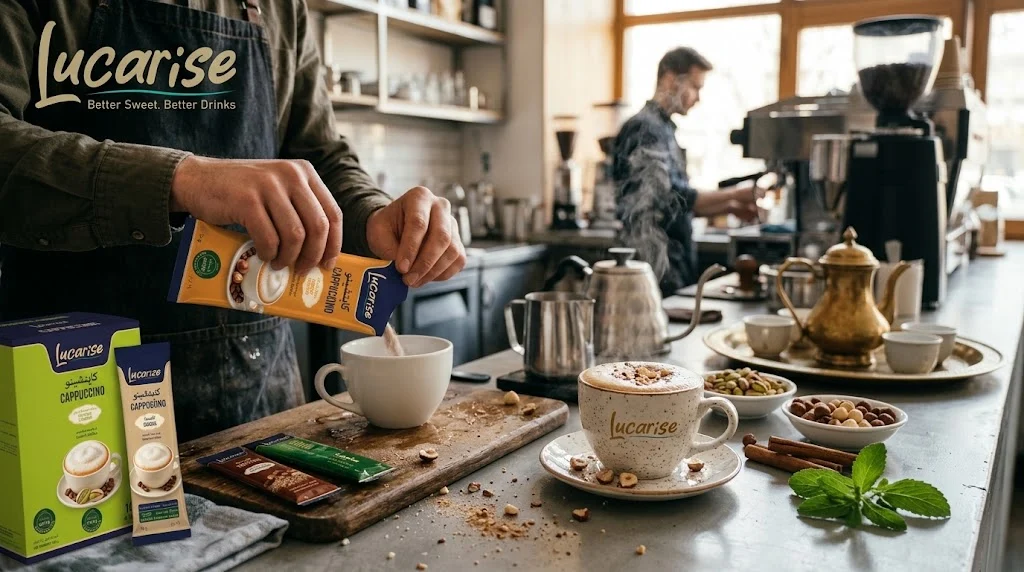
An instant cappuccino is a ready-to-mix powder that recreates the cappuccino experience without a machine. Instead of espresso and steamed milk, the sachet contains instant coffee, a creamer and milk powder, plus a sweetener. When you add hot water or hot milk and stir, the creamer and milk give the drink a smooth body and a soft layer of foam.
It is not identical to a barista-made cappuccino: the foam is lighter and the coffee is milder. What you get in return is speed, no equipment and the same result every time, which is why instant cappuccino is popular at the office, while travelling and at home.
What is inside a Lucarise cappuccino?
Our Lucarise cappuccino range is made in the Sohar Free Zone in Oman. The main sachet contains instant coffee powder, a non-dairy creamer based on coconut oil, skimmed milk powder and foamer powder, with no added sugar. The topping cappuccinos are sweetened with stevia Reb-M in the mix, and the classic cappuccino comes with a separate stevia sachet. The range comes in a box of 10 sachets, and each sachet makes one cup:
- Cappuccino with Gold Coffee Topping: with a 2 g stick of freeze-dried 100% Arabica gold coffee to sprinkle over the foam.
- Cappuccino with Hazelnut Topping: a separate sachet of pure toasted hazelnut to add a nutty aroma and a light crunch.
- Cappuccino with Pistachio Topping: a separate sachet of toasted pistachio granules for a nutty aroma and a light crunch.
- Classic Cappuccino: with a separate 1 g stevia sachet, so you can sweeten it your way: all of it, half or none.
One honest note: our cappuccinos contain milk, so they are not suitable for people who avoid dairy, and they are not carbohydrate-free.
How to Make Cappuccino at Home
Method 1: With an instant sachet (about a minute)
- Empty one sachet into a cup.
- Add about 150 ml of hot water or hot milk. Hot milk makes a richer, creamier cup.
- Stir well until smooth and the foam forms.
- If your box has a stevia sachet, add all of it, half or none to taste. If it has a topping sachet, sprinkle it over the foam just before serving.
Method 2: With an espresso maker or moka pot
- Brew a small, strong coffee (about one shot).
- Heat milk and froth it until it is thick and airy.
- Pour the coffee into a small cup, add the hot milk and spoon the foam on top.
Iced cappuccino
Dissolve the sachet in a little hot water and stir, then pour it over ice and add cold milk. This is an easy way to turn a sachet into a cold drink in summer. For the full method with cold foam, see our iced cappuccino recipe.
Does Cappuccino Have Sugar?
No added sugar, unless you add it. A classic cappuccino is only espresso, steamed milk and foam, so the only sugar in it is the natural milk sugar (lactose), around 6 g in a typical cup. Sugar comes in when you stir it in, add flavoured syrups or use a pre-sweetened instant mix. For more detail and a no-sugar recipe, read our guide to sugar-free cappuccino.
A plain cappuccino made with espresso and milk has no added sugar, but many instant mixes do. The World Health Organization recommends keeping free sugars below 10% of daily energy intake, which is about 50 g for an adult on a 2,000 kcal diet[4]. Three sweet drinks a day can use up a large share of that limit.
That is why our cappuccinos use stevia Reb-M instead of sugar. A fair caveat: the WHO advises against using non-sugar sweeteners for weight control[5], so treat a no-added-sugar cappuccino as a pleasant drink, not a diet tool. If you are comparing mixes, you can also read our guide on what is 3 in 1 coffee.
Is cappuccino sweet or bitter?
Neither very sweet nor very bitter. The espresso brings a mild bitterness, while the steamed milk adds a gentle natural sweetness from lactose and a creamy texture. Most people find an unsweetened cappuccino smooth and slightly sweet: less milky than a latte and less bitter than an espresso or americano.
Café-style coffee from a sachet
Lucarise cappuccinos and coffee mixes come in single sachets, made in Oman.
Making it at home from a sachet? See our guide to cappuccino sachets: how to choose and make them.
Keep reading
Frequently Asked Questions
What is cappuccino made of?
Traditionally, equal parts espresso, steamed milk and milk foam. An instant cappuccino is made of instant coffee, creamer, milk powder and a sweetener.
Is cappuccino stronger than latte?
Usually it tastes stronger because it has less milk for the same amount of espresso. The caffeine depends on the number of espresso shots, not on the name.
Does a cappuccino have a lot of caffeine?
A cappuccino made with one shot has about 77 mg of caffeine[2], less than a regular cup of filter coffee. Instant versions vary by brand.
Can I make cappuccino without a machine?
Yes. Use an instant cappuccino sachet and hot water or hot milk, or brew strong coffee in a moka pot and froth milk by hand.
Is instant cappuccino real cappuccino?
It is a convenient version of it. It does not use espresso or steamed milk, but it delivers the same creamy, foamy cup in under a minute.
Do Lucarise cappuccinos contain sugar?
No sugar is added. They are sweetened with stevia Reb-M.
References
- Wikipedia. Cappuccino. en.wikipedia.org
- Caffeine Informer. Caffeine in Cappuccino (data from the USDA FoodData Central database). caffeineinformer.com
- EFSA Panel on Dietetic Products, Nutrition and Allergies (NDA). Scientific Opinion on the safety of caffeine. EFSA Journal. 2015;13(5):4102. doi:10.2903/j.efsa.2015.4102
- World Health Organization. Healthy diet, fact sheet. who.int
- World Health Organization. WHO advises not to use non-sugar sweeteners for weight control in newly released guideline. 15 May 2023. who.int
This article was written by the Lucarise product team at Food Legend Industries, Oman, and last reviewed in October 2026. It is provided for general information and does not replace advice from a doctor or dietitian.
Try Lucarise before you buy
Free samples are available for cafés, hotels, offices and distributors in Oman and the GCC.


