
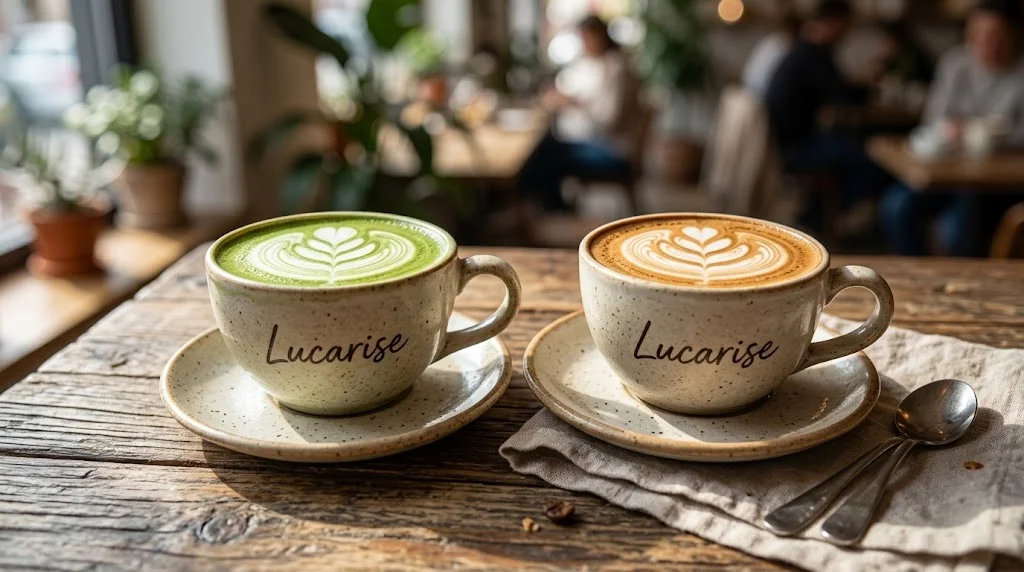
Coffee is the world’s favourite wake-up drink, but more and more people are swapping at least one cup a day for matcha. So which is better: matcha vs coffee? The honest answer is that both are good drinks with real benefits, and they simply work in different ways. Coffee gives a faster and usually stronger hit of caffeine, while matcha delivers a smaller dose together with L-theanine, an amino acid that many people feel makes the energy calmer.[2][3]
In this guide we compare matcha and coffee on caffeine, focus, sleep, health research, taste and sugar, using published science rather than marketing claims. As a result, you can choose the right cup for the right moment of your day.
Key takeaways
- Caffeine: a cup of filter coffee has about 90 mg of caffeine, while a typical serving of matcha (1–2 g of powder) has roughly 20–90 mg, depending on the matcha and the amount you use.
- Type of energy: matcha also contains L-theanine. In studies, caffeine plus L-theanine improved attention slightly more than caffeine alone, although the effects are small.
- Health: moderate coffee drinking is linked with lower risk of several diseases in large reviews, and matcha is rich in green-tea catechins. Neither is a miracle drink.
- Limits: up to 400 mg of caffeine a day is considered safe for healthy adults, and up to 200 mg for pregnant women.
- The real difference is often sugar: café lattes of either kind can hide several teaspoons of it.
Matcha or coffee?
Caffeine, taste and the way you drink them, compared so you can pick your cup.
Matcha vs Coffee at a Glance
| Matcha | Coffee | |
|---|---|---|
| What it is | Shade-grown green tea leaves, stone-ground or milled into a fine powder | Roasted seeds (beans) of the coffee plant, brewed with hot water |
| What you drink | The whole ground leaf, whisked into water or milk | An extract; the grounds are discarded |
| Caffeine per typical serving | About 20–90 mg (1–2 g of powder) | About 90 mg (200 ml filter coffee); about 80 mg (one espresso) |
| Key compounds | Caffeine, L-theanine, catechins such as EGCG, chlorophyll | Caffeine, chlorogenic acids, other polyphenols |
| How the energy feels | Gentler for many people; often described as “calm focus” | Faster and stronger; some people feel jittery |
| Taste | Vegetal, creamy and savoury (umami), with mild bitterness | Roasted, bitter and acidic, with a wide range of flavours |
| Preparation | Sift and whisk; or use a sachet or capsule | Brew, press or use a machine; or use instant coffee |
How Much Caffeine Is in Matcha vs Coffee?
Because you drink the whole leaf, matcha contains more caffeine than ordinary steeped green tea. Laboratory analyses of commercial matcha have found roughly 19–44 mg of caffeine per gram of powder.[1][2] Therefore, a light cup made with 1 g of powder may contain about 20–45 mg, whereas a strong cup made with 2 g may reach 40–90 mg.
Coffee varies too. However, the European Food Safety Authority (EFSA) uses about 90 mg for a 200 ml cup of filter coffee and about 80 mg for a 60 ml espresso as typical values.[3] A large café coffee with a double shot can easily contain 150 mg or more.
| Drink | Typical serving | Approximate caffeine |
|---|---|---|
| Matcha, light | 1 g powder | 20–45 mg |
| Matcha, strong | 2 g powder | 40–90 mg |
| Filter coffee | 200 ml | about 90 mg |
| Espresso | 60 ml | about 80 mg |
| Black tea | 220 ml | about 50 mg |
In other words, a cup of matcha usually has less caffeine than a cup of coffee, but a strong matcha can come close. For this reason, if you are sensitive to caffeine, the amount of powder matters more than the name of the drink.
Why Matcha Energy Feels Different: L-Theanine
The biggest difference between matcha and coffee is not caffeine at all. Matcha is grown in the shade for several weeks before harvest, which helps the leaf keep high levels of L-theanine, an amino acid found almost only in tea.[2] Coffee contains no L-theanine.
Several studies have tested caffeine and L-theanine together. For example, in a 2008 controlled trial the combination improved accuracy when switching between tasks and reduced distraction more than caffeine alone.[4] Similarly, a 2017 study that used matcha itself, as a drink and as a snack bar, found small improvements in attention and memory compared with a placebo.[5]
Nevertheless, it is important to keep this in proportion. A 2025 systematic review and meta-analysis concluded that L-theanine plus caffeine may give small-to-moderate benefits for attention and mood, but that the evidence is still uncertain.[6] In practice, many people describe matcha as “alert but relaxed”, and some find that switching their afternoon coffee to matcha reduces jitters. Individual responses to caffeine vary a lot, so the best test is how you feel.
Where Coffee Wins
Coffee has its own strengths. First, it is one of the most studied drinks in the world. An umbrella review in The BMJ, which pooled more than 200 meta-analyses, found that moderate coffee drinking (around three to four cups a day) was more often linked with benefit than harm, including lower risk of type 2 diabetes, liver disease and death from all causes.[7] These are observational studies, so they show an association rather than proof of cause; still, the overall picture is reassuring.
Second, coffee is the easier way to get a larger dose of caffeine. That is why it is popular before exercise: the International Society of Sports Nutrition concludes that caffeine at about 3–6 mg per kg of body weight can improve many types of exercise performance.[8] Finally, coffee offers an enormous variety of flavours, from fruity light roasts to chocolatey dark roasts.
Antioxidants: Catechins vs Chlorogenic Acids
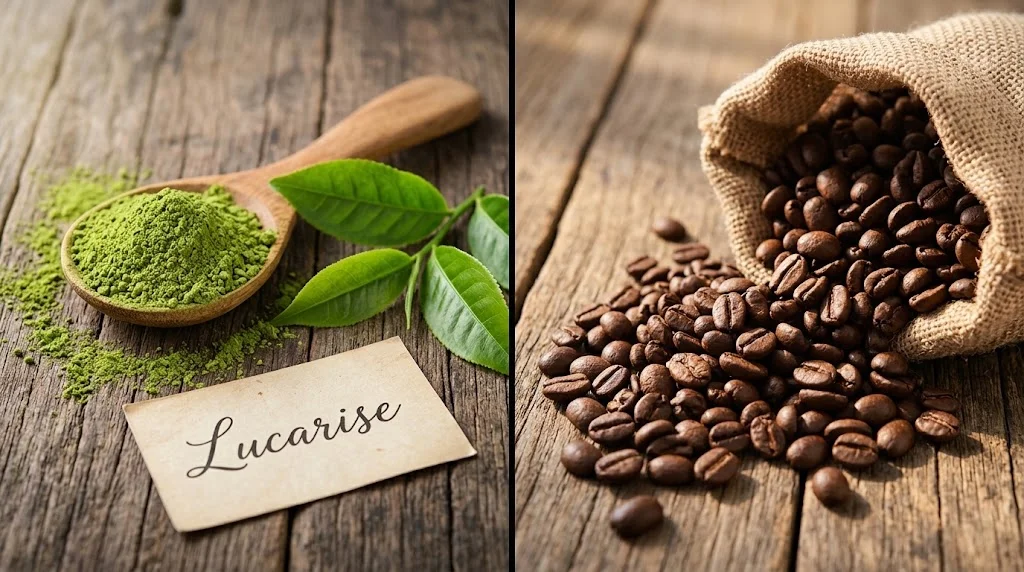
Both drinks are rich in plant polyphenols, but different ones. Matcha provides green-tea catechins, especially EGCG, and because you consume the whole leaf, a cup of matcha delivers more of them than a cup of steeped green tea.[2] Coffee, on the other hand, is one of the largest sources of chlorogenic acids in the diet.
You will often see claims that one drink has “137 times more antioxidants” than another. In fact, such numbers usually come from test-tube measurements that do not tell you what happens in the body. So the fair conclusion is simple: both drinks add useful polyphenols to a balanced diet, and neither should be treated as medicine.
Matcha vs Coffee for Sleep, Stomach and Iron
Sleep. Caffeine stays in the body for several hours. In a well-known sleep study, a large dose of caffeine taken even six hours before bedtime reduced total sleep by more than an hour.[9] Therefore, whether you choose matcha or coffee, it is wise to have your last caffeinated cup in the early afternoon if you have trouble sleeping. Because a typical matcha has less caffeine, it can be a gentler choice for an afternoon cup.
Stomach. Some people find black coffee on an empty stomach uncomfortable. If that is you, a milk-based drink such as a latte, or matcha with milk, is often easier to enjoy.
Iron. Both tea and coffee polyphenols reduce the absorption of iron from plant foods when they are drunk with a meal.[10] For this reason, people who need to watch their iron intake are usually advised to enjoy coffee or matcha between meals rather than with them.
How Much Caffeine Is Safe?
According to EFSA, healthy adults can safely have up to 400 mg of caffeine a day, and single doses of up to 200 mg do not raise safety concerns. Pregnant and breastfeeding women are advised to stay below 200 mg a day, and for children and teenagers EFSA uses about 3 mg per kg of body weight per day as a safe level.[3]
For example, two coffees in the morning (about 180 mg) plus one matcha latte in the afternoon (about 40–70 mg) stays comfortably below 400 mg. Remember to count other sources too, such as tea, cola, energy drinks and chocolate.
The Hidden Factor: Sugar
When people compare matcha vs coffee for health, they often forget the biggest variable: what goes into the cup with it. A plain espresso or a plain matcha has almost no calories. However, a café-style flavoured latte is frequently sweetened with syrup, which can add several teaspoons of sugar per cup and can easily outweigh any benefit of the tea or coffee itself.
That is why every sweetened Lucarise drink, including our matcha lattes, cappuccinos and coffee mixes, is sweetened with stevia Reb-M instead of sugar, so you get the café taste without the added sugar.
Matcha or Coffee: Which Should You Choose?
- Choose coffee if you want a strong, fast boost in the morning or before a workout, and you love the roasted flavour.
- Choose matcha if coffee makes you jittery, if you want steadier energy for studying or work, or if you need an afternoon cup with less caffeine.
- Choose both, as many people do: coffee in the morning and matcha after lunch is a popular way to stay alert while keeping total caffeine moderate.
Try Matcha and Coffee the Lucarise Way
If you would like to try both with no added sugar, our range makes it easy. For matcha, choose a creamy instant matcha latte, unsweetened pure matcha powder or Nespresso-compatible matcha capsules. For coffee, try our cappuccinos and 2-in-1 coffee mix. Want to know more about the green side? Read What is matcha?
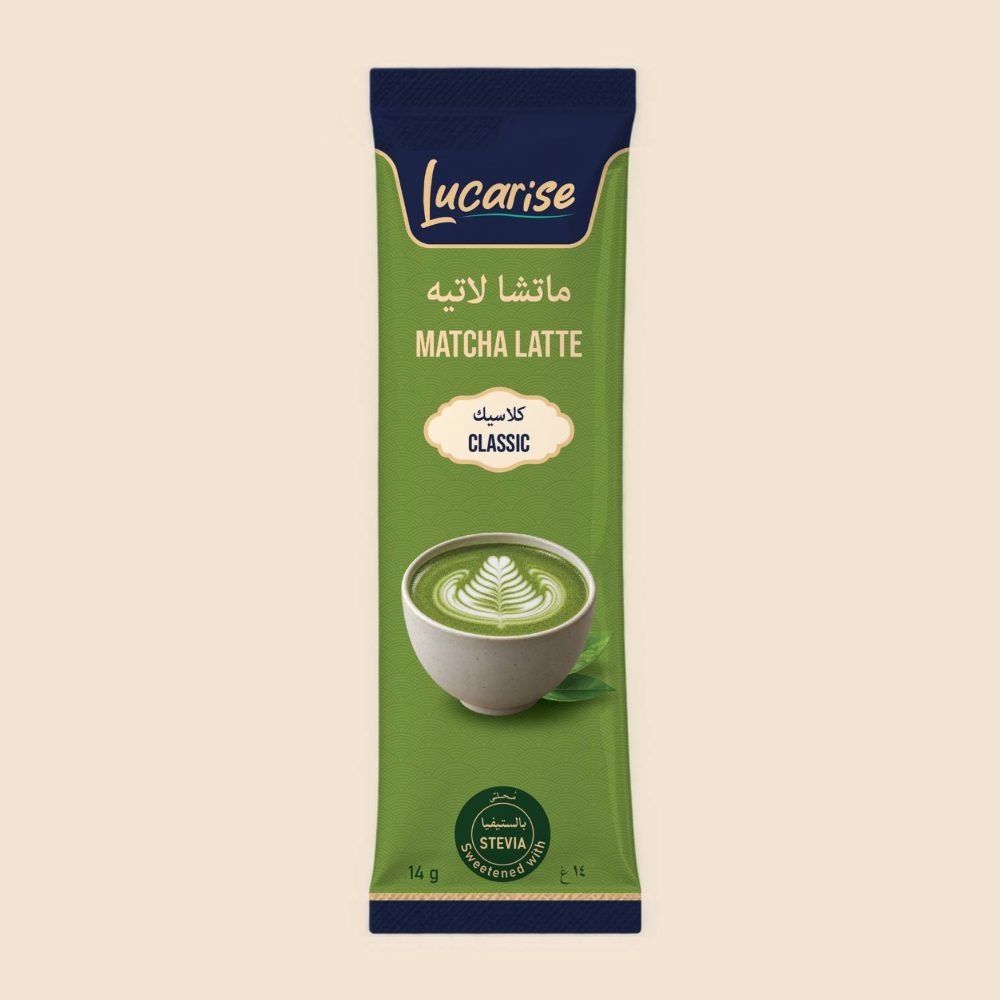
Try both, one sachet at a time
Lucarise makes instant matcha lattes, cappuccinos and coffee mixes in single sachets, made in Oman.
Keep reading
Frequently Asked Questions
Does matcha have more caffeine than coffee?
Usually not. A typical matcha made with 1–2 g of powder has about 20–90 mg of caffeine, while a cup of filter coffee has about 90 mg. A very strong matcha can match a cup of coffee, however.
Is matcha healthier than coffee?
Neither is clearly healthier. Coffee has the larger body of long-term research, and matcha offers L-theanine and green-tea catechins. In both cases, how much sugar you add matters more than the choice between them.
Will matcha keep me awake at night?
It can, because it contains caffeine. Although a typical cup has less caffeine than coffee, it is best to avoid it in the evening if you are sensitive.
Can I replace my morning coffee with matcha?
Yes. Many people switch gradually, starting with one cup a day. If you are used to a lot of coffee, a slightly stronger matcha (around 2 g) may help you avoid a caffeine dip during the change.
Can I drink matcha and coffee on the same day?
Yes, as long as your total caffeine stays within the limits above. In fact, coffee in the morning and matcha in the afternoon is a popular combination.
Is matcha or coffee better during pregnancy?
Both contain caffeine, so the same rule applies: stay below 200 mg of caffeine a day from all sources, and follow your doctor’s advice.
References
- Koláčková T, Kolofiková K, Sytařová I, Snopek L, Sumczynski D, Orsavová J. Matcha Tea: Analysis of Nutritional Composition, Phenolics and Antioxidant Activity. Plant Foods for Human Nutrition. 2020;75(1):48–53. doi:10.1007/s11130-019-00777-z
- Kochman J, Jakubczyk K, Antoniewicz J, Mruk H, Janda K. Health Benefits and Chemical Composition of Matcha Green Tea: A Review. Molecules. 2021;26(1):85. doi:10.3390/molecules26010085
- EFSA Panel on Dietetic Products, Nutrition and Allergies (NDA). Scientific Opinion on the safety of caffeine. EFSA Journal. 2015;13(5):4102. doi:10.2903/j.efsa.2015.4102
- Owen GN, Parnell H, De Bruin EA, Rycroft JA. The combined effects of L-theanine and caffeine on cognitive performance and mood. Nutritional Neuroscience. 2008;11(4):193–198. doi:10.1179/147683008X301513
- Dietz C, Dekker M, Piqueras-Fiszman B. An intervention study on the effect of matcha tea, in drink and snack bar formats, on mood and cognitive performance. Food Research International. 2017;99:72–83. doi:10.1016/j.foodres.2017.05.002
- Payne ER, Aceves-Martins M, Dubost J, Greyling A, de Roos B. Effects of tea (Camellia sinensis) or its bioactive compounds L-theanine or L-theanine plus caffeine on cognition, sleep, and mood in healthy participants: a systematic review and meta-analysis of randomized controlled trials. Nutrition Reviews. 2025;83(10):1873. doi:10.1093/nutrit/nuaf054
- Poole R, Kennedy OJ, Roderick P, Fallowfield JA, Hayes PC, Parkes J. Coffee consumption and health: umbrella review of meta-analyses of multiple health outcomes. BMJ. 2017;359:j5024. doi:10.1136/bmj.j5024
- Guest NS, VanDusseldorp TA, Nelson MT, et al. International Society of Sports Nutrition position stand: caffeine and exercise performance. Journal of the International Society of Sports Nutrition. 2021;18(1):1. doi:10.1186/s12970-020-00383-4
- Drake C, Roehrs T, Shambroom J, Roth T. Caffeine effects on sleep taken 0, 3, or 6 hours before going to bed. Journal of Clinical Sleep Medicine. 2013;9(11):1195–1200. doi:10.5664/jcsm.3170
- Hurrell RF, Reddy M, Cook JD. Inhibition of non-haem iron absorption in man by polyphenolic-containing beverages. British Journal of Nutrition. 1999;81(4):289–295. doi:10.1017/S0007114599000537
Try Lucarise before you buy
Free samples are available for cafés, hotels, offices and distributors in Oman and the GCC.


