
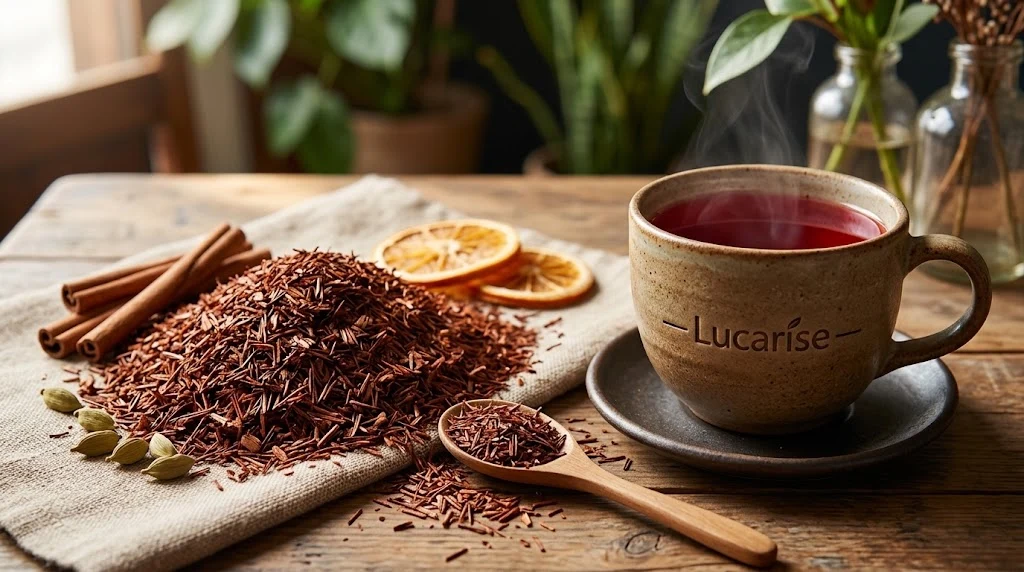
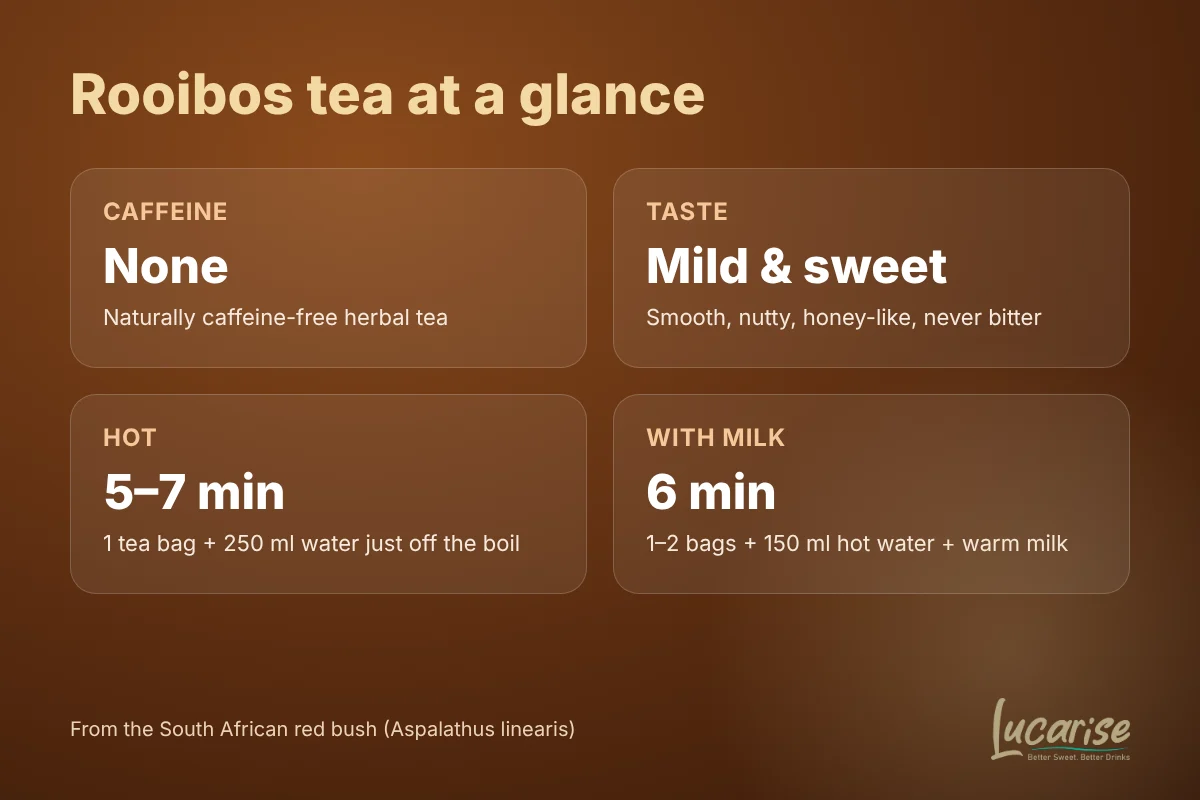
What is rooibos tea? Rooibos (say “roy-boss”) is a herbal tea made from the leaves of Aspalathus linearis, a shrub that grows only in the Cederberg region of South Africa’s Western Cape. The name means “red bush” in Afrikaans. It brews a reddish-amber cup with a mild, naturally sweet, slightly nutty taste, it is naturally caffeine-free, and it is low in tannins, so it does not turn bitter.
If you love the ritual of a cup of tea but want something you can drink late in the evening, rooibos is one of the easiest switches. It looks and drinks like a light black tea, works with or without milk, and makes an excellent iced tea. Here is what it is, how it tastes, what the research says and how to brew it.
Where rooibos comes from
Rooibos is a shrub native to a small mountainous area around the Cederberg in South Africa’s Western Cape, and it is still grown mainly there.1 The needle-like leaves are cut, bruised and left to oxidise, which turns them red and develops their sweet, woody flavour. A less common “green rooibos” is not oxidised and tastes more malty and grassy.1
What does rooibos taste like?
Red rooibos is smooth, mildly sweet and slightly nutty, with woody, honey-like notes and almost no bitterness. Because it is low in tannins, you can leave the tea bag in longer without the cup turning harsh.1 It pairs well with milk, lemon, vanilla, cinnamon or a little honey.
Does rooibos tea have caffeine?
No. Rooibos is not from the Camellia sinensis tea plant, so it is naturally caffeine-free.1 That makes it a good evening cup and a gentle option for anyone avoiding caffeine. See how it compares in our caffeine chart.
Rooibos tea benefits: what we know
- Caffeine-free and low in tannins. These are its most practical benefits: you can drink it at night, and it is gentle and never bitter.
- Naturally rich in plant compounds. Rooibos contains polyphenols such as aspalathin, which is found almost only in this plant. Much of the research on them has been done in the laboratory and in animals, and good human studies are still limited, so health claims should be treated with caution.
- An easy swap for sugary drinks. Because rooibos tastes naturally sweet, many people find they need little or no sugar.
This article is general information, not medical advice. If you are pregnant, have a health condition or take medication, ask your doctor before drinking any herbal tea regularly.

How to make rooibos tea
| Hot | Iced | With milk | |
|---|---|---|---|
| Tea | 1 tea bag (2 g) | 2 tea bags | 1 to 2 tea bags |
| Water | 250 ml just off the boil | 150 ml hot, then ice | 150 ml hot + 100 ml warm milk |
| Steep | 5 to 7 minutes | 7 minutes | 6 minutes |
| Finish with | Honey or stevia | Lemon and mint | Cinnamon or vanilla |
Rooibos vs black tea vs hibiscus
| Rooibos | Black tea | Hibiscus | |
|---|---|---|---|
| Caffeine | None | Yes | None |
| Taste | Mild, sweet, nutty | Strong, malty, can be bitter | Tart, berry-like |
| Colour | Reddish amber | Dark brown | Ruby red |
| Best with milk? | Yes | Yes | No |
Prefer something tart and fruity? Read our guide to hibiscus tea (karkade).
Try Lucarise Rooibos Tea
Lucarise Rooibos Tea is 100% South African rooibos in pyramid tea bags, with nothing added. It is smooth, naturally sweet and caffeine-free, lovely plain, with milk or over ice. Made in Sohar, Oman.
Rooibos tea: frequently asked questions
Is rooibos a real tea?
No. It is a herbal tea made from the leaves of the South African rooibos shrub, not from the Camellia sinensis tea plant.
Does rooibos tea have caffeine?
No. Rooibos is naturally caffeine-free, so you can drink it in the evening.
Can you drink rooibos with milk?
Yes. Its mild, slightly sweet taste works very well with milk, much like black tea.
Does rooibos get bitter if steeped too long?
Very little. Rooibos is low in tannins, so a longer steep makes it stronger but not harsh.
Is rooibos good iced?
Yes. Brew two tea bags in 150 ml of hot water for 7 minutes, pour over ice and add lemon and mint.
Sources
- Rooibos (Aspalathus linearis): origin, processing, caffeine and tannin content. Wikipedia


