
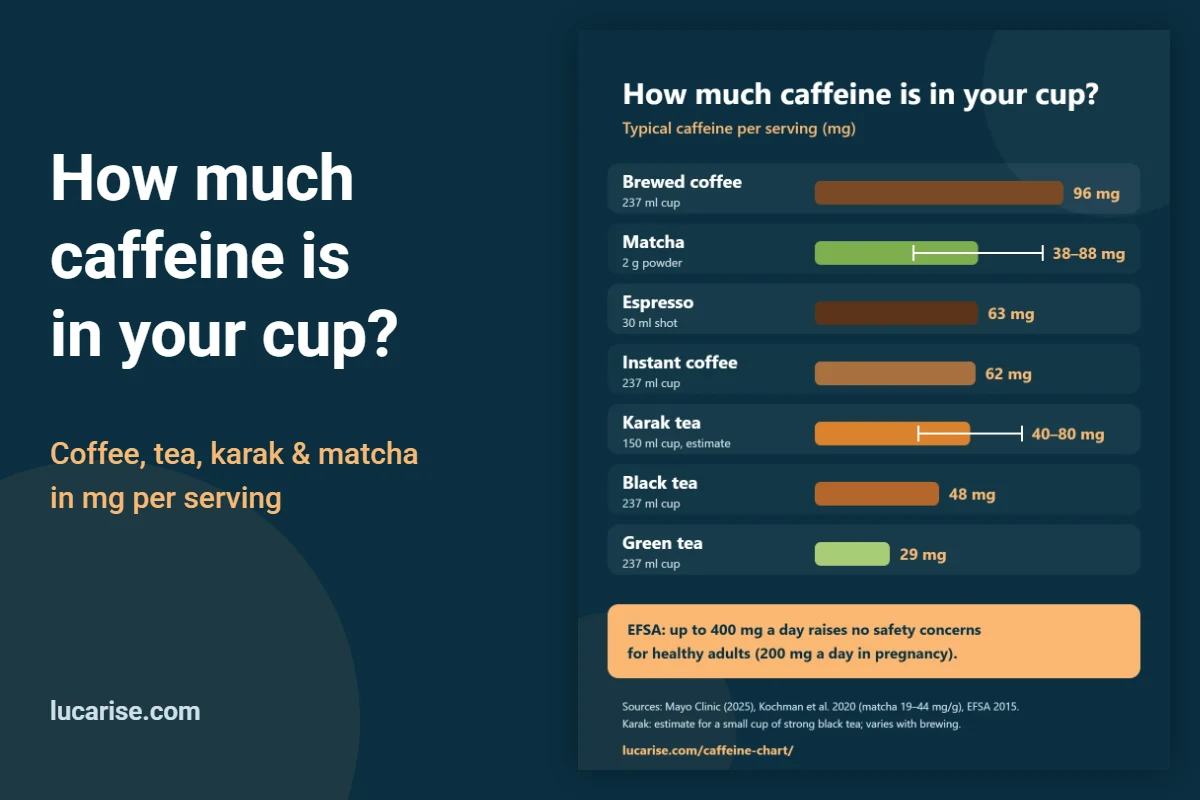
A 237 ml cup of brewed coffee has about 96 mg of caffeine, black tea about 48 mg and green tea about 29 mg[1]. Matcha varies the most: 2 g of powder can hold roughly 38–88 mg[2]. The chart below puts the drinks most people order in the Gulf side by side, and you are welcome to use it on your own site.
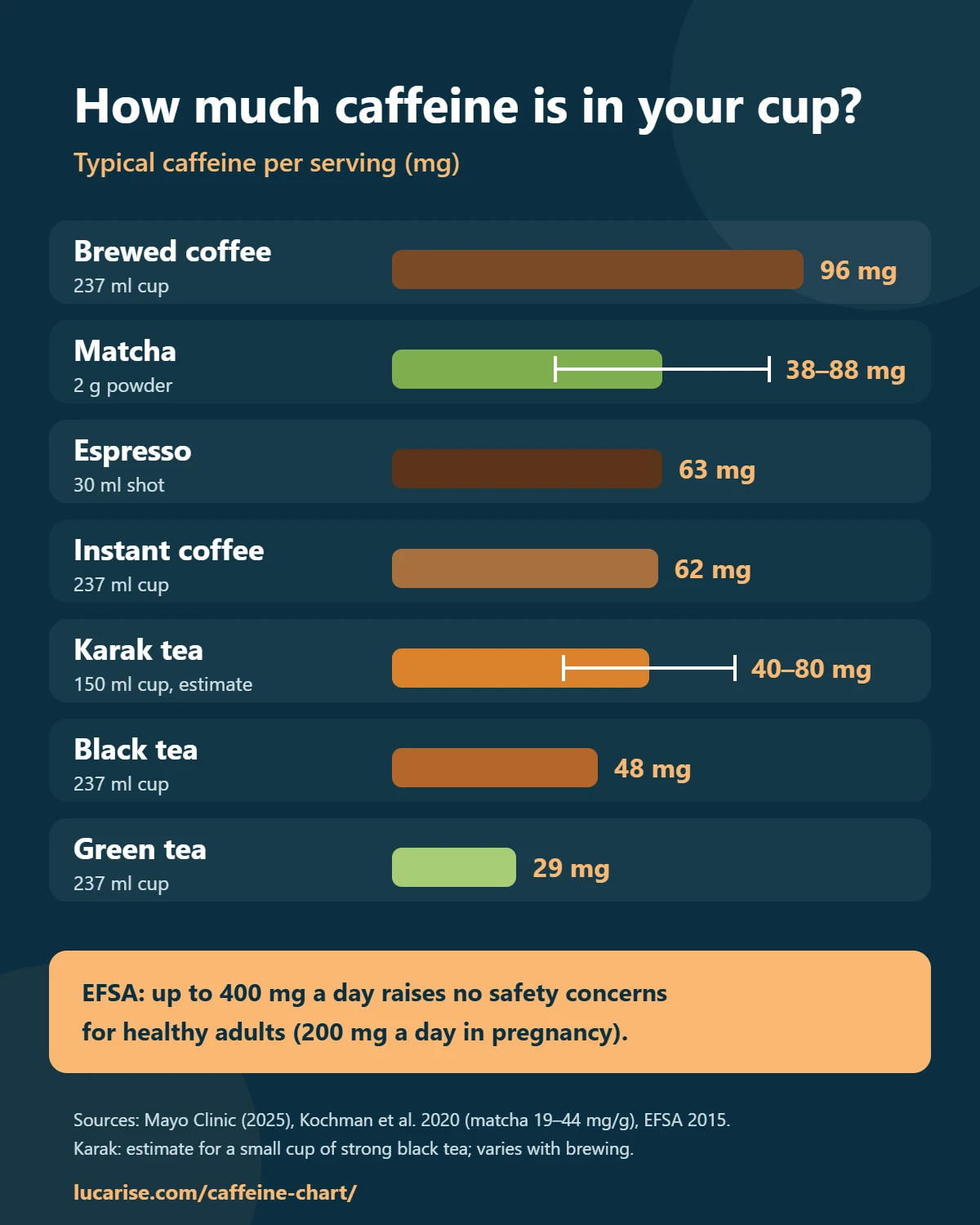
Caffeine per Serving
Try it: add up your own cups with our free caffeine calculator.
| Drink | Serving | Caffeine | Source |
|---|---|---|---|
| Brewed coffee | 237 ml cup | 96 mg | Mayo Clinic [1] |
| Matcha | 2 g powder | 38–88 mg | 19–44 mg per gram [2] |
| Espresso | 30 ml shot | 63 mg | Mayo Clinic [1] |
| Instant coffee | 237 ml cup | 62 mg | Mayo Clinic [1] |
| Karak tea | 150 ml cup | about 40–80 mg | Estimate for strong black tea |
| Black tea | 237 ml cup | 48 mg | Mayo Clinic [1] |
| Green tea | 237 ml cup | 29 mg | Mayo Clinic [1] |
Real values change with the beans or leaves, the amount used and the brewing time. For a ready-made drink, the label of the product is always the best guide.
How Many Cups Make 400 mg?
The European Food Safety Authority (EFSA) concluded that up to 400 mg of caffeine a day does not raise safety concerns for healthy adults, and up to 200 mg a day during pregnancy[3]. Using the values above, 400 mg is roughly:
| Drink | Servings to reach about 400 mg |
|---|---|
| Brewed coffee (237 ml) | about 4 cups |
| Espresso (30 ml) | about 6 shots |
| Instant coffee (237 ml) | about 6 cups |
| Black tea (237 ml) | about 8 cups |
| Karak (150 ml) | about 5–10 cups |
| Matcha (2 g) | about 4–10 servings |
| Green tea (237 ml) | about 13 cups |
Caffeine from every source adds up over the day, including soft drinks and energy drinks. This chart is general information, not medical advice.
Looking for a warm cup without caffeine, for example late in the evening? Herbal infusions such as Rooibos Tea and Hibiscus Tea are naturally caffeine-free. If you want real brewed coffee instead, one UFO Drip Coffee bag makes a single filter-style cup, while freshly ground Colombia Coffee Beans or French Ground Coffee belong in the brewed coffee row of the chart above.
Why Matcha and Karak Are Shown as Ranges
Matcha is the whole tea leaf ground into powder, so the caffeine depends on the grade and how many grams you use; a review of matcha studies reports 19–44 mg per gram[2]. Karak is strong black tea simmered with milk and cardamom, and every café makes it a little stronger or lighter. Read more in our guides: does karak tea have caffeine and matcha vs coffee.
Use This Chart on Your Site
Bloggers, cafés, teachers and journalists are free to use this chart. Copy the code below into your page; it shows the chart and a link back to this page as the source.
Keep reading
Caffeine: quick questions
Does green tea have caffeine?
Yes. A 237 ml cup of brewed green tea has about 29 mg of caffeine, roughly a third of a cup of brewed coffee (about 96 mg). Matcha is also green tea, but because you drink the whole powdered leaf, a 2 g serving usually has more: roughly 38–88 mg.
Which has more caffeine, karak or coffee?
A small cup of karak (about 150 ml) usually has roughly 40–80 mg of caffeine, depending on how strong the tea is. A 237 ml cup of brewed coffee has about 96 mg, so coffee usually has more per cup.
Does matcha have more caffeine than coffee?
It depends on the amount of powder. Matcha contains about 19–44 mg of caffeine per gram, so a 2 g serving has roughly 38–88 mg, usually less than a 237 ml cup of brewed coffee (about 96 mg).
Do Lucarise drinks contain caffeine?
Yes. Lucarise karak, matcha lattes and coffee drinks contain caffeine from tea, matcha or coffee. The amount depends on the product, so check the label of the pack you use.
References
- Mayo Clinic. Caffeine content for coffee, tea, soda and more. mayoclinic.org
- Kochman J, et al. Health Benefits and Chemical Composition of Matcha Green Tea: A Review. Molecules. 2020;26(1):85. PMC7796401
- EFSA Panel on Dietetic Products, Nutrition and Allergies. Scientific Opinion on the safety of caffeine. EFSA Journal. 2015;13(5):4102. doi:10.2903/j.efsa.2015.4102


