
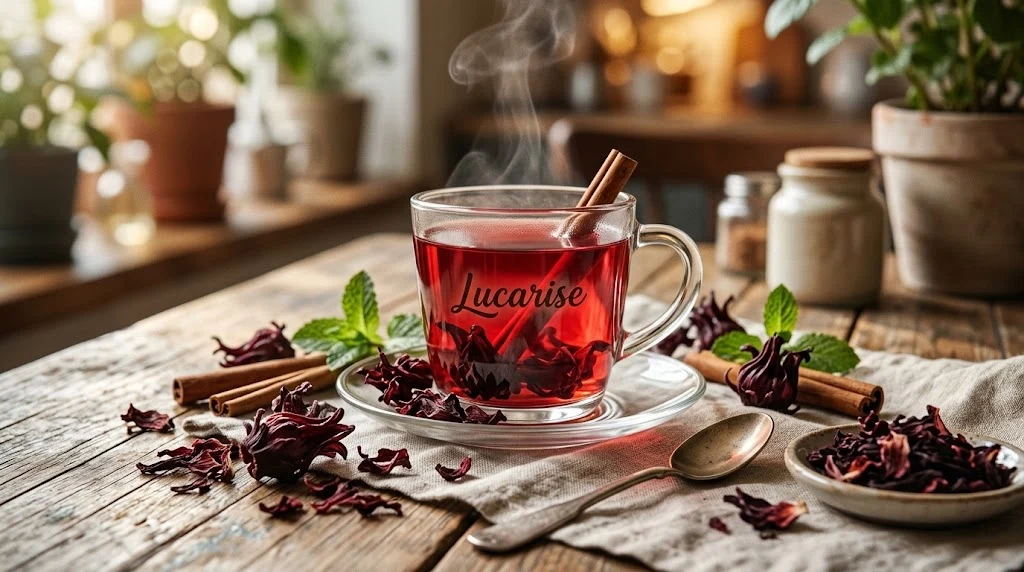
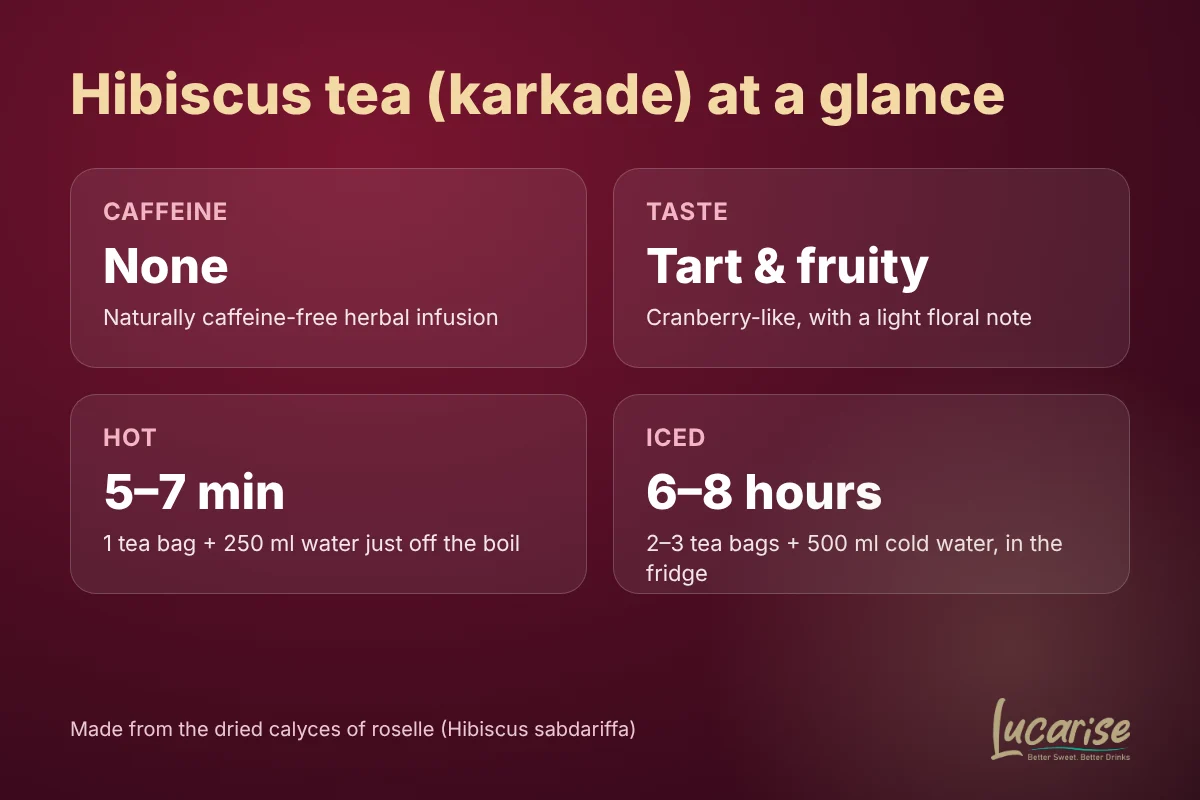
What is hibiscus tea? Hibiscus tea, known in Arabic as karkade, is a herbal infusion made from the dried calyces of the roselle plant (Hibiscus sabdariffa). It brews a deep ruby-red cup with a tart, cranberry-like taste, it is naturally caffeine-free, and it is enjoyed both hot and iced. Small clinical studies suggest it may modestly lower blood pressure, but it is not a treatment, and anyone who is pregnant or takes blood-pressure medicine should ask a doctor first.
Few drinks look as striking in a glass as karkade. In Egypt and Sudan it is an everyday drink, across the Gulf it is a favourite on the Ramadan table, and in Mexico the same flower is sold as agua de Jamaica. This guide explains where hibiscus tea comes from, how it tastes, what the research really says about its benefits, who should be careful with it, and how to make it hot or iced at home.
Where hibiscus tea comes from
Hibiscus tea is not made from the ornamental hibiscus flowers you see in gardens (Hibiscus rosa-sinensis). It comes from roselle, Hibiscus sabdariffa, an annual plant native to Central and West Africa that now grows across the tropics. After the flower falls, the fleshy red calyx around the seed pod is harvested and dried. Those dried calyces are what you steep. Roselle is known by many names, including karkade, roselle, Jamaica sorrel and sour tea.1
What does hibiscus tea taste like?
Hibiscus tea is tart and fruity, a little like cranberry or red berries, with a light floral note. The sourness comes from natural fruit acids in the calyces, which is why many people call it “sour tea”. Plain, it is refreshing and clean; a little sweetener rounds it out. It pairs well with mint, lemon, orange peel, cinnamon or ginger.
Does hibiscus tea have caffeine?
No. Hibiscus tea is a herbal infusion, not a true tea from the Camellia sinensis plant, so it is naturally caffeine-free. That makes it a good choice for the evening, for after iftar, or for anyone cutting back on caffeine. You can compare it with other drinks in our caffeine chart.
Hibiscus tea benefits: what the research says
Hibiscus is one of the more studied herbal drinks, but most trials are small and short, so the findings are best read as “promising” rather than proven.
- Blood pressure. A 2015 meta-analysis of five randomised controlled trials (390 people) found that hibiscus significantly lowered both systolic and diastolic blood pressure, with larger effects in people whose blood pressure was higher to begin with.2 A later analysis of seven trials reported average drops of about 4.7 mmHg systolic and 4.1 mmHg diastolic.1 These are modest changes, and hibiscus is not a replacement for prescribed treatment.
- Cholesterol and blood sugar. Some pooled analyses have reported small reductions in total and LDL cholesterol and in fasting glucose, but the evidence is limited and larger trials are needed.1
- A caffeine-free, sugar-free cold drink. Brewed without sugar, iced hibiscus gives you colour and flavour with no added sugar, which makes it an easy swap for soft drinks and sweetened juices.
This article is general information, not medical advice. If you have a health condition or take medication, speak to your doctor before drinking hibiscus tea regularly.
Side effects: who should be careful with hibiscus tea
For most healthy adults, a cup or two of hibiscus tea is generally well tolerated.1 A few groups should take extra care:
- Pregnancy and breastfeeding: there is not enough safety information, so it is best avoided.1
- Blood-pressure medicine or low blood pressure: hibiscus may add to the effect of blood-pressure-lowering drugs.1
- Other medicines: hibiscus may interact with some drugs, including the antimalarial chloroquine, and it has been shown to change how the body handles paracetamol (acetaminophen).1 Ask your pharmacist if you take regular medication.
How to make hibiscus tea (hot)
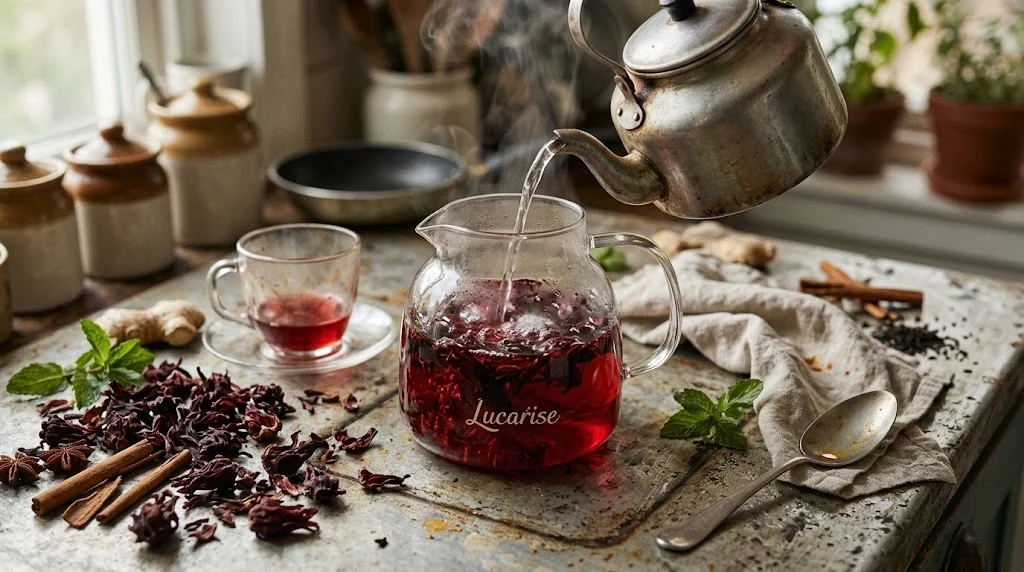
- Put one hibiscus tea bag (about 2 g) or 1 to 2 teaspoons of dried hibiscus in a cup.
- Pour over 250 ml of water just off the boil.
- Steep for 5 to 7 minutes. Longer steeping makes it deeper in colour and more tart.
- Remove the bag and sweeten to taste, ideally with a little stevia instead of sugar.
How to make iced hibiscus tea (cold karkade)
Iced hibiscus is the classic summer and Ramadan version. There are two easy ways to make it:
| Cold brew | Hot brew over ice | |
|---|---|---|
| For 500 ml | 2 to 3 tea bags in cold water | 2 to 3 tea bags in 250 ml hot water |
| Time | 6 to 8 hours in the fridge | 7 minutes, then pour over a full glass of ice |
| Taste | Smoother, less tart | Bolder and more tart |
| Best for | Making a jug the night before | A quick glass right now |
Finish with fresh mint, a slice of lemon or orange, and a little stevia if you like it sweeter. Keep cold-brewed hibiscus in a closed jug in the fridge and drink it within two days.
Try Lucarise Hibiscus Tea
Lucarise Hibiscus Tea is 100% hibiscus in pyramid tea bags, with nothing added: no sugar, no flavourings and no additives. It brews a bright ruby cup that is lovely hot and even better over ice. Made in Sohar, Oman.
Keep reading
Hibiscus tea: frequently asked questions
Is hibiscus tea the same as karkade?
Yes. Karkade is the Arabic name for tea made from the dried calyces of roselle (Hibiscus sabdariffa), the same drink sold as hibiscus tea.
Does hibiscus tea have caffeine?
No. It is a herbal infusion, not tea from the Camellia sinensis plant, so it is naturally caffeine-free.
Why is hibiscus tea sour?
The calyces contain natural fruit acids, which give the drink its tart, cranberry-like taste. A longer steep makes it more sour.
Can I drink hibiscus tea every day?
Most healthy adults can enjoy a cup or two as part of a normal diet. If you are pregnant or breastfeeding, have low blood pressure or take medication, ask your doctor first.
Is hibiscus tea good cold?
Yes. Iced hibiscus is one of the most popular ways to drink it. Cold brew 2 to 3 tea bags in 500 ml of water in the fridge for 6 to 8 hours, or brew hot and pour over ice.
Does hibiscus tea lower blood pressure?
Small clinical trials suggest it may lower blood pressure modestly, but it is not a treatment and should not replace prescribed medicine.
Sources
- Drugs.com. Roselle (Hibiscus sabdariffa), professional monograph. drugs.com
- Serban C, Sahebkar A, Ursoniu S, Andrica F, Banach M. Effect of sour tea (Hibiscus sabdariffa L.) on arterial hypertension: a systematic review and meta-analysis of randomized controlled trials. Journal of Hypertension, 2015;33(6):1119-1127. doi.org


