

Quick answer: Colombian coffee is usually balanced and sweet, with medium acidity and caramel, red fruit or citrus notes. Brazilian coffee is usually smoother and fuller, with low acidity and nutty, chocolate notes. Colombian coffee shines as filter coffee or a bright espresso; Brazilian coffee is ideal for espresso and milk drinks. Both are 100% Arabica in our range.
Colombia and Brazil are two of the best-known coffee origins in the world, and you will find them in most café blends. Brazil is the world’s largest coffee producer, with a record crop of about 71.9 million 60-kg bags forecast for 2026/27[2], while all Colombian coffee is washed Arabica under the rules of its national coffee federation[1]. This guide explains how they taste, why they are different, how to brew each one, and which one suits you.
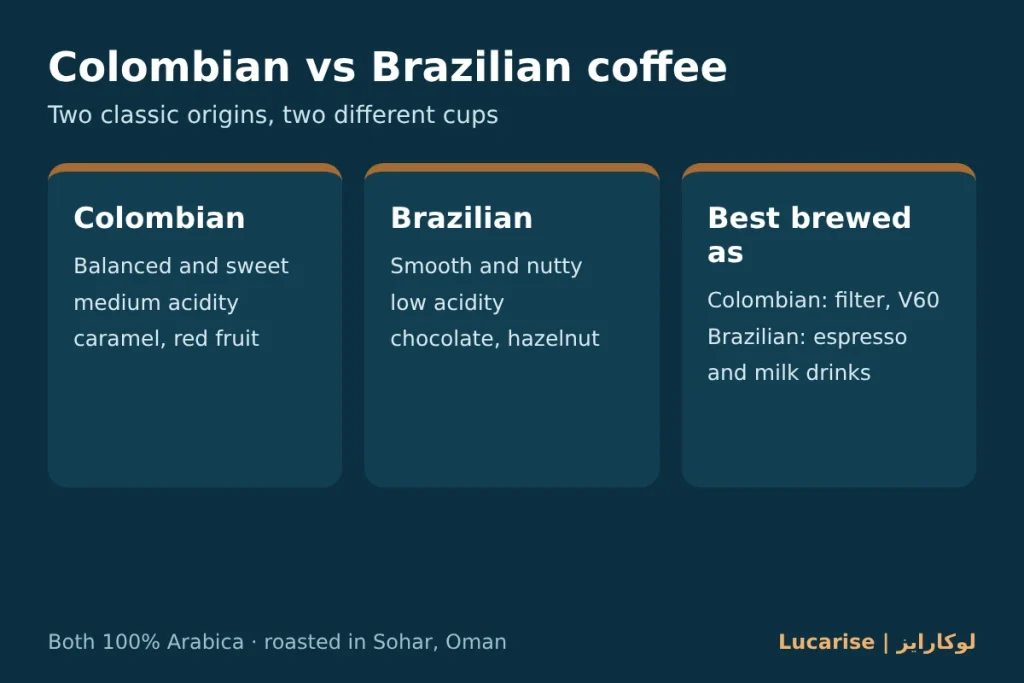
Colombian coffee vs Brazilian coffee at a glance
| Colombian coffee | Brazilian coffee | |
|---|---|---|
| Typical taste | Balanced and sweet: caramel, red fruit, citrus | Smooth and nutty: chocolate, hazelnut, caramel |
| Acidity | Medium, bright | Low |
| Body | Medium | Medium to full |
| Usual processing | Washed | Mostly natural or pulped natural |
| Best for | Filter, pour-over, bright espresso | Espresso, latte, cappuccino, moka pot |
| Good choice if you like | A clean, lively cup | A round, comforting cup |
What is Colombian coffee?
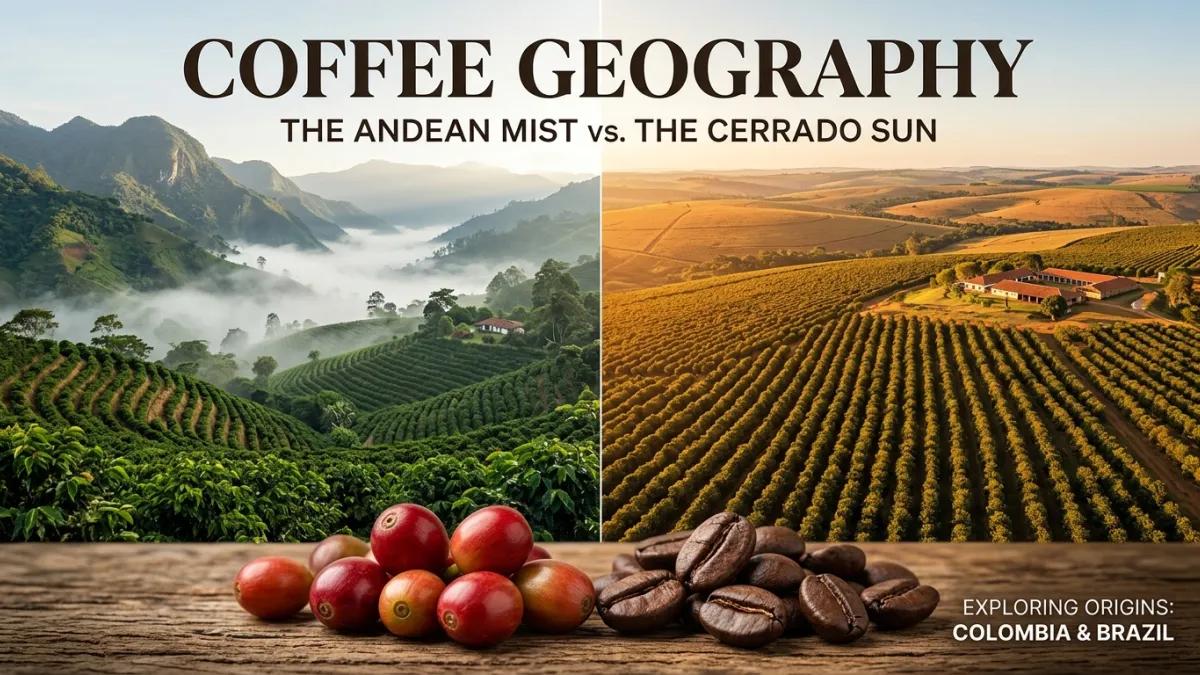
Colombian coffee is Arabica grown in the Andes mountains, often on small family farms on steep slopes. Coffee is harvested in different regions throughout the year[1], and it is washed: the fruit is removed before the beans dry, which gives a clean, bright cup. Since 2007, “Café de Colombia” has been protected as a geographical indication in the European Union[1], which means the name can only be used for coffee from Colombia.
What does Colombian coffee taste like?
A typical Colombian coffee is balanced: not too acidic, not too bitter, with a sweet caramel note and hints of red fruit or citrus. That balance is why it is a favourite for both black coffee and milk drinks.
What is Brazilian coffee?
Brazil grows coffee on large, often flat farms, so much of the harvest is done by machine. Most Brazilian Arabica is natural or pulped natural: the beans dry with some or all of the fruit still on them, which adds sweetness and body. Brazil grows both Arabica and Robusta; in 2026/27 about 47.5 million bags of its forecast crop are Arabica[2]. Our Brazil beans are 100% Arabica.
What does Brazilian coffee taste like?
Brazilian coffee is usually smooth and low in acidity, with nutty and chocolate notes and a fuller body. It is the base of many espresso blends because it gives a sweet, rounded shot and a thick crema.
How to brew Colombian and Brazilian coffee
| Method | Colombian | Brazilian |
|---|---|---|
| Filter / V60 | Excellent: 15 g coffee to 250 ml water at 92–96 °C | Good, for a softer, nuttier cup |
| Espresso | Bright and sweet; adjust grind to taste | Excellent: sweet, low acidity, thick crema |
| Latte / cappuccino | Good | Excellent: chocolate notes go well with milk |
| Moka pot | Good | Excellent |
| French press | Good | Good; use a coarse grind |
For step-by-step methods, read our drip coffee guide and espresso guide. Not sure which you prefer? Take our 30-second coffee quiz.
Colombian vs Ethiopian vs Brazilian coffee
| Ethiopian | Colombian | Brazilian | |
|---|---|---|---|
| Taste | Floral, fruity | Balanced, sweet | Nutty, chocolatey |
| Acidity | High | Medium | Low |
| Body | Light | Medium | Medium to full |
Ethiopian coffee is the most floral and fruity of the three. Read more in our Ethiopian coffee guide, and see more origins in the specialty coffee guide.
Does Colombian or Brazilian coffee have more caffeine?
If both are 100% Arabica, the caffeine is similar. What changes the caffeine in your cup is how much coffee you use and how you brew it. A 237 ml cup of brewed coffee has about 96 mg of caffeine[3]. Blends that include Robusta, which is common in some Brazilian coffee, have more. Track your daily total with our caffeine calculator.
Lucarise Colombia and Brazil coffee beans
Lucarise Colombia Coffee Beans and Brazil Coffee Beans are 100% Arabica whole beans, medium roasted at our own roastery in Sohar, Oman. Each comes in a 250 g pouch for home or a 1 kg pouch for offices and cafés. Grind them just before brewing for the best flavour.
Run a café, restaurant or shop?
Lucarise makes café drinks in business packs in our own factory in Oman: 1 kg café bags, 100-sachet hotel boxes and distributor cartons. Prices on request.
Colombian and Brazilian coffee: frequently asked questions
What is the difference between Colombian and Brazilian coffee?
Colombian coffee is usually washed, with medium acidity and a sweet, balanced taste. Brazilian coffee is usually natural processed, with low acidity, a fuller body and nutty, chocolate notes.
Which is better, Colombian or Brazilian coffee?
Neither is better; it depends on your taste. Choose Colombian for a bright, balanced cup and Brazilian for a smooth, chocolatey cup, especially with milk.
Is Colombian coffee strong?
Colombian coffee tastes balanced rather than harsh. Its strength depends on the roast and how much coffee you use.
Is Brazilian coffee good for espresso?
Yes. Its low acidity and sweetness make a rounded shot with good crema, which is why it is used in many espresso blends.
Is Colombian coffee Arabica?
Yes. Colombian coffee is Arabica, and it is washed, which gives a clean, bright cup.
How should I store coffee beans?
Keep them in a closed bag, away from heat, light and moisture, and use them within a few weeks of opening.
Sources
- WIPO. Making the origin count: the Colombian experience.
- Daily Coffee News (4 June 2026). Brazil coffee report: record crop and exports expected for 2026/27, reporting USDA Foreign Agricultural Service data.
- Mayo Clinic. Caffeine: how much is too much?


