
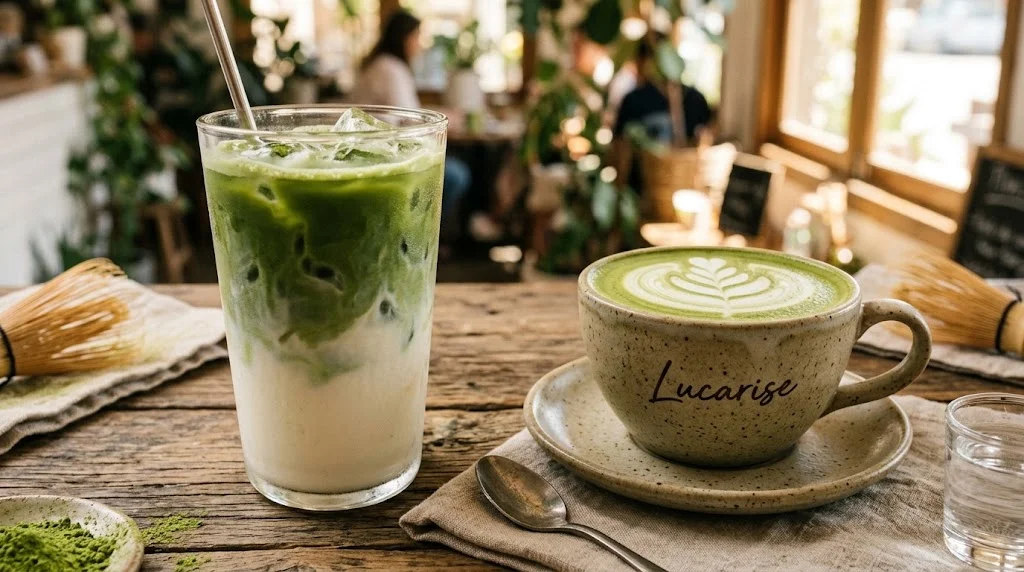
Want a café-style matcha latte without leaving the house? Good news: making one is easier than you think. All you need is matcha powder, a little hot water and milk. In this guide we show you how to make a matcha latte at home, hot or iced, step by step, with exact measurements, the best milks to use, how to sweeten it without sugar, and the common mistakes that make it taste bitter.
Quick recipe: one cup
- Matcha powder: 1–2 g (about ½–1 teaspoon).
- Hot water: 50–60 ml at 70–80 °C, not boiling.
- Milk: 150–200 ml, hot or cold.
- Sweetener (optional): one sachet of stevia sweetener, or to taste.
- For iced: add a glass of ice cubes.
Matcha latte, hot or iced
Measurements, the best milks and the mistakes to avoid.

Ingredients and Measurements
A matcha latte has only four ingredients, so the quality of each one shows directly in the cup:
| Ingredient | Amount per cup | Tip |
|---|---|---|
| Matcha powder | 1–2 g | 1 g for a mild latte, 2 g for a clear matcha flavour |
| Hot water | 50–60 ml | 70–80 °C; boiling water makes it bitter |
| Milk | 150–200 ml | Whole milk for creaminess, or a plant milk |
| Sweetener (optional) | To taste | Stevia, honey or sugar |
Choose a pure matcha powder with a bright green colour and a very fine texture. Dull or yellowish powder gives a grassy-tasting latte with a muddy colour. To learn more about matcha’s benefits and what is in it, read What is matcha?
Ceremonial vs Culinary Matcha: Which Should You Use?
Matcha is often sold as ceremonial grade or culinary grade. Ceremonial matcha is made from the youngest leaves and is usually brighter green, smoother and slightly sweeter, so it is the best choice when you whisk matcha with water and add only a little milk. Culinary matcha is a little more bitter and is meant for baking, smoothies and lattes made with plenty of milk and sweetener. These grades are not standardised, so judge the powder by its colour (bright green), its texture (very fine) and its taste rather than by the label alone.
The Tools You Need
- A small sieve: for sifting the matcha so it does not clump. This is the step most people skip.
- A bamboo whisk (chasen) or an electric milk frother: the first is traditional, the second is faster and works very well.
- A wide bowl or mug: to make whisking easier.
- A jar with a lid or a shaker: very handy for an iced matcha latte.
No whisk? No problem. Put the matcha and hot water in a sealed jar and shake hard for 20 seconds, and you will get a smooth, frothy mix.
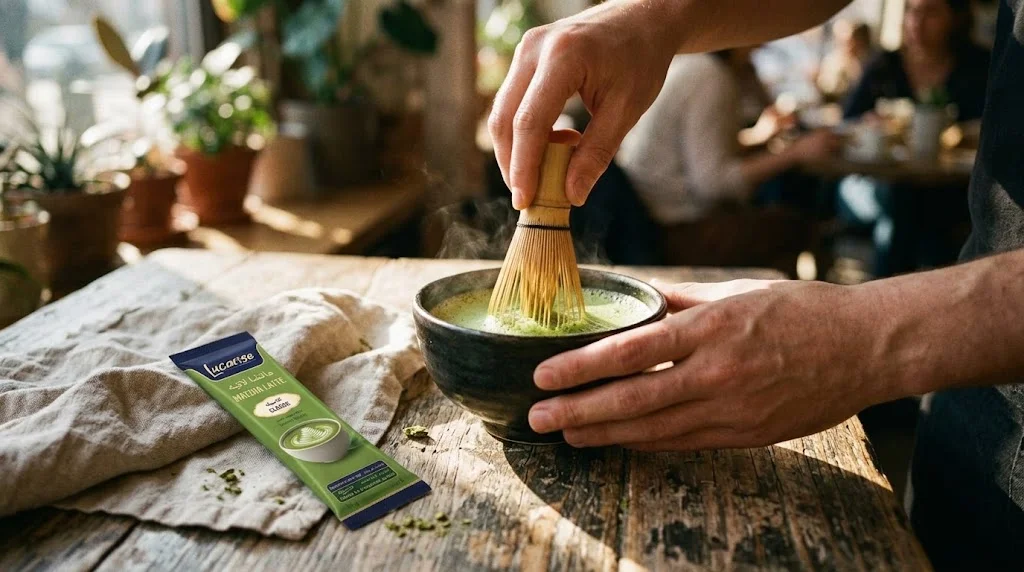
How to Make a Hot Matcha Latte
- Sift 1–2 g of matcha powder into a mug or bowl.
- Add 50–60 ml of water at 70–80 °C. If you do not have a thermometer, let boiled water cool for about two minutes.
- Whisk briskly in a zigzag (W-shaped) motion for 15–20 seconds until there are no lumps and a fine froth forms.
- Heat 150–200 ml of milk without boiling it, and froth it if you like extra foam.
- Pour the milk over the matcha, then sweeten and stir. Enjoy it straight away.
How to Make an Iced Matcha Latte
An iced matcha latte is the favourite in the Gulf summer, and it is just as easy:
- Whisk the matcha with 50–60 ml of hot water as above. Dissolving it in hot water first stops it from clumping in cold milk.
- Fill a tall glass with ice and pour in 150–200 ml of cold milk.
- Slowly pour the matcha over the milk for two beautiful green-and-white layers.
- Sweeten, then stir before drinking.
Tip: if you use a sweetener, dissolve it in the hot matcha mix before pouring it over ice, because it dissolves much faster in hot water than in cold milk.
Which Milk Is Best?
| Milk | Taste and texture |
|---|---|
| Whole milk | The creamiest; balances matcha’s gentle bitterness |
| Oat milk | Naturally sweet with excellent foam; the closest plant milk to a café latte |
| Almond milk | Lighter, with a soft nutty note |
| Coconut milk | A tropical touch that pairs well with matcha |
How to Sweeten It Without Sugar
In cafés, matcha lattes are usually sweetened with syrup, which can add several teaspoons of sugar to a cup and hide the taste of the matcha itself. At home, however, you decide. The smartest option is stevia Reb-M: clean sweetness with no calories and without the bitter aftertaste of classic stevia. For more on the different types, read our stevia sugar guide. Start with one sachet of Lucarise stevia sweetener and adjust to taste; the cardamom version gives your latte a lovely Gulf twist.
Flavours to Try
- Cardamom matcha latte: add a pinch of ground cardamom to the matcha before whisking.
- Strawberry matcha latte: spoon two tablespoons of strawberry purée into the glass before the milk, or sprinkle freeze-dried strawberry on top.
- Mango matcha latte: a refreshing tropical mix, perfect iced.
- Coconut matcha latte: use coconut milk instead of regular milk.
- Pistachio matcha latte: sprinkle crushed toasted pistachio over the foam.
What Does a Matcha Latte Taste Like?
A good matcha latte tastes smooth, creamy and lightly sweet, with a fresh, slightly grassy note and a gentle bitterness at the end. If yours tastes sharply bitter, use less matcha or cooler water; if it tastes weak, add another 0.5 g of matcha or a little less milk.
Prefer these flavours ready-made? Try Lucarise Cardamom Matcha Latte, Strawberry Matcha Latte with Topping, Mango Matcha Latte with Topping, Coconut Matcha Latte, Hazelnut Matcha Latte with Topping or Pistachio Matcha Latte with Topping.
Common Mistakes That Make It Bitter
- Using boiling water: high heat brings out bitterness; stick to 70–80 °C.
- Not sifting: small bitter lumps stay at the bottom of the cup.
- Too much matcha: start with 1 g and increase gradually.
- Old or badly stored matcha: matcha is sensitive to light, air and moisture, so seal the pouch well and use it within one to two months of opening.
The Fastest Way: Ready in Seconds
On busy mornings there is not always time to sift and whisk. That is why we created Lucarise matcha latte sachets: real matcha with milk and creamer and no added sugar. Classic, Cardamom and Coconut come with a separate stevia Reb-M sachet so you can sweeten them your way, while Strawberry, Mango, Pistachio and Hazelnut are sweetened with stevia in the mix and come with a topping sachet. Stir a sachet into hot water or milk, or shake it with cold milk and ice for an iced latte. If you have a capsule machine, try our Nespresso-compatible matcha capsules.
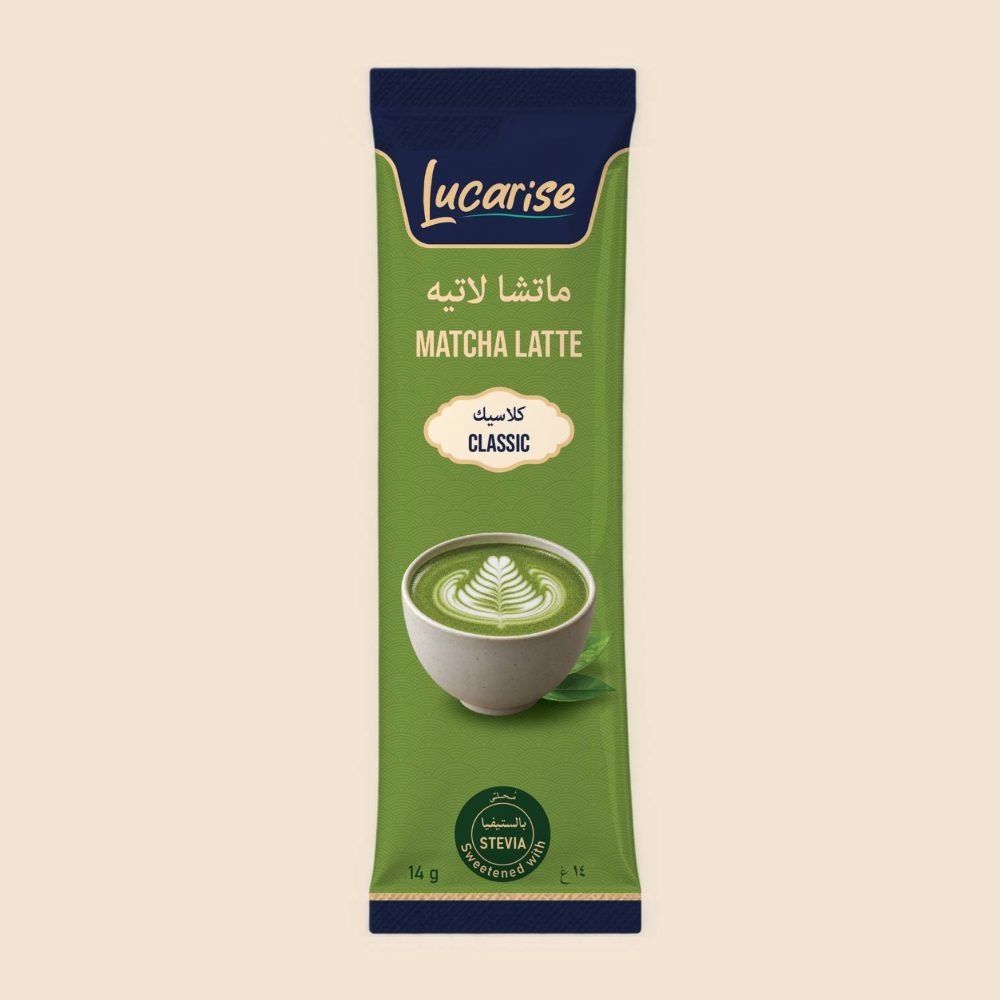
A creamy matcha latte from one sachet
Real matcha in a creamy single-sachet latte, made in Oman. Stir into hot water or milk, or shake with cold milk and ice. Sweetened with Stevia Reb-M, no added sugar.
Keep reading
Frequently Asked Questions
How much caffeine is in a matcha latte?
Matcha powder contains about 19–44 mg of caffeine per gram, so a latte made with 1–2 g has roughly 20–90 mg, usually less than a cup of filter coffee. For a full comparison, read Matcha vs coffee.
Is a matcha latte healthy?
It can be a good choice when made with pure matcha, a moderate amount of milk and no added sugar. Café versions sweetened with syrup, on the other hand, can contain a lot of sugar.
Can I make a matcha latte without a whisk?
Yes. Shake the matcha with hot water in a sealed jar, use a small electric milk frother, or choose instant matcha latte sachets that only need a spoon.
Can I make an iced matcha latte ahead of time?
You can whisk the matcha with water and keep it in the fridge for a day, but it is best to mix it with milk and ice just before drinking, because the colour and flavour fade over time.
How much matcha powder do I put in a latte?
Use 1 to 2 grams of matcha powder (about half to one teaspoon) with 50 to 60 ml of hot water and 150 to 200 ml of milk. Start with 1 g and add more if you want a stronger matcha flavour.
What is the difference between ceremonial and culinary matcha?
Ceremonial matcha is made from the youngest leaves and tastes smoother and slightly sweeter; culinary matcha is a little more bitter and is meant for baking and smoothies. The grades are not standardised, so check the colour, texture and taste.
How many calories are in a matcha latte?
The matcha itself adds only a few calories. Most of the calories in a matcha latte come from the milk and any sugar or syrup, so the total depends on the milk you choose and how you sweeten it.
Is a matcha latte suitable for children?
Matcha contains caffeine, so it is best kept to small amounts for children and teenagers. The European Food Safety Authority considers about 3 mg of caffeine per kg of body weight per day a safe level for them.
Try Lucarise before you buy
Free samples are available for cafés, hotels, offices and distributors in Oman and the GCC.


