
Quick answer: stevia is sold as liquid drops, pure powder, tablets, sachets and spoonable granules, and as dried green leaves. The “best” stevia is not one brand but the one with a clean label: purified stevia (steviol glycosides, ideally Reb-M or Reb-D for a sugar-like taste) mixed with a zero-carb carrier such as erythritol, in the form that suits how you use it. Avoid packs where dextrose or maltodextrin is the first ingredient if you are cutting carbs.
Walk down the sweetener shelf in any supermarket in Oman or Saudi Arabia and you will see dozens of products called “stevia”. They look similar, but what is inside can be very different. This guide explains the main types of stevia, what the words on the label mean and how to choose the right one for tea, coffee, baking or a low-carb diet. For the basics, start with the complete stevia guide.
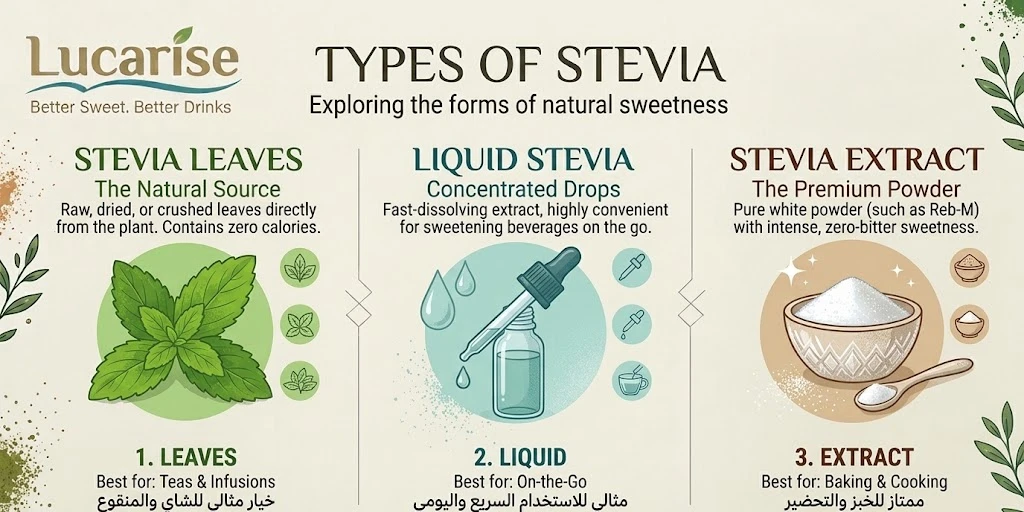
Types of stevia by form
| Form | What it is | Best for | Watch out for |
|---|---|---|---|
| Liquid drops | Stevia extract dissolved in water or glycerin | Tea, coffee, cold drinks | Very strong; one or two drops is enough |
| Pure powder (extract) | Highly concentrated steviol glycosides | Experienced users, large batches | Hard to measure; easy to overdo and taste bitter |
| Tablets | Small pressed tablets that dissolve in hot drinks | Tea and coffee on the go | Fillers such as lactose or sugar alcohols |
| Sachets (1 g) | Pre-measured stevia blend, usually with erythritol | Daily drinks, office, travel | The carrier: erythritol or dextrose? |
| Spoonable granules | Stevia blend measured like sugar | Baking and recipes | “Spoon for spoon” sweetness varies by brand |
| Dried green leaves | Whole stevia leaf, ground or as tea | Herbal tea | Herbal taste; not approved as a sweetener additive in many countries[2] |
Read more about the green leaf in stevia leaves: can they replace sugar?.
New to stevia? Our plain guide to stevia sugar covers what it is, whether it is safe and how much a day is fine.
Types of stevia by sweet compound: Reb-A, Reb-M and Reb-D
The sweetness in stevia comes from compounds called steviol glycosides. Regulators approve purified steviol glycosides, not crude extracts[1][2]. Not all glycosides taste the same:
- Reb-A (rebaudioside A): the most common and cheapest. At higher amounts it can leave a bitter, liquorice-like aftertaste.
- Reb-M and Reb-D: present only in tiny amounts in the leaf, so they are usually made by newer production methods. They taste closest to sugar, with much less bitterness.
- “Stevia extract 95%” or “steviol glycosides”: a mix of glycosides. The label may not say which ones.
If a pack names Reb-M, that is usually a sign of a better taste. Lucarise uses stevia Reb-M for this reason.
What is mixed with the stevia: the carrier
Pure stevia is so sweet that a sachet would hold only a few milligrams. To make it easy to measure, almost every product mixes it with a carrier. This is the part that matters most for your diet:
- Erythritol: a sugar alcohol with almost no calories that does not raise blood sugar. EFSA set its acceptable daily intake at 0.5 g per kg of body weight[3]. Large amounts can cause bloating. More in what is erythritol?
- Dextrose or maltodextrin: carbohydrates made from starch. They add calories and can raise blood sugar. Common in cheaper sachets.
- Inulin or other fibres: low in calories, but may cause gas in some people.
- Other sweeteners: some products sold as “stevia” also contain sucralose or aspartame. Compare them in stevia vs sucralose vs aspartame.
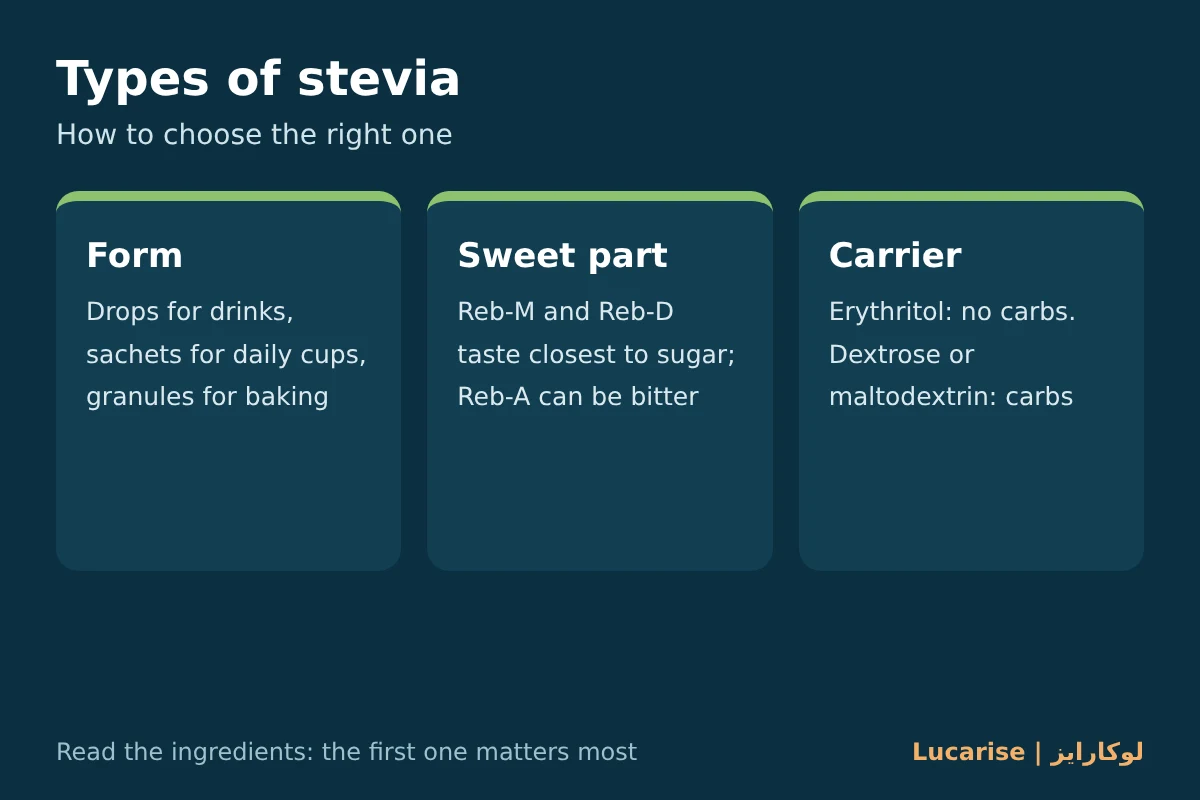
How to choose the best stevia: 5 checks
- Read the first ingredient. Ingredients are listed by weight. If dextrose or maltodextrin comes first, the pack is mostly carbohydrate.
- Look for the glycoside. Reb-M or Reb-D usually tastes closer to sugar than Reb-A.
- Pick the form for the job. Drops for cold drinks, sachets for daily tea and coffee, granules for baking.
- Check the sweetness equivalent. The pack should say how much sugar one sachet, drop or spoon replaces. Our stevia to sugar converter helps.
- Check it is real stevia. See how to tell if stevia is genuine for the signs of a fake or mislabelled pack.
If you have diabetes or follow a diet for a medical reason, ask your doctor or dietitian which sweetener suits you.
Which type is right for you?
| If you… | Choose |
|---|---|
| Drink tea, karak or coffee every day | Sachets of stevia + erythritol |
| Want zero-carb cold drinks | Liquid drops |
| Bake cakes and desserts | Spoonable stevia + erythritol granules (see baking with stevia) |
| Follow keto or low-carb | Any form where the only ingredients are steviol glycosides and erythritol |
| Prefer a herbal option | Dried leaf tea, knowing it tastes grassy |
Lucarise stevia sachets are a blend of stevia Reb-M and erythritol in 1 g sachets, in Classic and Cardamom.
Run a café, restaurant or shop?
Lucarise makes café drinks in business packs in our own factory in Oman: 1 kg café bags, 100-sachet hotel boxes and distributor cartons. Prices on request.
Frequently asked questions
What are the types of stevia?
Stevia comes as liquid drops, pure powder, tablets, sachets, spoonable granules and dried leaves. Products also differ in the sweet compound (Reb-A, Reb-M or Reb-D) and in what it is mixed with, such as erythritol or dextrose.
Which stevia is best?
The best stevia has a short, clean ingredient list: purified steviol glycosides (ideally Reb-M) with a zero-carb carrier such as erythritol, in the form that suits how you use it.
Is liquid stevia better than powder?
Neither is healthier. Drops are easiest for drinks, while powders and granules are easier for baking. Compare the ingredients, not the form.
Why do some stevia sachets raise blood sugar?
Some sachets use dextrose or maltodextrin as the carrier. These are carbohydrates. Check the ingredient list.
What is the difference between Reb-A and Reb-M stevia?
Both are steviol glycosides. Reb-A is the most common and can taste bitter in larger amounts. Reb-M tastes closer to sugar.
Are stevia tablets the same as stevia sugar?
They contain the same sweet compounds but different fillers. Read the label to see what makes up the tablet.
Sources
- EFSA Panel on Food Additives (2010). Scientific opinion on the safety of steviol glycosides.
- U.S. Food and Drug Administration. Has stevia been approved by FDA to be used as a sweetener?
- EFSA Panel on Food Additives (2023). Re-evaluation of erythritol (E 968).


