
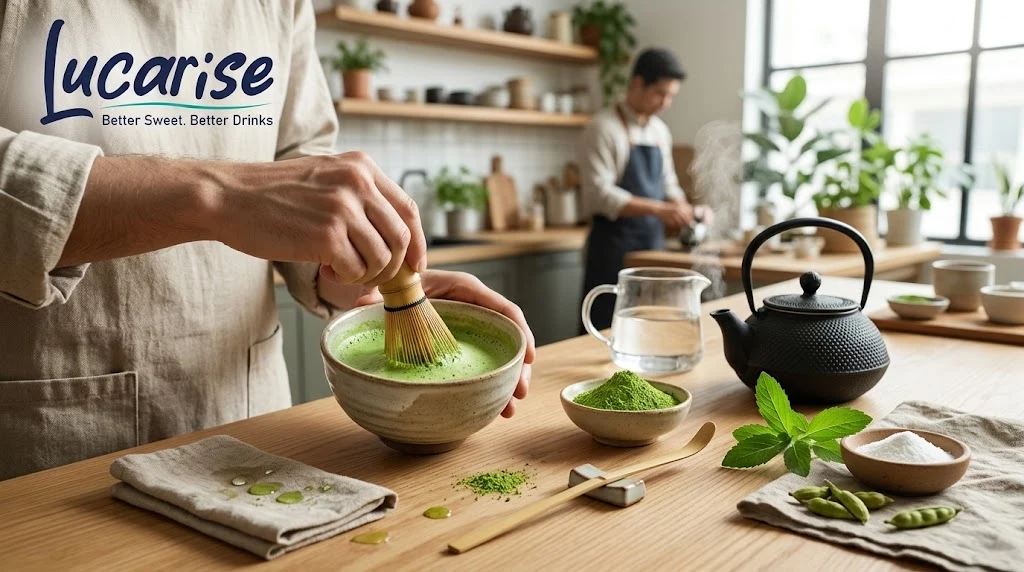
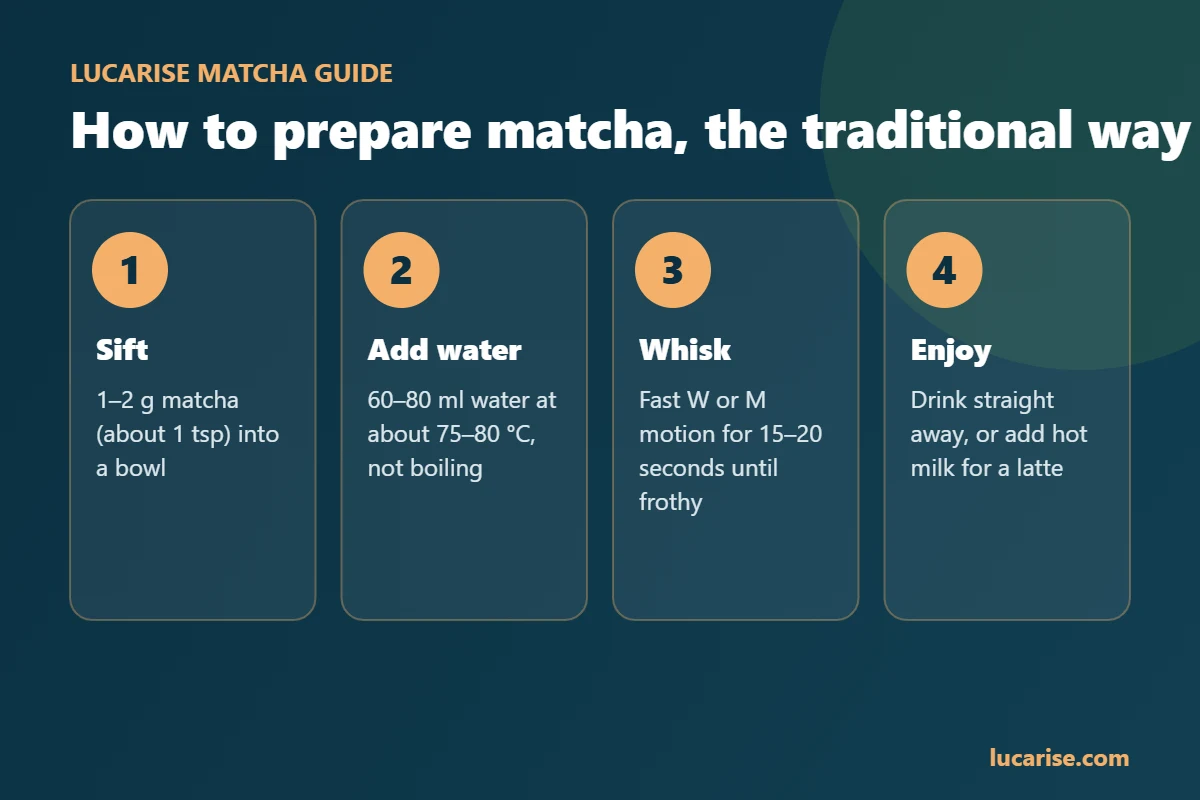
Quick answer: To prepare matcha tea the traditional way, sift 1–2 g of matcha (about one teaspoon) into a bowl, add 60–80 ml of water at 75–80 °C (hot, not boiling), and whisk quickly in a W or M shape for 15–20 seconds until a fine foam covers the top. Drink it straight away. No bamboo whisk? A small electric milk frother or a sealed jar you shake hard works well too.
Whisked matcha is the simplest way to taste what good matcha really is: just powder and water, no milk and no sugar. In Japan this everyday style is called usucha, or “thin tea”. It takes about two minutes once you know the steps, and the result is smooth, bright green and gently sweet rather than bitter.
What you need
| Tool | Why it helps | Easy alternative |
|---|---|---|
| Bowl (chawan) | Wide enough to whisk freely | Any wide mug or cereal bowl |
| Bamboo whisk (chasen) | Its many fine tines make a creamy foam | Handheld electric milk frother |
| Bamboo scoop (chashaku) | Measures about 0.5–1 g per scoop | A measuring teaspoon, or a 1 g sachet |
| Small sieve | Breaks up lumps for a smooth cup | Shake the powder with water in a jar |
| Kettle and thermometer | Water at 75–80 °C keeps matcha from turning bitter | Boil, then wait 3–5 minutes |
See our full guide to matcha tools if you want to choose a whisk and bowl.
How to make matcha tea, step by step
- Warm the bowl and whisk. Pour a little hot water into the bowl and stand the whisk in it for a minute. This softens the bamboo tines so they do not break, and keeps your tea warm. Pour the water out and dry the bowl.
- Sift the matcha. Sift 1–2 g (one heaped teaspoon, or two bamboo scoops) into the bowl. Matcha clumps easily, and sifting is the secret to a smooth, lump-free cup.
- Add a splash of water and make a paste. Add about 20 ml of the water and stir into a smooth paste. This step is optional but helps beginners avoid lumps.
- Add the rest of the water. Top up to 60–80 ml in total, at 75–80 °C. Boiling water burns the delicate amino acids and makes matcha taste harsh.
- Whisk fast. Hold the bowl with one hand and whisk from the wrist in a quick W or M shape, not in circles, for 15–20 seconds. Finish by moving the whisk slowly across the surface to pop big bubbles.
- Drink right away. Matcha is a suspension, not a dissolved tea, so the powder settles if it sits. Enjoy it within a few minutes.
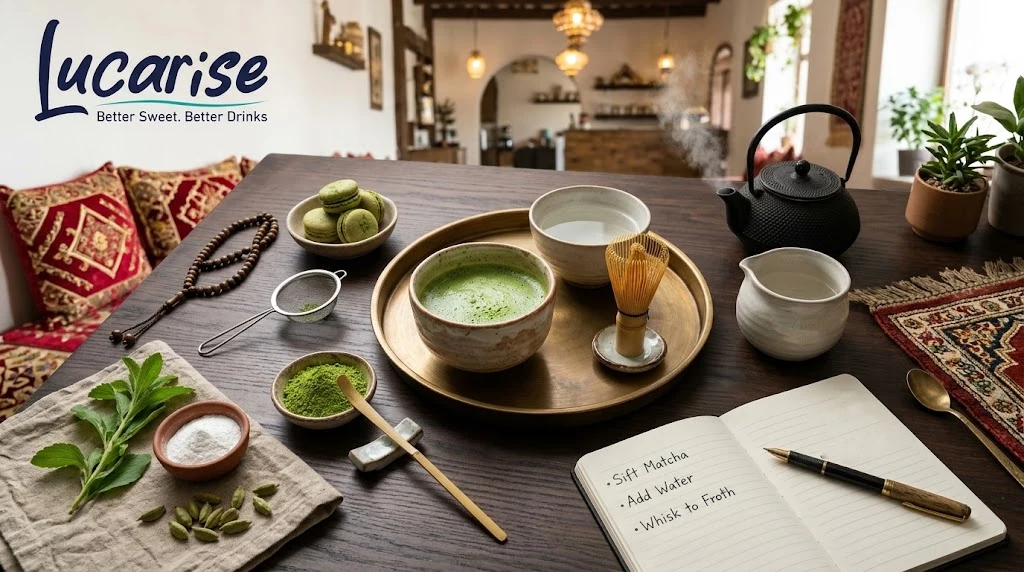
The Global Japanese Tea Association describes the same basic method: about 1.2 g of matcha (two bamboo scoops) with 70–80 ml of water, dissolving the powder in a little water first, then whisking quickly from the wrist and finishing with slower strokes in a W shape[1]. We suggest water at 75–80 °C for a smoother, less bitter cup.
Usucha or koicha: thin or thick matcha?
| Usucha (thin) | Koicha (thick) | |
|---|---|---|
| Matcha | 1–2 g | 3–4 g |
| Water | 60–80 ml | 30–40 ml |
| Method | Fast whisking until frothy | Slow kneading, no foam |
| Texture | Light, frothy | Thick, like warm honey |
| Grade | Ceremonial or good latte grade | Top ceremonial grade only |
Most people drink usucha every day. Koicha is served in formal tea ceremonies and needs the sweetest, youngest matcha, because any bitterness becomes very strong at that concentration. Read our guide to matcha grades to choose the right powder.
Common mistakes and how to fix them
- Bitter taste: the water was too hot, or you used too much powder. Let the kettle cool for a few minutes and start with 1 g.
- Lumps: the powder was not sifted. Sift it, or make a paste with a little water first.
- No foam: you stirred in circles or too slowly. Whisk quickly in a W or M shape from the wrist.
- Flat, dull flavour: the matcha is old or was stored open. Keep it airtight, in the fridge after opening, and use it within one to two months.
- Using a spoon: a spoon cannot break up the powder. Use a whisk, a milk frother or a shaken jar.
Make it your way
- Matcha latte: whisk the matcha with 30 ml water, then add 150–200 ml of hot or cold milk. Full recipe: how to make a matcha latte.
- Iced matcha: whisk with a little warm water, then pour over ice and top up with cold water or milk. See our iced matcha latte recipe.
- Sweetening: good matcha does not need sugar. If you like it sweeter, a pinch of stevia keeps it free of added sugar.
Lucarise Ceremonial Matcha Powder comes in tins and in pre-measured 1 g sachets, so you can skip the scoop and the scale. Prefer no whisking at all? Try our matcha capsules or a ready matcha latte mix. For everything else, start with our complete matcha guide.
🍵 More ways to use it: see how to use matcha powder: 10 ideas from lattes and smoothies to cakes, cookies and tiramisu.
🛒 Looking for pure matcha? Browse Lucarise matcha powder: unsweetened ceremonial matcha in 1 g sachets, tins and capsules.
🧮 Not sure how much matcha to use? Our free matcha calculator gives the grams, water and milk for any number of cups.
Run a café, restaurant or shop?
Lucarise makes café drinks in business packs in our own factory in Oman: 1 kg café bags, 100-sachet hotel boxes and distributor cartons. Prices on request.
Preparing matcha: frequently asked questions
What temperature should the water be for matcha?
About 75–80 °C. If you do not have a thermometer, boil the kettle and wait 3–5 minutes. Boiling water makes matcha bitter.
How much matcha do I use per cup?
For everyday thin matcha, use 1–2 g (about one teaspoon) with 60–80 ml of water. For thick koicha, use 3–4 g with 30–40 ml.
Can I make matcha without a bamboo whisk?
Yes. A handheld electric milk frother works very well, or shake the matcha and water hard in a sealed jar for 20 seconds.
Why does my matcha have lumps?
Matcha powder is very fine and clumps easily. Sift it before adding water, or stir it into a smooth paste with a little water first.
Should I add sugar to matcha?
Good matcha tastes naturally sweet and does not need sugar. If you want it sweeter, add a little stevia so your cup stays free of added sugar.
Sources
- Global Japanese Tea Association. How to prepare matcha.


