
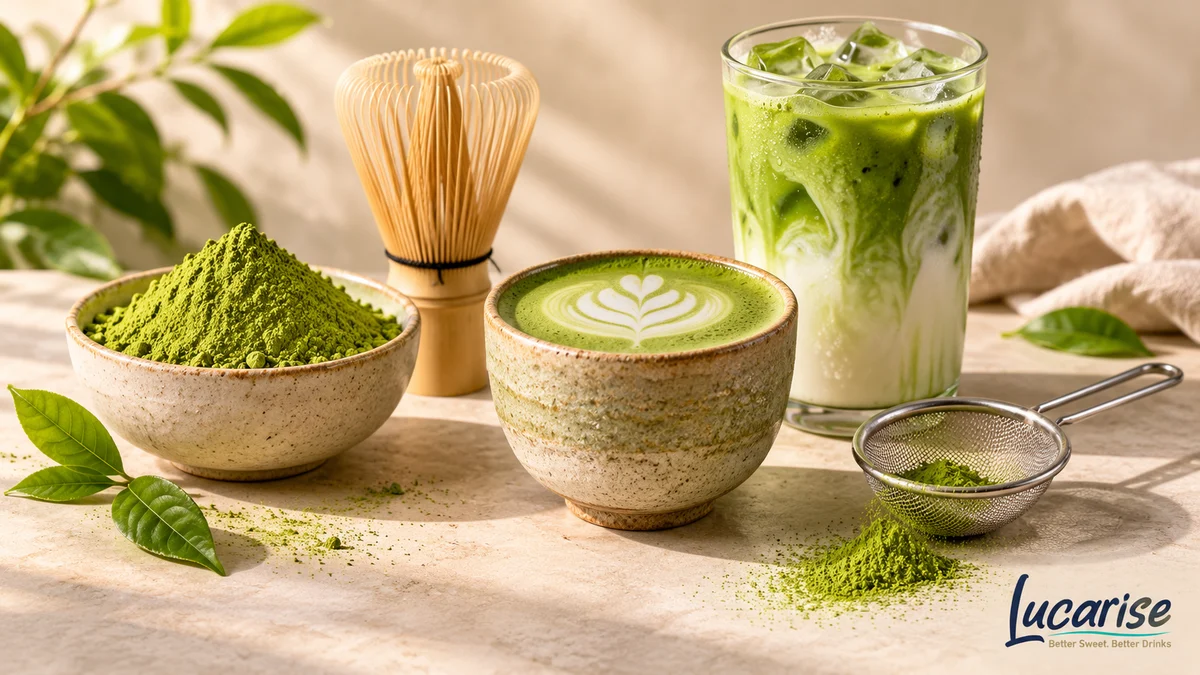
Quick answer: matcha powder is used in three main ways: as a tea (1–2 g whisked in 60–80 ml of water at 75–80 °C), in drinks such as hot or iced matcha lattes and smoothies, and in food such as cakes, cookies, tiramisu, yogurt and ice cream. Use a higher grade for drinking straight and a culinary grade for baking, always sift it first, and never pour boiling water on it.
Bought a tin of matcha and not sure what to do with it beyond one cup? Good matcha powder is far more versatile than most people think. Below are 10 ways to use it, with the amount to use for each, the grade that suits it best and the mistakes that make matcha taste bitter or turn brown. If you are new to matcha, start with what matcha is and our complete matcha guide.
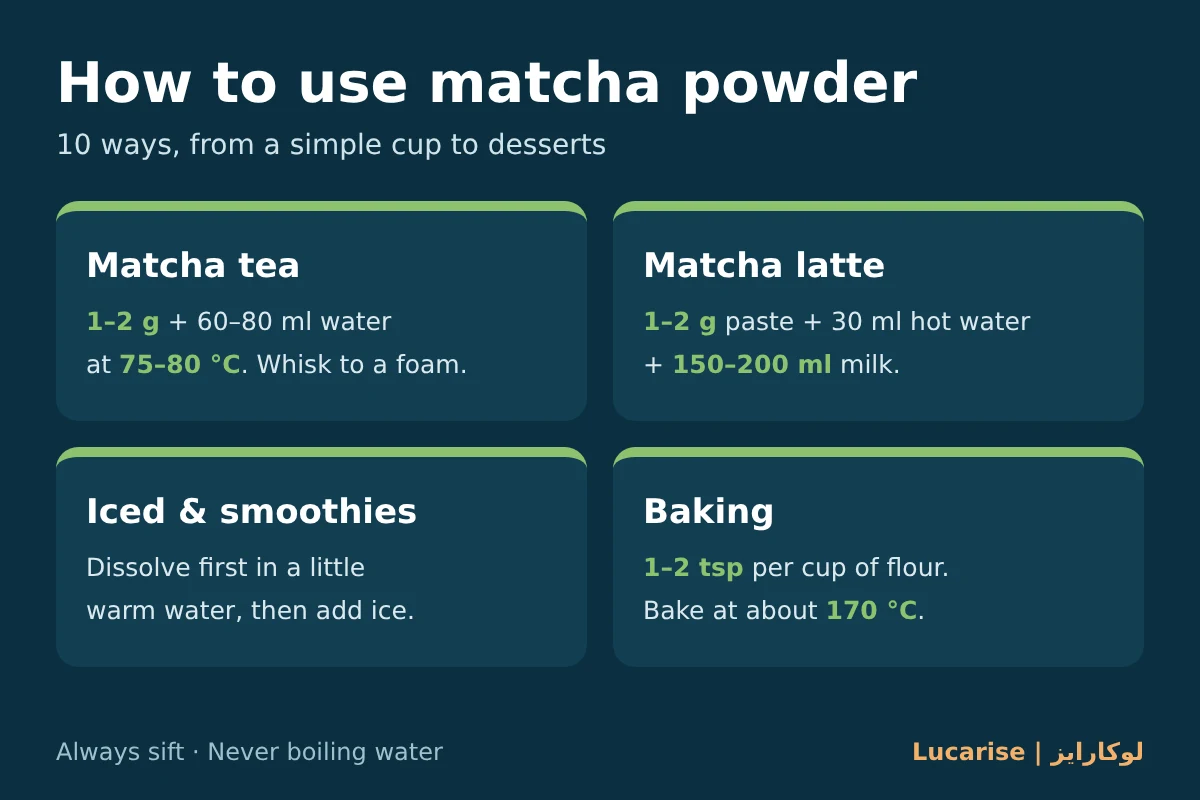
Which matcha for which use?
| Use | Best grade | How much | Water / heat |
|---|---|---|---|
| Traditional matcha tea | Ceremonial or premium | 1–2 g (½–1 tsp) | 60–80 ml at 75–80 °C |
| Hot matcha latte | Premium or latte grade | 1–2 g | 30 ml hot water + 150–200 ml milk |
| Iced latte, smoothie | Premium or culinary | 1–2 g | Dissolve in a little warm water first |
| Cakes, cookies, desserts | Culinary | 1–2 tsp per cup of flour | Bake at moderate heat (about 170 °C) |
Not sure about grades? Our guide to matcha grades explains ceremonial, premium and culinary matcha in detail.
Drinks: 5 ways to use matcha powder
1. Traditional matcha tea
Sift 1–2 g of matcha into a bowl, add 60–80 ml of water at 75–80 °C and whisk in a quick “M” or “W” motion until a fine foam forms. This is the purest way to taste a good matcha. Step-by-step instructions are in how to prepare matcha.
2. Hot matcha latte
Whisk 1–2 g of matcha with about 30 ml of hot (not boiling) water into a smooth paste, then add 150–200 ml of steamed milk. See our full matcha latte recipe and the best milk for matcha latte.
3. Iced matcha latte
Make the same paste with a little warm water so it dissolves, pour it over ice and top up with cold milk. Details in our iced matcha latte guide.
4. Cold matcha in a bottle
Put 1–2 g of matcha and 200 ml of cold water in a bottle with a tight lid and shake hard for 20–30 seconds. It is the quickest way to drink matcha at work or on the go, and cold water gives a smoother, less bitter taste.
5. Matcha smoothie
Blend about 1 teaspoon (around 2 g) of matcha with a banana, a cup of milk or yogurt and a handful of ice. Banana and dates give natural sweetness, so you do not need to add sugar.
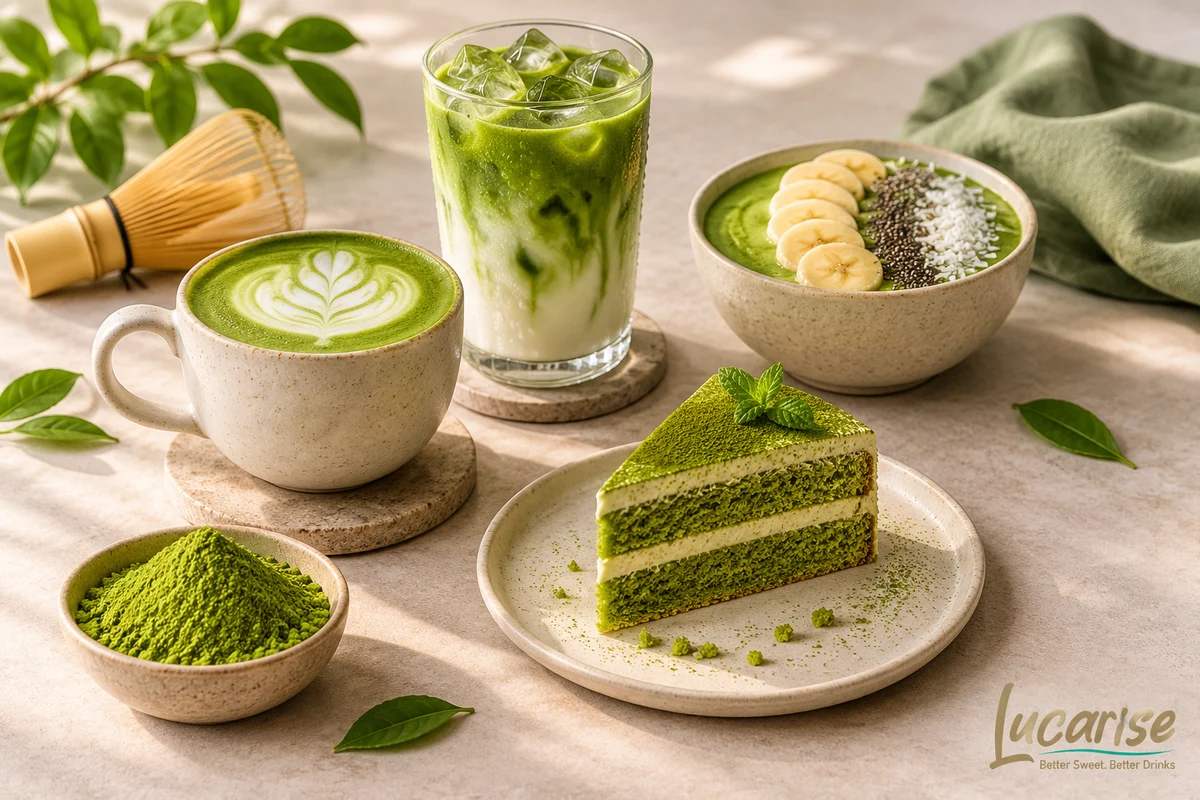
Food: 5 ways to cook and bake with matcha
6. Yogurt, oats and breakfast bowls
Sift ½–1 g of matcha over yogurt or stir it into overnight oats. Sifting is important here, because matcha clumps easily in cold, thick foods.
7. Matcha cake and muffins
Sift 1–2 teaspoons of culinary matcha per cup of flour together with the flour so the colour is even. Bake at a moderate temperature, about 170 °C, and cover the top with foil if it starts to brown, because high heat dulls the green colour and the flavour.
8. Matcha cookies
Use the same ratio, 1–2 teaspoons per cup of flour, and pair matcha with white chocolate, which balances its slight bitterness. Take the cookies out while the edges are still pale to keep them green.
9. Matcha tiramisu
Swap the coffee for a “matcha shot”: whisk 2 g of matcha into 60 ml of hot water and let it cool, then dip the biscuits in it. Mix a teaspoon of matcha into the cream layer and sift more on top instead of cocoa.
10. Matcha cream and ice cream
Whisk 1 teaspoon of matcha into 200 ml of cold whipping cream before you whip it, or stir a matcha paste into a simple no-churn ice cream base.
Tips for using matcha powder
- Always sift. Matcha is very fine and forms small lumps that will not dissolve later.
- Make a paste first. Mix the powder with a little water before adding milk or other liquid.
- Never use boiling water. Water above about 80 °C makes matcha taste bitter.
- Use moderate heat when baking to keep the green colour.
- Store it well. Once opened, keep matcha airtight, away from light and heat. See how to store matcha.
- Check it is real matcha. Our guide on how to tell real matcha shows what to look for on the label.
How much caffeine does each use add?
Matcha contains about 19–44 mg of caffeine per gram[1], so a drink made with 1–2 g has roughly 20–90 mg. A slice of matcha cake usually contains much less matcha than a drink. For healthy adults, EFSA considers up to 400 mg of caffeine a day from all sources safe, and up to 200 mg a day during pregnancy and breastfeeding[2].
Pure matcha powder or a matcha latte mix?
For tea, baking and recipes where you control the sweetness, use pure matcha powder. If you mainly want a quick, creamy latte, a ready matcha latte mix is easier: just add water or milk. The differences are explained in matcha powder vs matcha latte mix.
🌿 Try a Gulf twist: our cardamom matcha latte recipe, hot or iced.
🧮 Not sure how much matcha to use? Our free matcha calculator gives the grams, water and milk for any number of cups.
Run a café, restaurant or shop?
Lucarise makes café drinks in business packs in our own factory in Oman: 1 kg café bags, 100-sachet hotel boxes and distributor cartons. Prices on request.
Frequently asked questions
What can I use matcha powder for?
You can drink it as a tea, use it in hot and iced lattes, smoothies and cold drinks, and bake or cook with it in cakes, cookies, tiramisu, yogurt and ice cream.
Which matcha is best for baking?
Culinary-grade matcha is the usual choice for baking. Its stronger flavour holds up better in cakes and cookies, and it costs less than ceremonial grade.
How much matcha should I use per cup?
Use 1–2 g, about ½ to 1 teaspoon, for one cup of matcha tea or one matcha latte.
Can I mix matcha with cold water?
Yes. Shake 1–2 g of matcha with 200 ml of cold water in a closed bottle. Cold water gives a smoother, less bitter taste.
Why does my matcha taste bitter?
The most common reasons are water that is too hot, too much powder or an old, oxidised matcha. Use water at 75–80 °C and fresh matcha.
Does baking change matcha?
High heat dulls the green colour and some of the flavour. Bake at a moderate temperature and cover the top if it starts to brown.
Sources
- Koláčková T. et al. (2020). Matcha Tea: Analysis of Nutritional Composition, Phenolics and Antioxidant Activity. Plant Foods for Human Nutrition 75: 48–53. doi:10.1007/s11130-019-00777-z
- EFSA NDA Panel (2015). Scientific Opinion on the safety of caffeine. EFSA Journal 13(5): 4102. doi:10.2903/j.efsa.2015.4102
- ISO 20715:2023. Tea — Classification of tea types (definition of matcha). iso.org


