

That bright green latte everyone in Muscat, Dubai and Riyadh is ordering has a story that starts on shaded tea farms in Japan, not in a café. So, what is matcha, exactly? It is green tea leaf that has been shade-grown, steamed, dried and stone-ground into a fine powder that you whisk into water or milk and drink whole.
Because you consume the entire leaf, a cup of matcha delivers more caffeine, more L-theanine and more catechins than a cup of steeped green tea. That is the source of both its reputation and its hype.
This guide separates the two. You will learn how matcha is made, what the research supports (and what it does not), how much caffeine a cup really contains, how to judge quality on a shop shelf, and how to enjoy a matcha latte without the sugar that most café versions hide.
Matcha, explained
What it is, how to prepare it, and how to enjoy it pure or as a latte.

What Is Matcha? From Shaded Leaf to Fine Powder
Matcha comes from the same plant as all true tea, Camellia sinensis. What makes it different is how the leaf is grown and processed.
Shade-Grown Tea Leaves (Tencha)
Roughly three to four weeks before harvest, Japanese growers cover the tea bushes to block most of the sunlight. With less light, the leaves keep more of their amino acids, especially L-theanine, and build up more chlorophyll. The result is a deeper green colour, a softer, savoury (umami) taste and less bitterness.
After picking, the leaves are steamed to stop oxidation, dried, and the stems and veins are removed. This leaf is called tencha, and it is the only raw material for authentic matcha.
Stone-Ground Whole Leaf
Tencha is then ground, traditionally between granite stones, into a powder with a particle size of only a few microns. A traditional stone mill turns slowly to avoid heat, which would dull the colour and aroma.
With regular green tea you steep the leaves and throw them away. With matcha, the leaf is suspended in your cup, so you drink all of it, including the fibre and the compounds that do not dissolve in water.
Matcha vs Green Tea: What Actually Differs
Both are green tea. The differences come from shading and from drinking the whole leaf.
| Feature | Matcha | Steeped green tea (e.g., sencha) |
|---|---|---|
| Growing | Shaded 3–4 weeks before harvest | Usually grown in full sun |
| What you drink | The whole ground leaf | An infusion; leaves discarded |
| Caffeine per typical cup | About 20–90 mg (1–2 g of powder) | About 20–45 mg |
| L-theanine | High (shading preserves it) | Lower |
| Taste | Rich, creamy, umami, mildly sweet | Lighter, grassy, can be astringent |
| Preparation | Whisked, not steeped | Steeped 1–3 minutes |
⭐ What competitors won’t tell you: the “137 times more antioxidants” claim. You will see this figure on many matcha websites. It comes from a 2003 laboratory study that compared the EGCG in matcha with one low-grade Chinese green tea. Compared with typical green teas, the same study found matcha delivers around three times more EGCG. Three times is still a meaningful difference — and it is a number you can defend.
Matcha Benefits: What the Research Supports
Matcha is well studied as part of green tea research, but there are far fewer studies on matcha itself, and many are small or done in the lab. Here is an honest summary; for the full guide with sources, read matcha benefits.
Rich in Catechins and Antioxidants
Matcha is one of the most concentrated sources of tea catechins, especially EGCG (epigallocatechin gallate). In laboratory tests, these compounds show strong antioxidant activity. A 2021 review in the journal Molecules summarised matcha’s chemical profile and its potential benefits, while noting that more human trials are needed before firm health claims can be made.
Calm Focus: Caffeine Plus L-Theanine
This is the benefit with the best human evidence. L-theanine, an amino acid found almost only in tea, appears to soften the “edge” of caffeine. In a controlled trial published in Nutritional Neuroscience in 2008, the combination of L-theanine and caffeine improved attention and task-switching more than caffeine alone. A 2017 study in Food Research International tested matcha itself and found small improvements in attention and memory.
In practice, many people describe matcha as “alert but relaxed”. A common example: a coffee drinker who gets jittery from a second espresso switches the afternoon cup to matcha and finds the energy smoother and the crash milder. Individual responses vary, especially with caffeine.
Metabolism and Weight: Modest at Best
You will often read that matcha “burns fat”. The evidence does not support strong claims. A Cochrane review of green tea preparations found weight loss in overweight adults was small and not clinically important. Matcha can be a helpful swap for sugary drinks, which is where most of its real-world benefit for weight management comes from.
| Claimed benefit | Strength of evidence | What it means for you |
|---|---|---|
| Antioxidant content | Strong (lab data) | Matcha is rich in catechins |
| Calm focus (caffeine + L-theanine) | Moderate (human trials) | Smoother energy for many people |
| Heart and metabolic health | Limited, mostly green tea in general | Promising, not proven for matcha |
| Fat burning / weight loss | Weak | Small effect; swapping out sugar matters more |
Does Matcha Have Caffeine? How Much Is in a Cup
Published measurements put matcha at roughly 19–44 mg of caffeine per gram of powder, depending on grade and harvest. A typical serving uses 1–2 g, so expect about 20–90 mg per cup. For comparison, a standard 240 ml cup of brewed coffee has around 95 mg.
The U.S. Food and Drug Administration considers up to 400 mg of caffeine a day generally safe for healthy adults. During pregnancy, most guidelines recommend staying under 200 mg a day. A 1 g Lucarise pure matcha sachet therefore provides roughly 20–45 mg of caffeine. A 2 g Lucarise matcha capsule provides roughly twice that. Caffeine varies naturally from harvest to harvest, so treat these as ranges rather than exact figures.
How to Choose Quality Matcha in the GCC
Matcha’s popularity in the UAE, Saudi Arabia, Qatar and Oman means shelves are full of options, and quality varies widely. Use this checklist.
Ceremonial, Premium or Culinary?
These grades are not officially regulated, but they generally mean the following. Ceremonial grade is made from the youngest first-harvest leaves and is meant to be whisked with water only. Premium or “latte” grade has a fuller flavour that stands up well to milk. Culinary grade is stronger and more bitter, and is best for baking and cooking.
Five Signs of Good Matcha
- Colour: bright, vivid green. Yellow, olive or brown tones suggest older leaves, poor storage or oxidation.
- Texture: silky and fine, like eyeshadow, not gritty.
- Aroma: fresh, grassy and sweet. A dull, hay-like smell is a warning sign.
- Origin and harvest: good brands state the country (and ideally the region) of origin.
- Packaging: airtight and light-proof. Matcha loses colour and flavour quickly once exposed to air, light and heat.
💡 Expert tip: read the ingredients list in order. Many ready-made “matcha latte” powders list sugar first and matcha near the end, sometimes below 5%. If sugar or “glucose syrup” is the first ingredient, you are buying a sweet drink with a little matcha in it, not a matcha drink.
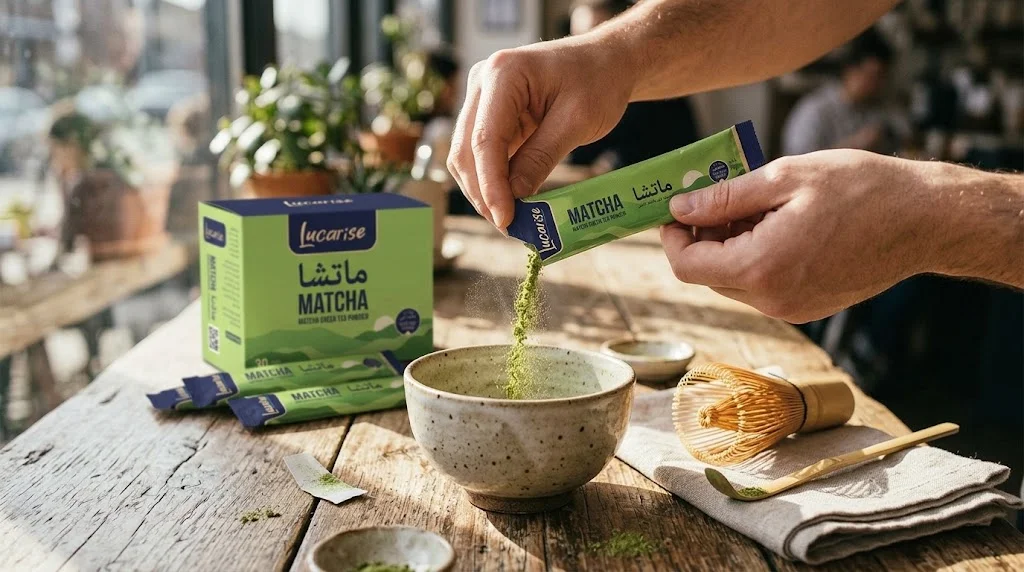
The Lucarise Matcha Range: Pure Matcha and No-Added-Sugar Lattes
This is where we come in. Lucarise is a beverage brand with its own production facility in the Sohar Free Zone, Oman. Our matcha range is built around two ways people actually drink matcha: pure and whisked, or as a creamy latte without added sugar.
| Product | Size | Best for |
|---|---|---|
| Pure Matcha (single-serve sachet) | 1 g · 30 sachets per box | Traditional whisked matcha, smoothies, travel |
| Cardamom Matcha (single-serve sachet) | 1 g · 30 sachets per box | A Gulf-style twist on pure matcha |
| Matcha Tin | 50 g or 200 g | Daily home use and baking |
| Pure Matcha Capsule | 2 g · 10 capsules per box | Quick matcha from a capsule machine (Nespresso®-compatible) |
| No-Added-Sugar Matcha Latte: Classic, Cardamom or Coconut | 14 g sachet · 10 per box | A creamy latte in 30 seconds |
| No-Added-Sugar Matcha Latte with Topping: Pistachio, Hazelnut, Strawberry or Mango | 14 g sachet + topping sachet · 10 per box | An indulgent café-style latte at home |
Pure Matcha: Sachets, Tins and Capsules
Our pure matcha contains nothing but ground matcha: no sugar, no sweetener, no fillers. The 1 g sachets are pre-measured for one cup and stay sealed until you open them, which solves matcha’s biggest storage problem: losing colour and flavour once exposed to air. The 50 g and 200 g tins are airtight and light-proof for daily use at home. The Cardamom Matcha blends pure matcha with cardamom, a flavour pairing familiar to anyone who grew up with Gulf-style tea and coffee.
⭐ Why cardamom works with matcha: cardamom’s warm, citrusy aroma softens matcha’s grassy notes and makes the first cup feel familiar for people in the Gulf who are used to cardamom in karak and Arabic coffee. It is a gentle way to start drinking pure matcha without reaching for sugar.

No-Added-Sugar Matcha Latte: What’s Inside
- Matcha: real matcha green tea powder is the base of every blend. The full ingredient list is on each product page.
- Sweetener: stevia Reb M only — no sugar, no artificial sweeteners. Reb M is a steviol glycoside known for a cleaner, more sugar-like taste with less of the bitter aftertaste some people notice in older stevia sweeteners. Steviol glycosides are approved food sweeteners and have been assessed by food-safety authorities such as EFSA.
- Flavours: Classic, Cardamom and Coconut.
- Topping editions: real pistachio, real hazelnut, freeze-dried strawberry or freeze-dried mango, packed in a separate sachet so it stays crunchy until you add it.
How to Prepare Lucarise Matcha
- Pure matcha (1 g sachet): add the powder to a bowl or cup with about 70 ml of water at around 80 °C (not boiling) and whisk briskly in a zigzag motion until frothy. Add more water or milk to taste.
- Hot matcha latte (14 g sachet): empty one sachet into a cup, add about 150 ml of hot water or milk and stir or froth for 20 seconds.
- Iced matcha latte: dissolve one latte sachet in 50 ml of warm water, pour over ice and top up with cold milk.
- Topping editions: tear open the topping sachet and sprinkle it on top just before drinking.
A real-world routine we hear often: a Muscat professional who used to buy a sweetened café matcha every afternoon now keeps pistachio-topping latte sachets at the office, makes an iced version in a minute, and drops one sugary drink a day without giving up the treat.
Who Should Be Careful with Matcha
Matcha is a safe everyday drink for most healthy adults, but a few groups should take care:
- People sensitive to caffeine, or anyone drinking matcha late in the day, as it may affect sleep.
- Pregnant or breastfeeding women, who should count matcha towards their daily caffeine limit.
- People with low iron levels: tea catechins can reduce the absorption of iron from plant foods, so drink matcha between meals rather than with them.
- Anyone with a medical condition or on regular medication should check with their doctor.
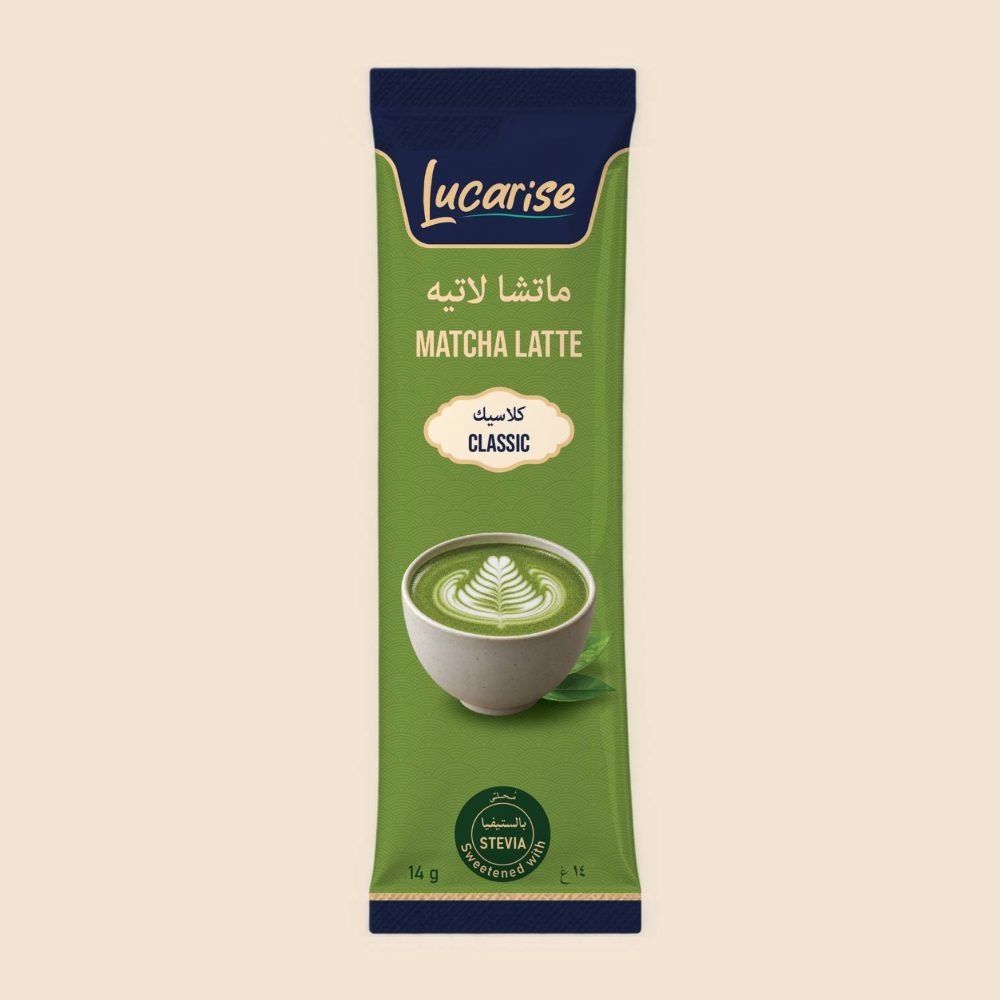
Pure matcha or a ready latte
Choose premium matcha powder for whisking and recipes, or a matcha latte sachet sweetened with Stevia Reb-M, with no added sugar.
For the full details and sources, read our article on matcha side effects. If you want to prepare matcha the traditional way, see our guide to matcha tools.
Keep reading
Frequently Asked Questions About Matcha
Is matcha healthier than coffee?
Neither is “better” for everyone. Matcha usually has less caffeine per cup and contains L-theanine, which many people find gives smoother energy. Coffee has its own well-researched benefits. The bigger difference is usually what you add: sugar and syrups matter more than the base drink. For a full comparison, read Matcha vs coffee.
How much matcha can I drink a day?
For most healthy adults, one to three cups (about 2–6 g of powder) a day is a reasonable range. Keep your total caffeine from all sources under 400 mg a day, or under 200 mg if you are pregnant.
Is a no-added-sugar matcha latte suitable for people with diabetes?
A matcha latte sweetened with stevia Reb M contains no added sugar, which makes it a better fit for a sugar-controlled diet than café versions made with syrup. Milk still contains natural carbohydrates, so check the total carbohydrates on the label and follow your doctor’s or dietitian’s advice.
Is matcha keto-friendly?
Pure matcha has almost no carbohydrates, so plain matcha, such as a 1 g pure matcha sachet whisked with water, fits a keto diet. For latte mixes, check the net carbs per serving, because milk powder and sugar add carbs quickly. The exact values for each Lucarise latte are printed on the nutrition panel of the box.
When is the best time to drink matcha?
Morning or early afternoon works best for most people, or about 30–60 minutes before a workout. Avoid it in the evening if caffeine affects your sleep.
Does matcha have to be whisked with a bamboo whisk?
For traditional matcha with water, a bamboo whisk (chasen) gives the best foam and texture. For instant matcha latte sachets, a spoon, small frother or shaker bottle is enough. A small electric frother also works well for pure matcha sachets.
Matcha in Your Daily Routine: The Bottom Line
Matcha is shade-grown green tea that you drink whole, which is why it delivers more caffeine, more L-theanine and more catechins than ordinary green tea. Its best-supported benefit is calm, focused energy; claims about dramatic fat burning are not backed by strong evidence.
When choosing matcha, look for a bright green colour, a fine texture, a clear origin, and an ingredients list that does not start with sugar.
Start with Lucarise Pure Matcha in 1 g sachets or tins if you want matcha the traditional way, or try a No-Added-Sugar Matcha Latte in Classic, Cardamom or Coconut, or with a pistachio, hazelnut, strawberry or mango topping, if you want the comfort of a latte without the sugar.
Shop Pure Matcha → | Shop Matcha Latte →
About the Author
Written by the Lucarise team in the Sohar Free Zone, Oman. Last updated: October 2, 2026.
Lucarise matcha, tea and coffee products are produced at our facility in the Sohar Free Zone, Oman.
Try Lucarise before you buy
Free samples are available for cafés, hotels, offices and distributors in Oman and the GCC.


