
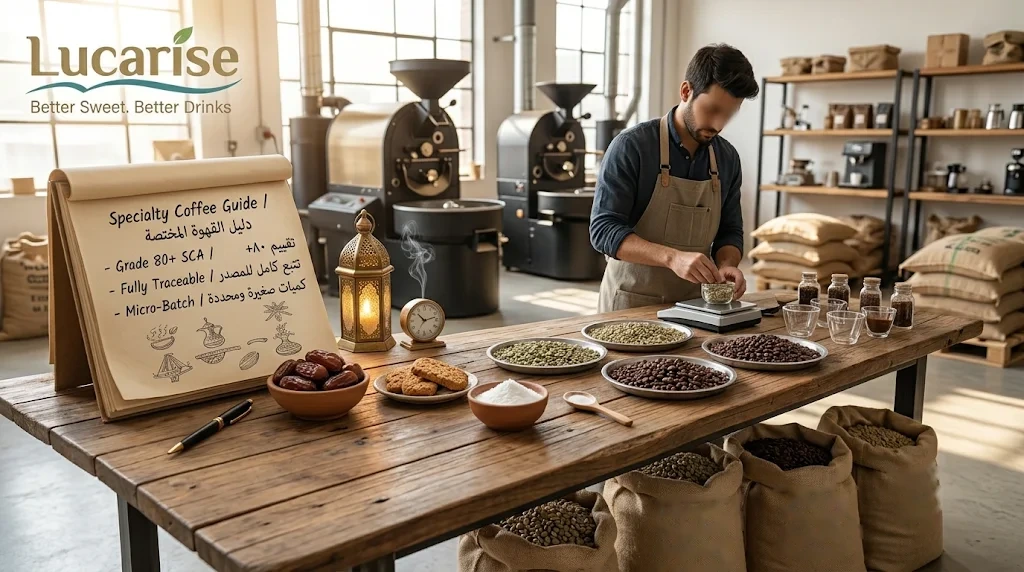
Quick answer: specialty coffee is coffee that scores 80 points or more out of 100 when graded by trained, certified tasters using the Specialty Coffee Association (SCA) scale, with very few defects in the green beans and at least one distinctive quality in flavour, aroma, acidity or body[1]. In everyday use, it also means coffee you can trace to its origin, roasted carefully and brewed with attention to ratio, grind and water. This guide explains what specialty coffee is, how it differs from regular coffee, and every main way to brew it at home.
Not sure which coffee to try? Take our 30-second coffee quiz and get your match.
Specialty coffee has grown fast in Saudi Arabia, Oman and across the Gulf, with new roasteries and coffee shops in every city. This page is our central guide: start here, then follow the links to our step-by-step guides for each brewing method.
What is specialty coffee?
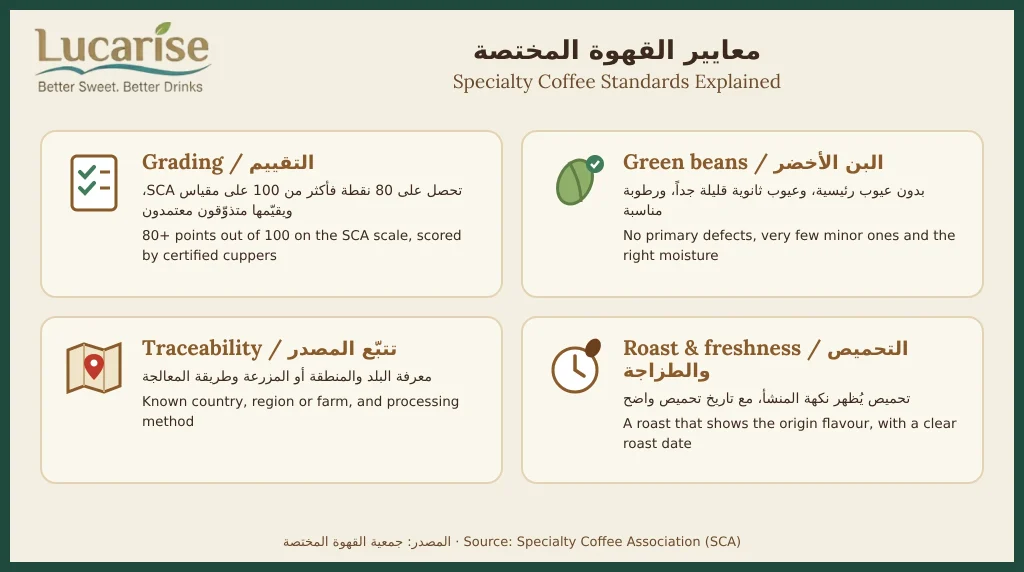
The term comes from the coffee trade. Under the SCA system, a sample of green (unroasted) coffee is checked for defects and then cupped, meaning brewed and tasted in a standard way, by certified tasters such as Q graders. Coffee that scores 80 points or more is called specialty grade[1]:
| Score | Grade |
|---|---|
| 90–100 | Outstanding |
| 85–89.99 | Excellent |
| 80–84.99 | Very good |
| Below 80 | Not specialty (commercial or commodity grade) |
The green beans must also have no primary defects and only a few minor ones, the right moisture level and no faults or taints in the cup[1]. Almost all specialty coffee is Arabica; read more in Arabica vs Robusta.
Specialty coffee vs regular coffee
| Specialty coffee | Regular (commercial) coffee | |
|---|---|---|
| Grading | 80+ points on the SCA scale | Not graded, or below 80 |
| Traceability | Often shows country, region or farm, process and roast date | Often only a brand and a blend name |
| Roast | Usually light to medium, to show the origin flavour | Often darker, for a uniform taste |
| Flavour | Distinct notes such as fruit, flowers, chocolate or nuts | Mostly roasted and bitter notes |
| Brewing | Ratio, grind and water are measured | Usually brewed without measuring |
Ways to brew coffee: our step-by-step guides
The brewing method changes the taste as much as the beans. Pick a method, then follow the full guide:
| Method | Cup | Grind | Starting ratio | Guide |
|---|---|---|---|---|
| Espresso | Small, strong, with crema | Fine | about 1:2 (18 g coffee to 36 g espresso) | How to make espresso |
| Drip / pour-over (V60) | Clean and light | Medium-fine | about 1:16 (15 g to 250 ml) | How to make drip coffee |
| Turkish coffee | Thick, with foam and grounds | Extra fine, like flour | about 1:10 (6–7 g to 70 ml) | How to make Turkish coffee |
| Arabic coffee (gahwa) | Light roast with cardamom | Medium | see the guide | How to make Arabic coffee |
| French press | Full-bodied, a little sediment | Coarse | about 1:15, steep 4 minutes | — |
| Moka pot | Strong, close to espresso | Fine to medium-fine | fill the basket level, do not press | — |
| Cold brew | Smooth, low bitterness | Coarse | about 1:8, steep 12–18 hours in the fridge | — |
Espresso is also the base of milk drinks: latte, cappuccino and iced cappuccino. Scale any recipe with our coffee to water ratio calculator.
The four basics of a great cup
- Ratio: weigh your coffee and water. Most filter methods sit between 1:15 and 1:17; the SCA Golden Cup standard is about 55 g of coffee per litre[2].
- Grind: match the grind to the method. Too fine tastes bitter, too coarse tastes sour and weak.
- Water: use clean, good-tasting water just off the boil, about 90–96 °C for most methods.
- Freshness: coffee tastes best within a few weeks of roasting. Grind just before brewing if you can, and keep the pack tightly closed.
Coffee origins and their flavours
Where coffee is grown, and how it is processed, shape its taste. These are general tendencies, and every farm and harvest is different:
| Origin | Often described as |
|---|---|
| Ethiopia | Floral and fruity, with lively acidity |
| Colombia | Balanced and sweet, with caramel notes |
| Brazil | Nutty and chocolatey, with low acidity |
| Yemen | Rich and complex, with dried-fruit and spice notes |
| Saudi Arabia (Jazan, Khawlani) | Traditional Arabian coffee; read more in our Saudi coffee guide |
Washed, natural and honey: what the process means
| Process | How it is done | Typical taste |
|---|---|---|
| Washed | The fruit is removed before the beans dry | Clean and bright |
| Natural (dry) | The beans dry inside the whole fruit | Fruity and sweet, fuller body |
| Honey | Some fruit is left on the beans while they dry | Between washed and natural |
Roast levels
| Roast | Colour | Taste | Good for |
|---|---|---|---|
| Light | Light brown | Brighter acidity, more origin flavour | Drip, pour-over, Arabic coffee |
| Medium | Medium brown | Balanced sweetness, acidity and body | Almost every method |
| Dark | Dark brown, may look oily | Bolder, more roasted and bitter | Espresso with milk, moka pot |
How to buy good coffee beans
- Check the label for origin, roast level and, ideally, the roast date.
- Buy whole beans if you have a grinder; buy ground coffee made for your method if you do not.
- Choose a pack size you will finish within a few weeks.
- Store coffee in its closed pack or an airtight container, in a cool, dry place away from sunlight. Avoid the fridge, where it can absorb moisture and smells.
Coffee tools for brewing at home
You do not need a café setup. Start with the basics and add tools as you go:
| Tool | Why it helps |
|---|---|
| Digital scale (0.1 g) | Measures coffee and water exactly, so you can repeat a good cup |
| Burr grinder | Gives an even grind and lets you grind fresh for each method |
| Gooseneck kettle | Lets you pour slowly and evenly for drip coffee |
| Dripper and filters (V60 or similar) | For clean, light pour-over coffee |
| Cezve (Turkish coffee pot) | For traditional Turkish coffee with foam |
| Moka pot or espresso machine | For strong, concentrated coffee and milk drinks |
| French press | For full-bodied coffee with no paper filter |
If you have no equipment at all, drip bags are the simplest start: see how to make drip coffee.
How to choose a specialty coffee roastery
- Roast date: a good roaster prints the roast date, not only an expiry date.
- Clear information: origin country or region, process (washed, natural or honey) and roast level.
- Choice of grind: whole beans, or ground to order for your brewing method.
- Fresh stock: small batches roasted often, so the coffee on the shelf is recent.
- Advice: staff who can suggest a coffee and a recipe for how you brew at home.
Lucarise coffee
Lucarise coffee is 100% Arabica, roasted and packed in our own factory in Oman. Choose by how you brew:
| If you brew | Try |
|---|---|
| Espresso or moka pot | Espresso Ground Coffee |
| Coffee maker or moka pot | French Ground Coffee |
| Turkish coffee pot (cezve) | Turkish Ground Coffee |
| Dallah, Arabic style | Arabic Ground Coffee with Cardamom |
| No equipment | UFO Drip Coffee bags |
| Your own grinder | Ethiopia, Colombia, Brazil or Signature Blend beans |
Keep your beans tasting their best with our guide on how to store coffee, and look up any unfamiliar word in the coffee glossary.
Run a café, restaurant or shop?
Lucarise makes café drinks in business packs in our own factory in Oman: 1 kg café bags, 100-sachet hotel boxes and distributor cartons. Prices on request.
Specialty coffee: frequently asked questions
What does specialty coffee mean?
Coffee graded 80 points or more out of 100 on the SCA scale by certified tasters, with very few green-bean defects and a distinctive flavour.
Who decides if coffee is specialty?
Trained, certified tasters, such as Q graders, who check green coffee for defects and cup it using the SCA method.
Is specialty coffee always Arabica?
Almost always. Arabica usually has more complex flavour and acidity than Robusta.
What is the best way to brew specialty coffee at home?
There is no single best way. Drip (V60) shows the origin flavour most clearly, espresso gives a strong concentrated cup, and Turkish coffee gives a thick traditional cup.
What is the best coffee to water ratio?
For filter methods, start at about 1:16, for example 15 g of coffee to 250 ml of water, and adjust to taste.
How should I store coffee beans?
In a closed pack or airtight container, in a cool, dry place away from sunlight, and use them within a few weeks of opening.
Sources
- Perfect Daily Grind (2020). Do we need to redefine specialty coffee? (SCA 100-point scale: 80 points or above is specialty grade; green-coffee defect limits).
- Specialty Coffee Association (SCA). Golden Cup brewing standard: about 55 g of coffee per litre of water, water at 92–96 °C.


