
What are the best drinks for Ramadan? Water is the most important drink in Ramadan: spread about 8 to 10 cups across the hours between iftar and suhoor instead of drinking it all at once. At suhoor, choose water and caffeine-free drinks such as herbal tea, and cut back on coffee, strong tea and sugary drinks, which can increase fluid loss. At iftar, start with water and dates, and save Arabic coffee and karak for after the meal.
In Ramadan, eating and drinking times change completely, so what you drink between iftar and suhoor largely decides how you feel during the fasting day, especially in the Gulf heat. This guide organises Ramadan drinks by time: what to drink at iftar, after it and at suhoor, what to cut back on, and a quick table you can keep all month.
How much water do you need in Ramadan?
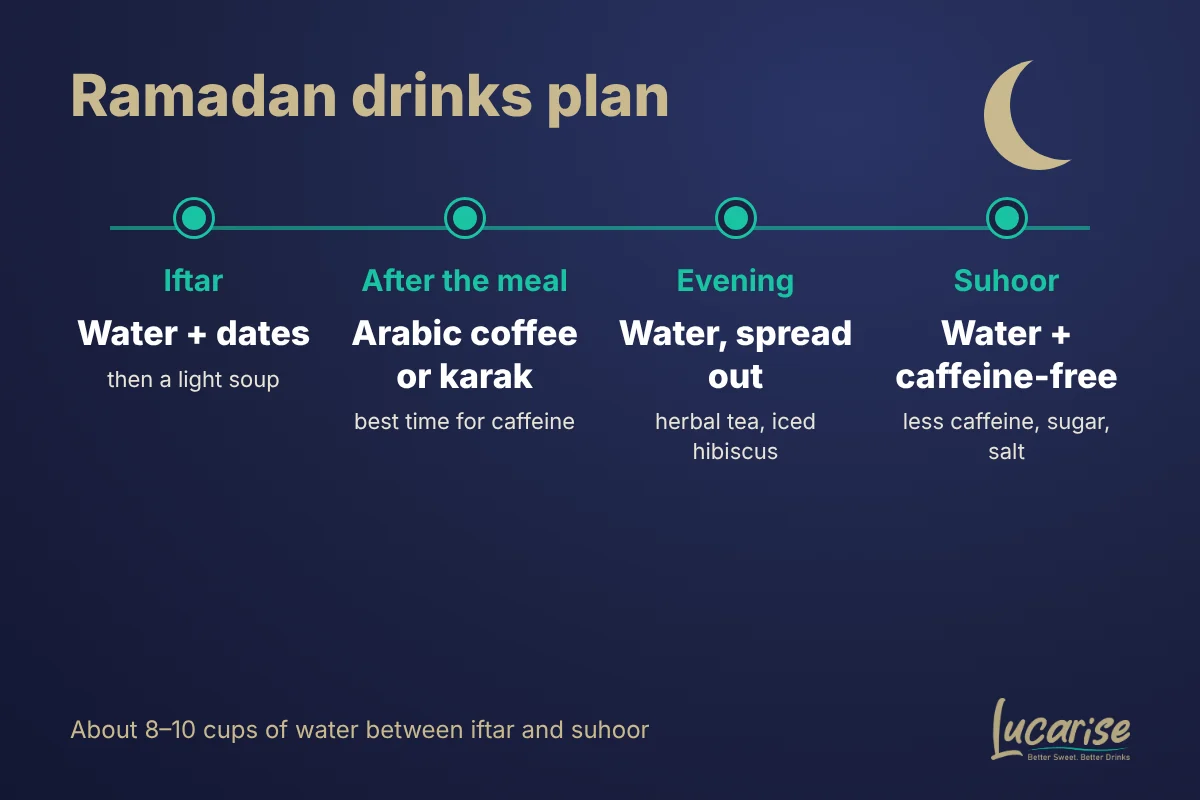
Nutrition guidance recommends at least 8 to 10 cups of water during non-fasting hours, spread across the time between iftar and suhoor rather than in one go.1 An easy pattern: two cups at iftar, two after the meal, two in the evening and two at suhoor. Water-rich foods such as watermelon, cucumber, oranges and tomatoes help too.1
Best drinks for iftar
- Water and dates first: break your fast with water and dates, then a light soup, then the main meal, slowly.1
- Laban or milk: a familiar part of the Ramadan table that adds fluid to the meal.
- Traditional Ramadan drinks such as qamar al-din, jallab and tamarind: delicious, but many are heavily sweetened, so keep to a small glass or make them with less sugar.
- Iced hibiscus (karkade): a refreshing, caffeine-free red drink you can make without sugar. Read how to make iced hibiscus tea.
Planning the Ramadan table? See how much sugar is in Ramadan drinks such as Vimto, jallab and qamar al-din.
Arabic coffee and karak in Ramadan: when to drink them
Arabic coffee with dates and karak are at the heart of Ramadan gatherings in the Gulf. The best time for them is a little after iftar and in the evening, not right at suhoor. Coffee and tea increase urine output, which is why cutting back on caffeine at suhoor is recommended.1 If you drink coffee every day, reduce it gradually before Ramadan to ease withdrawal headaches. Here is how to cut caffeine before Ramadan. Compare the caffeine in each drink in our caffeine chart and read about Arabic coffee and how it is served.
Hosting in Ramadan? Read our guide to Arabic coffee etiquette in Ramadan: who to serve first, how much to pour and what shaking the cup means.
Best drinks for suhoor
- Water: have at least two cups at suhoor, with lemon slices or mint if you like.1
- Caffeine-free herbal tea: such as rooibos, which is warm, caffeine-free and never bitter.1
- A caffeine-free latte: if you want something warm and creamy at suhoor instead of coffee, choose a caffeine-free drink such as a date seed latte. Read about date seed coffee.
- Coconut water is another option if you like it.1
Drinks to cut back on at suhoor
- Large amounts of coffee and strong tea: they increase urine output.1
- Sugary and fizzy drinks: they can increase fluid loss.1 If you want sweetness, use a little stevia instead of sugar.
- Very salty or spicy foods at suhoor, which make you thirstier during the day.1
Ramadan drinks by time of day
| Time | What to drink | Note |
|---|---|---|
| At iftar | Water and dates, then soup | Start slowly |
| After the meal | Arabic coffee or karak, or iced hibiscus | Best time for caffeine |
| Evening | Water, spread out; herbal tea | At least two cups |
| Suhoor | Water, rooibos, a caffeine-free latte | Less caffeine, sugar and salt |
This article is general information. If you have a health condition such as diabetes or kidney disease, or are pregnant, talk to your doctor before fasting and about which drinks suit you.
For Ramadan: no-added-sugar drinks from Oman
Classic Date Latte is caffeine-free and ideal for suhoor, 100% Hibiscus Tea makes a sugar-free iced drink for iftar, and the Majlis Gift Box brings together Arabic coffee with saffron, saffron karak, date latte and cardamom tea for Ramadan and Eid guests.
Hosting guests? Find out how much coffee, water and cardamom you need with our Arabic coffee calculator.
Ramadan drinks: frequently asked questions
What is the best drink for suhoor to avoid thirst?
Water is best, spread across the hours between iftar and suhoor. Cutting back on salt, caffeine and sugar at suhoor also helps.
Does coffee at suhoor make you thirsty?
Coffee and tea increase urine output, so it is recommended to limit them at suhoor and enjoy them after iftar instead.
How many cups of water should I drink in Ramadan?
About 8 to 10 cups spread between iftar and suhoor, for example two at iftar, two after the meal, two in the evening and two at suhoor.
Are Ramadan drinks like qamar al-din healthy?
They are a lovely part of the Ramadan table, but many are high in sugar, so keep to a small glass or make them with less sugar.
What is a warm caffeine-free drink for suhoor?
Rooibos or another herbal tea, or a caffeine-free latte such as a date seed latte.
Sources
- Johns Hopkins Aramco Healthcare. Ramadan Nutrition and Hydration Guide: How to Nourish Your Body While Fasting. jhah.com


