
The Complete Matcha Guide
Matcha in one paragraph: matcha is shade-grown green tea leaves ground into a fine powder. Because you drink the whole leaf, it has more flavour, colour and caffeine than steeped green tea: about 20–90 mg of caffeine per cup from 1–2 g of powder. Drink it whisked with water, as a hot or iced latte, or use it in desserts. This guide brings together everything Lucarise has written about matcha, from the basics to recipes.
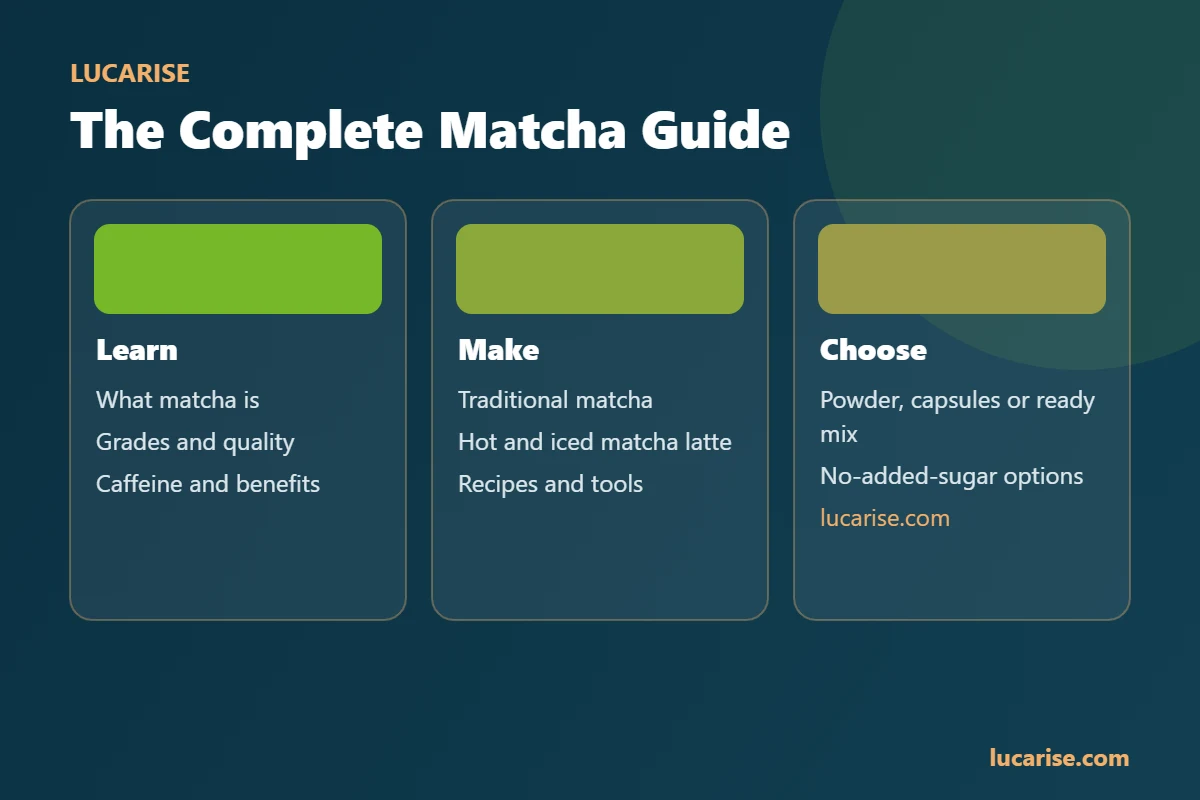
Start here: matcha basics
- What is matcha?: how it is made, how it differs from green tea and how much caffeine it has.
- Matcha grades explained: ceremonial, latte and culinary matcha, and how to check quality.
- Japanese vs Chinese matcha: how they differ in origin, grinding, taste and price, and which suits lattes or whisking.
- How to tell real matcha from fake: label signs and five simple home tests.
- How to store matcha: fridge or cupboard, how long it lasts after opening, and signs of stale matcha.
- How to prepare matcha the traditional way: the water temperature, the amounts and the whisking trick.
- Matcha tools: whisk, bowl, scoop and the easy alternatives.
- Matcha powder: Lucarise pure matcha with nothing added, in 1 g sachets, tins and capsules.
Matcha drinks and recipes
- How to make a matcha latte: hot or iced, with exact amounts.
- Best milk for matcha latte: whole, oat, almond or soy, compared for taste and foam.
- How to use matcha powder: 10 ways, from matcha tea and lattes to cakes, cookies and tiramisu.
- Cardamom matcha latte: a Gulf twist on matcha, hot or iced, with how much cardamom to add.
- Iced matcha latte: ready in two minutes.
- Strawberry matcha latte: the layered café favourite at home.
- Sugar-free matcha latte: how to sweeten without added sugar.
- Matcha powder vs matcha latte mix: which one suits you.
Caffeine, benefits and side effects
- Best time to drink matcha: morning, before a workout or afternoon, and when to avoid it (sleep and iron).
- Matcha benefits: what the research supports, and what it does not.
- Matcha for weight loss: what the studies show, and where it really helps.
- Matcha side effects: caffeine, iron and how much is too much.
- Matcha vs coffee: caffeine, energy and taste compared.
Beyond matcha
- What is hojicha?: the roasted Japanese green tea with less caffeine.
Matcha quick facts
| Question | Short answer |
|---|---|
| How much matcha per cup? | 1–2 g (about one teaspoon) |
| Water temperature | 75–80 °C, never boiling |
| Caffeine per cup | About 20–90 mg |
| Best grade for drinking straight | Ceremonial |
| Best grade for lattes | Latte (premium) or ceremonial |
| Best grade for baking | Culinary |
| How to store it | Airtight, dark, in the fridge after opening; use within 1–2 months |
Shop Lucarise matcha
- Ceremonial Matcha Powder: 100% pure matcha in tins and 1 g sachets.
- Cardamom Matcha Powder: pure matcha with natural cardamom.
- Matcha Capsules: for Nespresso-compatible machines, no whisking.
- Matcha Latte mixes: real matcha in single-serve sachets with no added sugar.
Matcha: frequently asked questions
Is matcha the same as green tea?
It comes from the same plant, but the leaves are shaded before harvest and ground into powder. You drink the whole leaf, so matcha is stronger in flavour, colour and caffeine than steeped green tea.
How much caffeine is in matcha?
Roughly 19–44 mg per gram of powder. A typical cup uses 1–2 g, so it has about 20–90 mg, compared with around 95 mg in a 240 ml cup of brewed coffee. For the full answer, with caffeine per gram, per cup and in a matcha latte, read does matcha have caffeine?
What is the best way for a beginner to drink matcha?
Start with a matcha latte: whisk 1–2 g with a little water and add 150–200 ml of milk. Milk softens the taste while you get used to it.
Which matcha grade should I buy?
Ceremonial for drinking with water, latte or premium grade for lattes, and culinary for baking and smoothies.


